
Quick Answer:
Valencia is one of the best cities in Spain for seniors thanks to its flat layout, affordable costs, safe environment, and excellent public transport. It is less crowded than Barcelona and offers a relaxed, accessible travel experience ideal for visitors over 60.
Best for: Relaxed travel, affordability, walkability
Avoid if: You dislike warm weather in summer
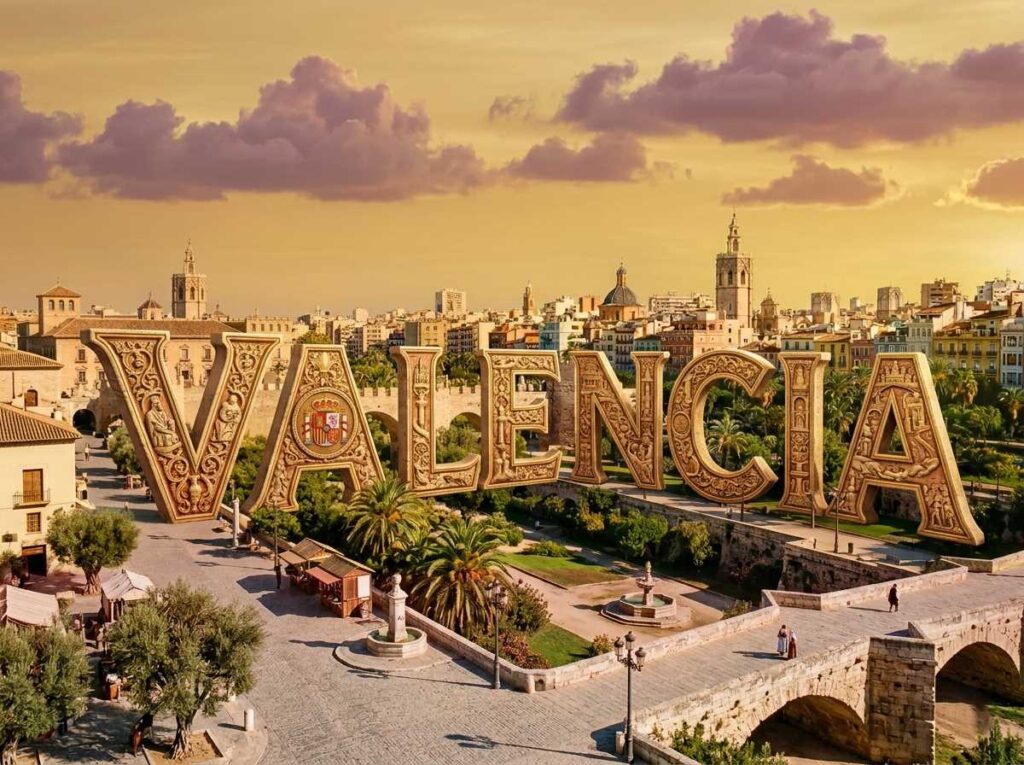
Valencia is quietly one of the best cities in Europe for American seniors. This Seniors’ Guide to Valencia covers everything you actually need to know: the neighborhoods worth staying in, the attractions worth your energy, and the honest budget reality of visiting Spain’s third-largest city.
What sets Valencia apart from the more obvious European choices isn’t just the 300 days of sunshine or the Mediterranean coastline. It’s the pace. Valencia moves at a speed that suits senior travelers — unhurried, human-scaled, genuinely accessible. Spain’s TUR4all Accessibility Report consistently ranks Valencia among Europe’s most senior-friendly cities: 95% of the historic district has been upgraded with smooth paving and ramps, and the city’s “Accessible Beach” program ensures that even the waterfront is genuinely navigable for visitors with mobility considerations.
Come for a week. Stay longer than you planned. That’s what most seniors do.
Valencia at a Glance for American Seniors
| 🌡️ Best Time to Visit | April–June and September–October. Mild temperatures, lower crowds than summer peak. |
| 💵 Currency | Euro (€). $1 USD ≈ €0.92 in 2026. More affordable than Paris, Amsterdam, or London. |
| ✈️ Flights from US | No direct flights — connect via Madrid (1 hr) or Barcelona (3.5 hr AVE train). From NYC: ~10 hrs total. |
| 🗣️ Language | Spanish (Castilian) and Valencian. English spoken in tourist areas, hotels, and restaurants. |
| 🚶 Walkability | Excellent. Flat city, wide sidewalks, extensive pedestrianized zones. Very senior-friendly. |
| 🏥 Healthcare | Hospital Clínico Universitario and Hospital La Fe are world-class facilities. Travel insurance essential. |
| 💰 Daily Budget | €60–€100/day (budget) to €150–€250/day (comfortable) per person including accommodation. |
Top Reasons Seniors Love Valencia
- Flat and easy-to-walk streets
- Affordable daily costs
- Safe and relaxed environment
- Accessible public transport
- Less crowded than major tourist cities
Why Valencia Works So Well for Senior Travelers
Barcelona gets the Instagram posts. Madrid gets the history tourists. Valencia gets the seniors who come back.
There are four specific reasons Valencia consistently outperforms more famous Spanish cities for travelers over 60:
Scale: Valencia is large enough to have genuine world-class culture, cuisine, and nightlife — but compact enough that its main attractions are reachable on foot or via a short tram ride. You are never more than 20 minutes from anything that matters.
Terrain: Valencia is flat. Genuinely, unusually flat for a European city of its size. The hills that make Barcelona’s Gothic Quarter charming also make it exhausting for seniors managing knee or hip concerns. Valencia’s historic center sits on a plain, and the famous Turia Gardens — a 9-kilometer green corridor running through the city — provides completely flat, shaded walking with benches every few hundred meters.
Pace: Valencia operates on Mediterranean time, which means nobody is rushing. Lunch happens at 2pm and lasts two hours. Dinner begins at 9pm. The city’s rhythm naturally accommodates the relaxed schedule that most senior travelers prefer.
Price: Valencia is significantly less expensive than Madrid, Barcelona, or any comparable city in France or northern Europe. A restaurant meal that costs €40 per person in Barcelona costs €22 in Valencia. A mid-range hotel that runs €180/night in Madrid runs €110 in Valencia. Your retirement income goes further here than almost anywhere else in Western Europe.
🏘️ The Best Neighborhoods to Stay in Valencia
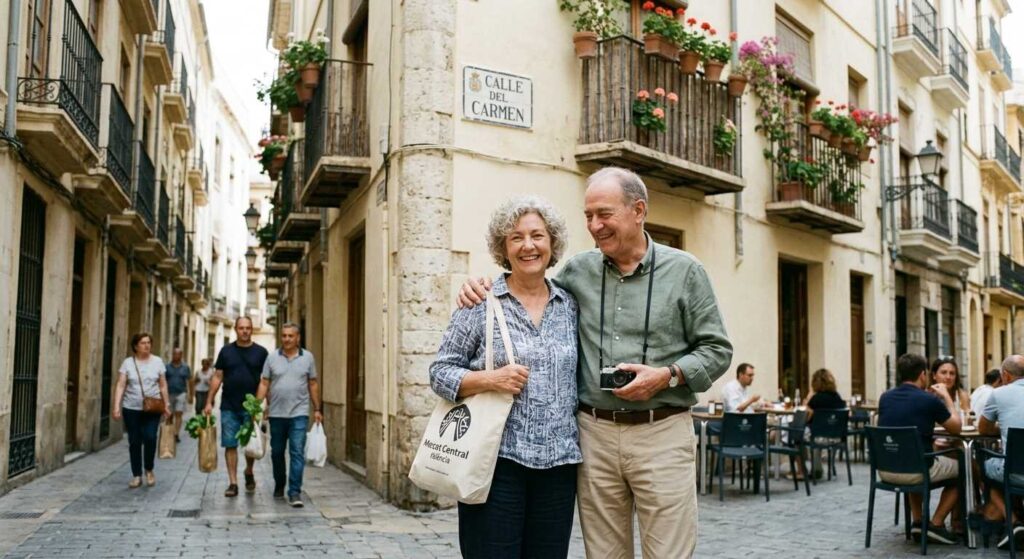
Valencia’s neighborhoods have distinct characters. Since where you stay shapes your entire experience, this Seniors’ Guide to Valencia provides an honest look at the best options for travelers over 60.
🏛️ Ciutat Vella (Old Town) — Best for First-Time Visitors
Valencia’s historic heart is where most seniors stay on their first visit — and for good reason. The Valencia Cathedral, the Central Market (one of the most beautiful food markets in Europe), and the Plaza de la Reina are all within a five-minute walk of each other. The streets are mostly pedestrianized, which means minimal traffic noise and safer walking conditions.
Senior considerations: Some streets in the oldest parts of Ciutat Vella have uneven cobblestones — manageable with sturdy footwear but worth noting if you use a cane or walker. Most hotels in the area have upgraded their elevator access in recent years. Book specifically in the area around Plaza de la Reina or Calle de la Paz for the flattest and most accessible walking.
Price range: Mid-range hotels €90–€150/night. Boutique hotels and apartments €70–€130/night.
🌿 El Pla del Real and Eixample — Best for Comfort and Space
If Ciutat Vella feels busy, the Eixample district — Valencia’s elegant 19th-century expansion neighborhood — offers wide boulevards, excellent restaurants, and a calmer residential atmosphere. El Pla del Real, directly adjacent to the Turia Gardens, is particularly appealing for seniors who want green space at their doorstep and quieter mornings.
International hotel chains (Meliá, NH, Westin) operate in this area and provide the standardized comfort, elevator access, and English-speaking staff that some seniors prefer for a first international trip.
Price range: €100–$200/night for 4-star international hotels. €70–€120 for mid-range options.
🏖️ Near Malvarrosa Beach — Best for Longer Stays
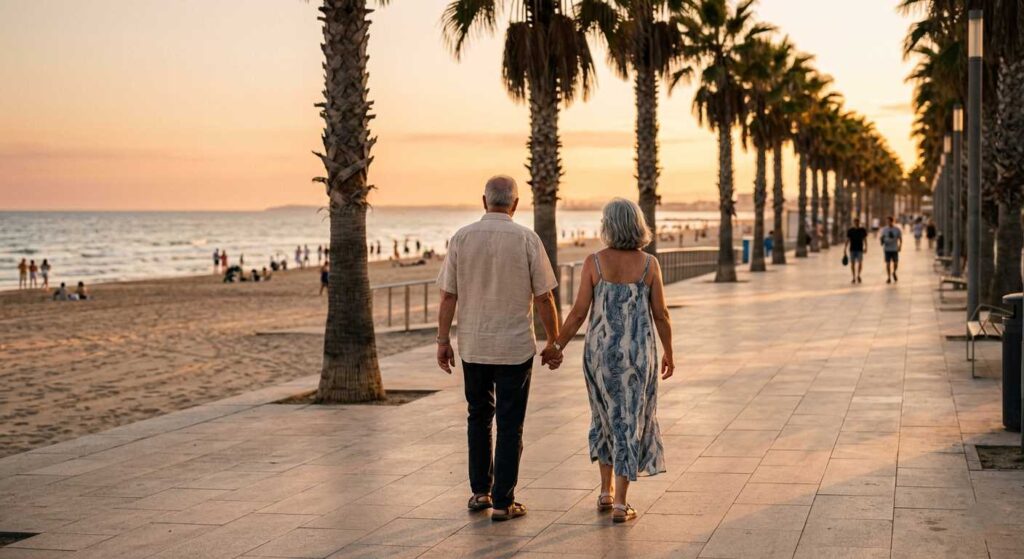
If you’re staying more than a week, consider renting an apartment near Malvarrosa beach. The beach promenade is completely flat and lined with restaurants. The tram (Line 4) connects you to the city center in 20 minutes. This neighborhood provides the kind of daily routine — morning walk on the promenade, coffee at a seafront cafe, afternoon rest — that makes Valencia feel like living rather than visiting.
Price range: Furnished apartments €800–€1,400/month, €60–€120/night for shorter stays.
🚌 Getting Around Valencia: The Senior’s Transport Guide
Valencia has one of the most senior-friendly public transport systems in Spain. In this Seniors’ Guide to Valencia, we’ve broken down the transport options that prioritize comfort and ease of use.
🎫 The Tarjeta Dorada — Essential for Seniors Over 60
The Tarjeta Dorada is a national senior discount card available to anyone over 60. For just €6/year, it provides 40% off all Renfe (national rail) train tickets. Purchase it at Valencia’s Estació del Nord station with your passport. Day trips from Valencia — to Xàtiva’s medieval castle, the rice fields of Albufera, or the hilltop town of Sagunto — become genuinely affordable with this card.
🚌 EMT City Buses
Valencia’s EMT bus network covers every neighborhood with low-floor, air-conditioned buses. Every bus has designated spaces for wheelchairs and mobility aids. The SUMA integrated transport card works across buses, metro, and trams — load it at any metro station and tap to enter. Fares: €1.50/trip, or €8.50 for a 10-trip card.
🚇 Metro and Tram
Valencia’s metro has elevator access at all main stations. Line 4 of the tram runs above ground through the old riverbed — a scenic and completely flat route that takes you from the city center directly to Malvarrosa beach. It’s one of the most pleasant transit rides in Europe: quiet, air-conditioned, with views of the Turia Gardens park along the way.
🚕 Taxis and Cabify
Valencia taxis are metered, clean, and reasonably priced — a cross-city ride rarely exceeds €10–€12. Cabify (Spain’s equivalent of Uber) operates throughout Valencia with app-based pricing. Both options are reliable for seniors who prefer door-to-door service for evening outings or when carrying luggage.
🚲 Cycling — Optional for Confident Seniors
Valencia has 150+ kilometers of dedicated cycle lanes, and the Turia Gardens park is completely closed to cars. Valenbisi (Valencia’s bike-share system) and several rental shops offer bikes at €5–€15/day. The city is so flat that cycling is genuinely accessible for seniors without significant joint concerns — but it’s entirely optional. The bus and tram cover everything.
| Transport | Cost | Senior Rating | Best For |
|---|---|---|---|
| EMT Bus | €1.50/trip | ⭐⭐⭐⭐⭐ | Daily city navigation |
| Tram Line 4 | €1.50/trip | ⭐⭐⭐⭐⭐ | City center to beach |
| Metro | €1.50–€2.50 | ⭐⭐⭐⭐ | Airport, outer neighborhoods |
| Taxi / Cabify | €6–€15 | ⭐⭐⭐⭐⭐ | Evening outings, luggage |
| Renfe trains (day trips) | €5–€15 (40% off with Tarjeta Dorada) | ⭐⭐⭐⭐⭐ | Xàtiva, Sagunto, Albufera |
🗺️ What to See: The Senior’s Prioritized Attraction Guide
Visual Exploration: Top Destinations in Valencia for 2026
To help you visualize your trip, this Seniors’ Guide to Valencia includes a curated video tour of the city’s top attractions. From the futuristic City of Arts and Sciences to the historic charm of the Old Town, see why Valencia is the perfect unhurried destination for your next adventure.
Valencia has more attractions than a week can hold. Here’s what’s genuinely worth your time and energy — honest about the physical demands of each:
🥇 Don’t Miss
Key attractions in Valencia include the City of Arts and Sciences, Turia Gardens, Malvarrosa Beach, and Valencia Cathedral. These locations are known for their accessibility, flat walking paths, and senior-friendly facilities, making them ideal for relaxed exploration.
Mercado Central (Central Market)
One of the most beautiful covered markets in Europe — a 1928 modernist building with stained glass domes sheltering 1,200 market stalls. Arrive at 10am on a weekday when the produce vendors are fully stocked and the crowds haven’t arrived yet. Completely flat, well-ventilated, with seating areas throughout. Budget an hour — you’ll want to try things. The best fresh orange juice you’ll ever drink is €1.50 at the juice stalls near the main entrance.
La Ciudad de las Artes y las Ciencias (City of Arts and Sciences)
A futuristic architectural complex that genuinely earns the photographs. The Oceanogràfic — Europe’s largest aquarium — and the Science Museum (Príncipe Felipe) are both world-class. Mobility note: The entire complex is flat and has elevator access throughout. Golf cart transfers are available for visitors who need them — ask at the main entrance. Budget a full day or split across two visits.
Turia Gardens Park
Nine kilometers of park running through the city on the former riverbed. Completely flat, completely car-free, lined with benches, cafes, and sports facilities. This is where Valencia’s daily life happens — joggers, cyclists, families, seniors doing their morning walk. The section near the Palau de la Música has fountains and particularly good cafe seating. A morning spent here is one of the most pleasurable things you can do in Valencia.
Valencia Cathedral and La Seu
The cathedral houses what many believe is the Holy Grail — visited by four popes, the golden chalice is displayed in a dedicated chapel. Climbing the Miguelete bell tower (207 steps, narrow spiral staircase) is not recommended for seniors with heart conditions or significant knee problems. The cathedral itself is entirely accessible and genuinely impressive.

🥈 Worth Your Time
Museo de Bellas Artes (Fine Arts Museum) — Free admission. One of Spain’s finest collections outside the Prado. Air-conditioned, completely accessible, and rarely crowded. A perfect afternoon activity when temperatures peak.
El Carmen neighborhood — Valencia’s bohemian arts district, full of street art, independent cafes, and small galleries. More atmospheric than the tourist center. Cobblestone streets in some areas — wear appropriate footwear.
Albufera Natural Park day trip — The rice paddy wetlands south of Valencia where paella was invented. A 30-minute bus ride from the city center. Boat tours on the lagoon are flat and accessible. The village of El Palmar serves the most authentic paella you’ll find anywhere.
🍽️ What to Eat in Valencia: The Honest Food Guide
Valencia’s food culture is one of the strongest arguments for visiting. This is not tourist food — it’s a genuine culinary tradition that produces some of the best eating in Europe.
🥘 The Paella Question
Valencia is where paella comes from — which means Valencians have very specific opinions about what it should contain (chicken, rabbit, flat green beans, garrofón beans, tomato, saffron) and what it absolutely should not (seafood, chorizo, onion). The version served in Valencia is different from what most Americans have eaten under that name.
Where to eat it: The most authentic paella experience is at the restaurants in El Palmar, the village in Albufera Natural Park where the dish originated. In the city, look for restaurants that serve paella only at lunch (the traditional time) and only for a minimum of two people — these signals indicate authenticity. Avoid any restaurant in the tourist center with a paella photo on an outdoor menu board.
For seniors with seafood preferences or shellfish allergies: ask for Arroz del Senyoret (Gentleman’s Rice) — peeled seafood rice, easier to eat and equally delicious.
🍊 Horchata and Fartons
Valencia’s signature drink is horchata — a cold, sweet milk made from tiger nuts (not related to tree nuts, safe for most nut allergies). Paired with a farton (a soft, sweet pastry for dipping), it’s served at dedicated horchaterías throughout the city. Horchatería Santa Catalina near the Central Market is the most famous. Afternoon hours, around 5–6pm, are the traditional time.
🦐 Seafood and Tapas
Valencia’s proximity to the Mediterranean means exceptional fresh seafood at prices significantly below what you’d pay in coastal tourist towns. The neighborhood of La Marina (the old port area) has excellent seafood restaurants with terrace seating and sea views. Gambas al ajillo (garlic prawns), pulpo a la gallega (octopus), and croquetas (croquettes) are Valencia tapas staples worth seeking out.
☕ Coffee Culture
Spanish coffee culture operates on specific rules that are worth knowing. A café con leche (half espresso, half hot milk) is the standard morning coffee. An Agua de Valencia — a local cocktail of cava, orange juice, vodka, and gin — is Valencia’s signature aperitif and entirely optional but worth trying once at a Plaza de la Reina terrace.
🏖️ The Beaches: What Seniors Need to Know
Valencia’s beaches are different from the crowded resort beaches of the Costa del Sol or the rocky coves of the Costa Brava. They’re urban beaches — wide, flat, fully serviced, and easily reached by public transport from the city center.
Malvarrosa and La Patacona are the primary beaches, connected by a continuous flat promenade lined with restaurants and cafes. The promenade is entirely accessible for mobility aids. The beaches have:
- Free sun lounger and umbrella rental stations for seniors and people with disabilities during summer months
- Cruz Roja (Red Cross) beach posts providing amphibious wheelchairs and staff assistance for swimming from June through September
- Accessible changing facilities and showers at regular intervals along the promenade
- Flat sand that’s firmer than typical beach sand — more walkable for seniors managing balance concerns
Practical tip: Go on weekday mornings in summer — the beaches are significantly less crowded before noon on weekdays. By 11am in July and August, temperatures can exceed 90°F and beach crowds peak. Early morning or after 5pm are the most comfortable times for seniors to be at the beach in summer.
💰 Honest Budget Guide: What Valencia Actually Costs in 2026
| Category | Budget | Mid-Range | Comfortable |
|---|---|---|---|
| 🏨 Hotel (per night) | €50–€80 | €90–€140 | €150–€250 |
| 🍽️ Food (per day) | €25–€40 | €45–€70 | €75–€120 |
| 🚌 Transport (per day) | €5–€10 | €10–€18 | €15–€30 |
| 🎭 Activities (per day) | €8–€15 | €15–€30 | €30–€60 |
| 💰 DAILY TOTAL (per person) | €88–€145 | €160–€258 | €270–€460 |
Money-saving notes for seniors: The menú del día (daily set menu) available at most restaurants for lunch — typically €12–€18 for three courses including wine or water — is one of the best value propositions in European travel. A full, excellent lunch for €15 at a local restaurant that charges €40 for the same dishes à la carte in the evening. Many of Valencia’s major museums offer free admission on Sunday afternoons and have permanent senior discounts with ID.
For comparison with other European destinations, see our guide on Budget-Friendly European Destinations for Senior Travelers.
🗓️ A Suggested 7-Day Valencia Itinerary for Seniors
Day 1 — Arrival and Orientation: Check in, short walk around Plaza de la Reina to get your bearings. Evening tapas at a neighborhood bar. Early night — rest matters.
Day 2 — Old Town Morning, Gardens Afternoon: Mercado Central at 10am (pre-crowd). Valencia Cathedral. Lunch at a menú del día restaurant. Afternoon walk through the Turia Gardens toward the City of Arts and Sciences — you don’t need to go in today, just see the exterior.
Day 3 — City of Arts and Sciences: Full morning and early afternoon at the Oceanogràfic or Science Museum. This is a big walking day — wear comfortable shoes and use the golf cart transfer if available. Rest afternoon. Dinner in the La Marina port area.
Day 4 — Albufera Day Trip: Bus or taxi to Albufera Natural Park. Boat tour on the lagoon. Paella lunch in El Palmar village. Back to Valencia by mid-afternoon. This is the best day of most seniors’ Valencia trips.
Day 5 — Beach Day: Tram Line 4 to Malvarrosa. Morning walk on the promenade. Beach time. Long seafood lunch at a promenade restaurant. Afternoon rest. This is Valencia at its most pleasurable pace.
Day 6 — El Carmen Neighborhood and Museo de Bellas Artes: The bohemian arts quarter in the morning — street art, independent cafes, the IVAM contemporary art museum. Free afternoon at the Bellas Artes. Horchata and fartons at Horchatería Santa Catalina at 5pm.
Day 7 — Day Trip to Xàtiva (with Tarjeta Dorada): 40-minute Renfe train south to Xàtiva — a hilltop medieval city with a spectacular castle. The town itself is flat and accessible; the castle requires a steep climb (optional). Back for final Valencia dinner.
⚠️ Practical Tips Every Senior Should Know Before Arriving
- 🌡️ July and August are genuinely hot. Temperatures regularly exceed 90°F with high humidity. If you’re visiting in summer, plan all outdoor activity before noon and after 6pm. Air conditioning is standard in hotels but not always in older restaurant dining rooms.
- 👟 Footwear matters more than you think. Flat-soled walking shoes with ankle support are essential. Some El Carmen streets have uneven cobblestones, and the Turia Gardens paths transition between different surface types.
- 🏧 Use Wise or Charles Schwab for cash. Spanish ATMs charge fees for foreign cards. Wise (a prepaid travel card) and Charles Schwab’s international checking account both provide zero-fee withdrawals at current exchange rates.
- 🍽️ Eat on Spanish time. Lunch is the main meal, served 2–4pm. Dinner begins at 9pm. Restaurants that are open at 6pm for dinner are serving tourists. The best food experiences happen when you adapt to local hours.
- 💊 Spanish pharmacies are excellent. Spanish farmacías — identified by a green cross — are staffed by qualified pharmacists who can advise on and provide many medications available only by prescription in the US. For minor health concerns, a pharmacy visit before a doctor’s office visit is the local norm.
- 📱 Download the EMT Valencia app. Real-time bus tracking, journey planning, and SUMA card top-up in English. Free and genuinely useful for navigating Valencia’s bus network.
🔗 Planning the Rest of Your European Adventure
Valencia pairs beautifully with several other senior-friendly destinations reachable by train:
- Madrid: 1 hour 40 minutes by AVE high-speed train (€40–€70 with Tarjeta Dorada discount)
- Barcelona: 3 hours 10 minutes by AVE (€35–€65 with discount)
- Alicante: 1 hour 30 minutes — gateway to the Costa Blanca for beach-focused seniors
For building a broader European itinerary around Valencia, see our guide on Budget-Friendly European Destinations for Senior Travelers. For seniors considering longer stays in Europe or the possibility of living abroad part of the year, our guide on the Digital Nomad Lifestyle for Seniors covers the full picture of slow travel and location-independent living after 60.
Valencia rewards the senior traveler who comes without a rigid agenda and lets the city’s rhythm set the pace. The paella takes two hours. The afternoon is for rest. The evening begins when the heat breaks. This is not a city that makes you feel like you’re falling behind.
Book the flight. The Turia Gardens are waiting. The paella at El Palmar is waiting. The horchata is cold and the afternoon is long. Go.
Frequently Asked Questions
Yes — Valencia is one of Spain’s most accessible cities. All EMT city buses have ramps and designated wheelchair spaces, most metro stations have elevator access, and the city center is extensively flat and pedestrianized. The Turia Gardens park and the Malvarrosa beach promenade are fully accessible. The City of Arts and Sciences complex offers golf cart transfers for visitors with mobility limitations. Some streets in El Carmen neighborhood have uneven cobblestones that require care.
April through June and September through October offer the ideal combination of warm weather (65–78°F), lower tourist crowds, and full availability of all attractions and beach services. July and August are genuinely hot (regularly 90°F+) with high humidity and peak crowds — manageable but more demanding for seniors sensitive to heat. March and November are pleasant for walking but the beaches are quiet.
A comfortable 7-day trip for two — mid-range hotel, daily meals, transport, and attractions — typically costs €2,200–€3,400 total, excluding flights. This works out to approximately $2,400–$3,700 at current exchange rates. Valencia is considerably less expensive than comparable European city trips to Paris, Amsterdam, or Barcelona, making it one of the best value-for-quality destinations in Western Europe for American senior travelers.
Some do, some don’t. The Tarjeta Dorada train discount (40% off Renfe trains) is available to anyone over 60 regardless of nationality — purchase it at any Renfe station with your passport for €6. Many Valencia museums offer reduced admission for seniors over 65 with ID. Bus and metro fares don’t have special tourist senior rates, but the SUMA card’s standard fares are already very affordable. Always carry ID and ask at each attraction — policies vary.
Valencia has a low crime rate and is generally considered safe for tourists. The main risks are standard urban pickpocketing in crowded areas — particularly the Central Market, La Lonja de la Seda, and busy bus stops. Keep wallets in front pockets or a crossbody bag rather than a backpack. The tourist areas are well-lit and active in the evenings. Valencia does not have the aggressive street scam culture found in some larger Spanish and Italian cities.
Last reviewed and updated: April 29, 2026 by the SeniorGig Team.