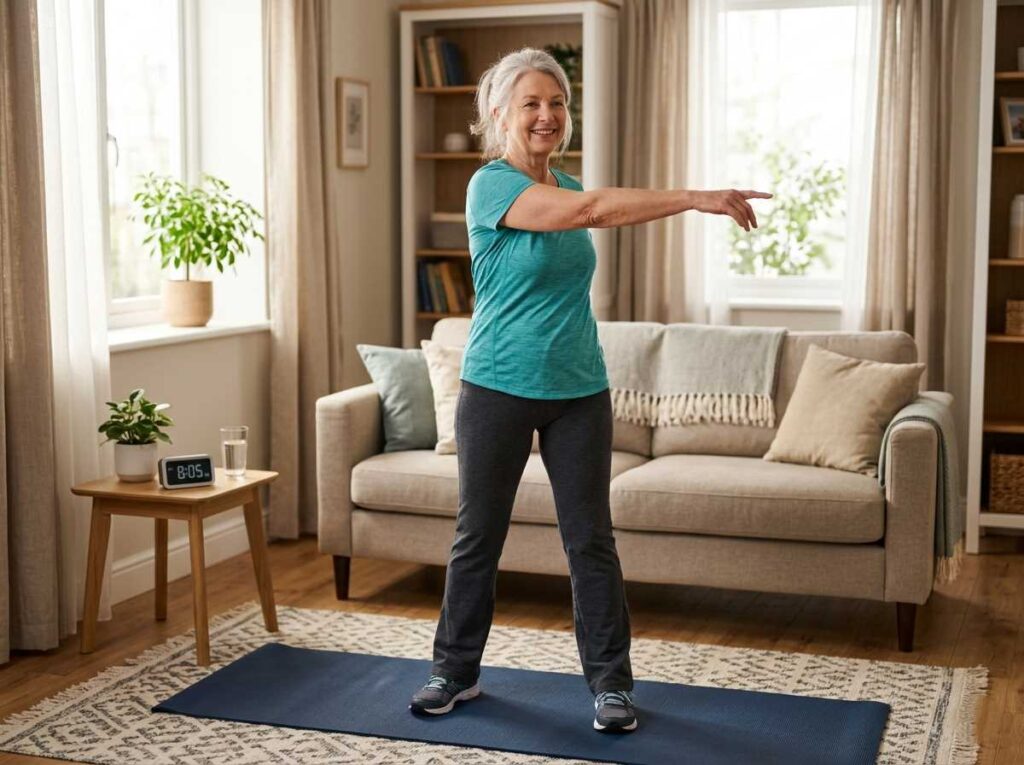
I know the feeling of waking up and sensing that your body has turned into a block of wood overnight. You try to reach for your glasses, and your shoulder clicks. You step out of bed, and your knees protest. For years, I thought this was just the unavoidable tax of aging. But it isn’t. The truth is, your joints are like hinges that need daily oiling. Engaging in a structured routine of Morning Exercises for Seniors is the single best way to “oil” those hinges. You don’t need to be a marathon runner. You just need to move your body in ways that respect your current limits while pushing gently for more freedom.
Why Morning Movement is a Biological Necessity
When you sleep, your body enters a state of repair, but it also becomes stagnant. Your fascia—the connective tissue surrounding your muscles—can become sticky and tight. This leads to that morning stiffness we all dread. Morning movement breaks these “fuzz” bonds and increases the temperature of your muscle tissues.
The Role of Synovial Fluid
Think of synovial fluid as your body’s motor oil. It sits inside your joint capsules. During rest, it thickens. When you begin your morning routine, the movement thins this fluid, allowing your joints to glide without friction. Dr. Robert Ashley from UCLA Health notes that movement is the only way to effectively distribute this fluid across the cartilage. Without it, you are literally grinding bone on bone.
Impact on the Nervous System
Early exercise wakes up your proprioceptors. These are tiny sensors in your limbs that tell your brain where your body is in space. As we age, these sensors can get sluggish, which leads to stumbles and falls. By performing balance-focused moves early, you “recalibrate” your brain for a safer day. This mental clarity is a perfect companion when you sit down to tackle profitable ChatGPT jobs.
Phase 1: Bed-Based Mobility (The “Before You Stand” Routine)
You should never rush out of bed. Sudden vertical movement can cause a drop in blood pressure, leading to dizziness. Start your Morning Exercises for Seniors while you are still lying down.
1. Ankle Pumps and Circles
Extend your legs straight. Point your toes away from you, then flex them back toward your shins. Do this 20 times. Follow up with 10 slow circles in each direction.
- Why: This activates the “calf pump,” which pushes blood from your lower extremities back to your heart. It reduces swelling and prevents blood clots.
2. Gentle Knee-to-Chest
Pull your right knee toward your chest. Hold for 15 seconds. Repeat with the left. Finally, pull both knees in.
- Why: This flattens the lumbar spine against the mattress, releasing tension in the lower back that accumulates from sleeping in one position.
3. Glute Bridges
Bend your knees and keep your feet flat on the bed. Lift your hips toward the ceiling. Hold for 2 seconds and lower slowly. Do 10 repetitions.
- Why: It “wakes up” your glutes, which are the primary muscles used for standing up. Weak glutes are a leading cause of knee and back pain.
Phase 2: Core Stability and Fall Prevention
Once you are on your feet, your focus should shift to balance. Falls are the leading cause of injury-related hospitalizations for seniors. You can build an “internal suit of armor” by strengthening your core.
4. The Counter-Top Squat
Stand in front of your kitchen counter and hold the edge lightly. Lower your hips back as if sitting in a chair. Keep your weight on your heels.
- Why: Squatting is a functional movement. You need it to get off the toilet or out of a car. Strengthening these muscles ensures you maintain your independence.
5. Single-Leg Stance (The “Flamingo”)
Hold onto a chair and lift one foot off the ground. Try to balance for 30 seconds. Switch legs.
- Expert Tip: Once you get good at this, try touching the chair with only one finger, then none. This builds the micro-muscles in your ankles that prevent falls.
6. Heel-to-Toe “Tightrope” Walk
Walk 10 steps in a straight line, placing your heel directly against the toe of your other foot.
- Why: This challenges your vestibular system (balance center). It is far more effective than just walking normally. Improving your balance here will make your remote work for retirees much more comfortable as you move around your home office.
Phase 3: Upper Body Freedom and Posture
If you spend time on a computer or phone, you likely have “forward head posture.” This puts immense strain on your neck and can lead to tension headaches.
7. Wall Angels
Stand with your back against a wall. Tuck your chin. Lift your arms so your elbows and wrists touch the wall. Slide them up and down like you are making a snow angel.
- Why: This is the ultimate “posture corrector.” It opens the chest and strengthens the muscles between your shoulder blades.
8. Doorway Chest Stretch
Stand in a doorway and place your forearms on the frame. Step forward gently until you feel a stretch across your chest. Hold for 30 seconds.
- Why: Tight chest muscles pull your shoulders forward. Opening them up improves your breathing capacity and reduces neck pain.
Exercise Modifications for Common Ailments
| Ailment | Modification | Focus |
| Arthritis | Perform moves in warm water or do seated versions | Joint lubrication without impact |
| Osteoporosis | Avoid deep spinal twists or forward folds | Resistance training to build bone |
| Hip Replacement | Avoid crossing your legs or bending past 90° | Controlled, linear movements |
| Vertigo | Perform all exercises seated or near a wall | Safety and slow transitions |
Recommended Video Resources
Sometimes you need a visual guide to follow along. I recommend these high-quality, senior-focused creators:
“10 Minute Morning Stretch for Seniors” by Yes2Next: Direct, no-fluff movements that are easy to follow.
Creating a Sustainable Routine
Consistency is your superpower. Doing 10 minutes every day is 100 times better than doing 60 minutes once a week. If you are exploring best side hustles for retirees, you know that small, daily actions lead to big results. Exercise is no different.
The 3-Step Habit Loop
- The Trigger: Put your sneakers next to your bed or by the coffee pot.
- The Action: Start with just the bed-based ankle pumps.
- The Reward: Take a moment to feel the blood flowing through your limbs. Enjoy that “loose” feeling.
Frequently Asked Questions For Morning Exercises For Seniors
Most experts suggest doing gentle mobility before breakfast to wake up the body. However, if you have blood sugar issues, have a small snack (like a banana) first.
As long as there is no pain, “crepitus” (cracking or popping) is generally harmless air bubbles or tendons moving over joints. If it hurts, stop the movement.
Absolutely. Many of these moves, like shoulder rolls, ankle pumps, and neck stretches, can be performed while seated.
You will feel less stiff within the first three days. Significant improvements in balance and strength usually take 4 to 6 weeks of daily practice.
No. At this stage, your body weight is your best tool. As you get stronger, you can use household items like water bottles for extra resistance.
External References: For Morning Exercises For Seniors