

Here’s something the affiliate marketing for seniors industry doesn’t want you to know. The vast majority of affiliate marketing content online is written by young people selling courses about affiliate marketing to other young people who want to quit their jobs. It’s a self-referential ecosystem built on hype, inflated income claims, and a fundamental misunderstanding of where affiliate marketing actually creates value.
Real affiliate income — the kind that compounds over years and requires no ongoing hustle — comes from one thing: genuine expertise recommending genuinely useful products to people who trust your opinion.
Seniors have this in abundance.
Eleanor retired at 64 after 27 years as a registered dietitian in Minnesota. By starting a simple website and YouTube channel about nutrition for people managing Type 2 diabetes, she focused on a topic she knew better than almost anyone in her state. The content included reviews for books, kitchen tools, meal planning apps, and glucose monitors with direct links to her recommendations on Amazon.
Interestingly, she never thought of it as ‘affiliate marketing’. Instead, her perspective was that she was simply doing what she’d always done: recommending useful things to people who needed help managing a difficult health condition.
Her Amazon affiliate earnings last year: $31,400. From recommendations she would have made for free anyway, to people who genuinely needed them.
That’s what affiliate marketing looks like when it works correctly. This guide explains how to build exactly that — starting from scratch, explained completely.
What Is Affiliate Marketing? The Complete Plain-Language Explanation
Affiliate marketing is earning a commission by recommending someone else’s product or service. When someone clicks your recommendation link and makes a purchase, the seller pays you a percentage of the sale — typically 3% to 20% depending on the product category.
The mechanics are simple:
- You join an affiliate program — most are free to join
- You receive a unique tracking link for each product you recommend
- You share that link in your content — blog posts, YouTube videos, newsletters, social media
- When someone clicks your link and buys, you earn a commission automatically
- The seller ships the product and handles all customer service — you are never involved in the transaction beyond the recommendation
There is no need to handle products yourself. Beyond the recommendation, you never deal with customers or process payments. The process is simple: you recommend, someone buys, and you earn.
Why Affiliate Marketing Is Genuinely Passive Income
A blog post you wrote in 2023 recommending a specific glucose monitor is still earning commissions in 2026 every time someone finds it via Google search and clicks your link. A YouTube video you recorded 18 months ago reviewing a Medicare supplement insurance comparison service earns commissions every day viewers watch it. The work is front-loaded; the income continues.
This is different from consulting, freelancing, or most other senior income streams — which require active ongoing effort to generate ongoing income. Affiliate income, once built, runs in the background. For more on passive income structures that work for seniors, see our guide on Passive Income for Seniors.
The Affiliate Marketing Advantage That Seniors Have and Rarely Realize
Most affiliate marketing guides treat the recommender as interchangeable — as if it doesn’t matter who is doing the recommending, only that the link is clicked. This is profoundly wrong, and it’s why most affiliate marketers earn very little while a small number earn significant incomes.

The single most important variable in affiliate marketing success is trust. People buy through affiliate links from sources they trust. They don’t buy from random websites populated with keyword-stuffed reviews written by someone who has never used the product.
Trust comes from demonstrated expertise. And demonstrated expertise comes from years of doing something seriously.
A retired cardiologist recommending heart health monitoring devices. A former financial planner recommending retirement income books. An experienced gardener recommending specific tools. A retired teacher recommending educational resources. In each case, the recommender’s authority is visible, credible, and backed by decades of professional or personal immersion in the subject.
This is precisely what Google’s current search algorithms reward and what younger affiliate marketers spend years trying to build. Seniors start with it.
The Affiliate Programs Worth Joining in 2026
There are thousands of affiliate programs. Most seniors need to know about five or six. Here’s what actually matters:
🛒 Amazon Associates — The Starting Point for Almost Everyone
Amazon’s affiliate program is the most practical starting point for most senior affiliate marketers because Amazon sells almost everything, buyers already trust Amazon, and the commission attribution window (24 hours after a link click) means you earn on anything a buyer purchases — not just the specific product you linked.
Commission rates: 1% to 10% depending on category. Physical products average 3% to 5%; luxury beauty and Amazon devices pay higher.
Practical example: You recommend a specific blood pressure monitor in a blog post. A reader clicks your link, decides to buy a different model, and also adds a kitchen scale and a book to their cart. You earn commission on all three — even though you only linked to the blood pressure monitor.
How to join: Go to affiliate-program.amazon.com and apply with your website or YouTube channel URL. Approval typically takes 1 to 3 business days. You need to make at least 3 qualifying sales within 180 days of joining to maintain your account.
💊 Health and Wellness Programs (Higher Commissions)
Health supplement companies, fitness equipment manufacturers, and wellness service providers typically pay 10% to 30% commissions — significantly higher than Amazon. For seniors with credibility in health-adjacent niches, these programs can generate substantial income from relatively modest traffic.
Examples: Thorne Research (supplements), Life Extension, Vitacost, and direct programs run by specific wellness brands. Find these by searching “[product category] affiliate program” or through affiliate networks like ShareASale and CJ Affiliate.
💰 Financial Services Programs (Highest Commissions)
Financial products — insurance comparisons, investment platforms, tax software, credit monitoring services — pay some of the highest affiliate commissions available. A single referral to a Medicare supplement insurance comparison service can pay $50 to $150. A referral to a financial planning service can pay $100 to $500.
These commissions reflect the high lifetime value of financial customers. For seniors with credibility in finance, retirement planning, or insurance, financial affiliate programs can generate significant income from relatively small audiences.
Programs worth exploring: PolicyGenius (insurance comparison, $54–$150/referral), Credible (student loan refinancing, $200/referral for relevant audiences), and various tax software programs that pay $10–$30 per software purchase referral.
📚 Book and Course Affiliate Programs
Amazon Associates covers book recommendations automatically. For online courses, Udemy’s affiliate program pays 10% to 15% on course sales. Coursera’s affiliate program pays 45% on subscriptions. For seniors recommending educational resources in their professional domain, these programs can generate meaningful recurring income.
🛠️ Software and SaaS Programs (Recurring Commissions)
Software affiliate programs often pay recurring commissions — you earn every month a referred customer remains a subscriber. Referring a single user to a project management tool, a CRM platform, or a health tracking app at 20% monthly commission means that one referral keeps earning indefinitely. For seniors with business-oriented audiences, SaaS affiliate programs represent some of the most attractive long-term income structures available.
Where to Put Your Affiliate Links: The Platforms That Work Best for Seniors
Affiliate links earn money when people click them. People click them when they trust your recommendation and are actively seeking that type of product. Here’s where senior affiliate marketers build the most effective presence:
📝 A Simple Blog or Website
A blog is the foundation of most successful senior affiliate marketing practices — for one reason that trumps all others: Google. When someone searches “best glucose monitor for seniors” or “Medicare supplement insurance comparison” or “home blood pressure monitor review,” they are actively looking to buy. A well-written, expert blog post that appears in those search results and recommends specific products is affiliate marketing at its most efficient.
You don’t need a complex website. A simple WordPress.com or Squarespace site with 20 to 30 well-written, expert articles in your niche is a functional affiliate marketing foundation. For how to build this, see our guide on How to Set Up a Simple Website for Seniors.
📹 YouTube Channel
YouTube is the second largest search engine in the world — and affiliate links in video descriptions convert extremely well because viewers have just spent 10 minutes watching you demonstrate expertise. Raymond’s electrical channel earns $400 to $600 per month from Amazon affiliate links to tools he mentions in videos. Every video description includes links to the specific tools he references. For how to build a YouTube channel, see our YouTube for Seniors guide.
📧 Email Newsletter / Substack
An email newsletter audience is the most valuable affiliate marketing audience because subscribers have explicitly chosen to receive your recommendations. Open rates for email newsletters are typically 30% to 50% — compared to 2% to 5% organic reach for social media posts. A Substack newsletter of 1,000 engaged subscribers in a high-purchase-intent niche can generate significant affiliate income from occasional, genuine product recommendations. For more, see our Substack for Seniors guide.
💼 LinkedIn Articles and Posts
For seniors with professional audiences and business-oriented niches, LinkedIn is an underused affiliate marketing channel. Product recommendations in the context of professional expertise — a former HR director recommending HR software, a retired accountant recommending tax tools — convert well because the professional context establishes immediate credibility. LinkedIn’s policy allows affiliate links in articles and posts, though transparent disclosure is required.
The Legal and Ethical Rules Every Senior Affiliate Marketer Must Follow
This section is not optional. The FTC (Federal Trade Commission) requires anyone earning commissions from product recommendations to clearly disclose that relationship to their audience. Failure to disclose is not just an ethical problem — it’s a legal one that can result in significant penalties.
⚠️ FTC Disclosure Requirements — What You Must Do:
- Every page, post, or video that contains affiliate links must clearly state that it includes affiliate links and that you earn a commission if readers purchase through them
- The disclosure must be clear and prominent — not buried in small print at the bottom of the page
- On YouTube, both the video itself and the description must contain disclosure
- Standard language: “This post contains affiliate links. If you purchase through these links, I may earn a small commission at no additional cost to you.”
The FTC’s current guidance on affiliate disclosures is available at ftc.gov.
Beyond the legal requirement, disclosure is good practice for a more important reason: it builds trust rather than eroding it. Readers who know you earn commissions don’t stop trusting your recommendations — they actually respect the transparency. What destroys trust is undisclosed commercial relationships discovered by readers after the fact.
The Ethics of Recommending Products You Haven’t Used
The most successful senior affiliate marketers only recommend products they have genuinely used or thoroughly researched from a position of professional expertise. Recommending a product purely for its commission rate — without genuine knowledge of its quality — is both ethically problematic and commercially counterproductive. Readers who buy your recommendation and find it disappointing don’t return to your site or channel.
Eleanor reviews every product she recommends from the perspective of her 27 years as a dietitian. When she recommends a glucose monitor, she has studied its accuracy data, its ease of use for older adults, and its integration with diabetes management apps. Her recommendation carries weight because it reflects professional judgment, not financial incentive.
Step-by-Step: Building Your First Affiliate Marketing Income Stream
Week 1: Choose Your Niche and Affiliate Programs
Identify the specific topic where your expertise, your audience’s purchase intent, and affiliate commission opportunities align. Then join 2 to 3 affiliate programs relevant to that niche. Start with Amazon Associates — you’ll need a website or YouTube channel URL to apply. Add one or two specialized programs in your category once you’re approved.
Week 2–4: Create Your Platform
Build the platform where your affiliate content will live. For most seniors, this is either a simple blog or a YouTube channel — or both. Your first five to ten pieces of content should be “best of” posts or videos in your niche — “Best Glucose Monitors for Seniors in 2026,” “Top 5 Medicare Supplement Comparison Tools,” “The Home Blood Pressure Monitor I Actually Recommend.” These high-purchase-intent content pieces drive the most affiliate clicks.
Month 2–3: Build Your Content Library
Publish consistently — one to two pieces of quality content per week. Mix product-specific content (reviews and comparisons) with informational content (how-to guides, explanatory posts) that builds your authority and attracts organic search traffic. The informational content builds trust; the product content monetizes it.
Use Perplexity AI to research current product specifications, pricing, and alternatives before writing reviews. Use Claude to help structure and draft content efficiently. Your expertise provides the judgment; AI tools reduce the time required for everything around it. See our Perplexity AI for Seniors guide for how to use it for research.
Month 3–6: Optimize and Expand
Review your affiliate program dashboards monthly. Which pieces of content are generating clicks? Which products are converting buyers? Double down on the content types and product categories that are working. Update older posts to reflect current product availability and pricing — Google rewards fresh, accurate content and penalizes outdated information.
Add email capture to your website — an invitation for visitors to receive a free resource in exchange for their email address. A growing email list is the most valuable long-term asset an affiliate marketer can build, because it reduces dependence on Google’s algorithm or YouTube’s distribution for reaching your audience.
Realistic Income Expectations From Affiliate Marketing for Seniors
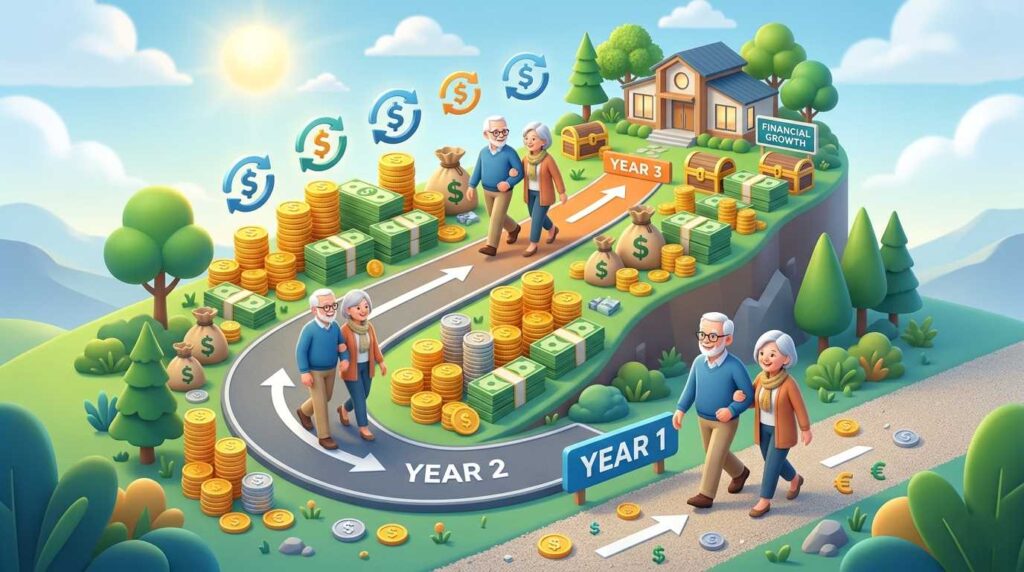
Eleanor’s $31,400 is real — and it took three years to reach that level. Here’s what a realistic trajectory looks like:
| Timeline | Monthly Income Range | What Drives It |
|---|---|---|
| Months 1–6 | $0–$100 | Building content, establishing search presence |
| Months 7–12 | $50–$400 | Early organic traffic, first consistent conversions |
| Year 2 | $300–$1,500 | Growing content library, compounding search traffic |
| Year 3+ | $1,000–$5,000+ | Established authority, diverse traffic sources, email list |
The income compounds slowly and then accelerates. The seniors who reach significant affiliate income are those who treated it as a long-term investment — publishing consistently for 24 to 36 months regardless of early results — rather than expecting fast returns.
For context: Eleanor published 127 blog posts and 94 YouTube videos over her first three years. Her monthly content investment was 15 to 20 hours. Her monthly income from that investment is now $2,600 to $3,100 — and it requires approximately two hours of maintenance per month to sustain.
For how affiliate income interacts with Social Security benefits and tax obligations, see our guides on Earning Income While on Social Security and Tax Tips for Senior Freelancers.
While numbers and guides are helpful, nothing beats hearing the truth from someone who has actually walked the path. I found this video of a fellow retiree sharing their personal journey into affiliate marketing. Watching their first-hand experience might be the most valuable minutes you spend today—it proves that your expertise truly is your greatest asset.
Affiliate Marketing Mistakes That Cost Seniors Time and Income
These errors appear consistently among seniors who start affiliate marketing but don’t reach meaningful income:
Choosing a niche for commission rates rather than expertise. High-commission niches you don’t know well produce low-quality content that Google ignores and readers don’t trust. Your expertise is your competitive advantage — build around it, not around commission percentages.
Expecting results in 90 days. Affiliate marketing built on organic search traffic takes 12 to 24 months to reach meaningful income levels. The content you publish today earns most of its income in year two and three. Seniors who quit after six months of modest results abandon the investment just before it starts paying significant returns.
Not disclosing affiliate relationships. Beyond the legal requirement, undisclosed affiliates damage reader trust when discovered — and readers discover them. Always disclose, always.
Recommending products without genuine knowledge. A review of a product you haven’t used or researched thoroughly is detectable by experienced readers and punished by Google’s quality algorithms. Your authority is your most valuable asset — protect it by only recommending what you genuinely believe in.
Ignoring email list building. Organic search traffic is algorithm-dependent. An email list is yours regardless of what Google or YouTube does. Building your list from day one protects your income from platform algorithm changes.
Next Steps: Start Your Affiliate Marketing Practice
Affiliate marketing connects directly to every content platform seniors are building:
- Recommend products naturally in your Substack newsletter — see Substack for Seniors.
- Build the website that hosts your affiliate content — read How to Set Up a Simple Website for Seniors.
- Use AI tools to research products and create content efficiently — see Best AI Tools for Seniors.
- For the complete picture of online income after 50, visit our Make Money Online After 50 Master Guide.
Eleanor still sees patients — just not in a clinic. Her website and YouTube channel reach approximately 80,000 people per month. She spends about 15 hours per month creating new content and maintaining what she’s built.
“I spent 27 years recommending things to patients who trusted me,” she says. “I’m still doing that. The only difference is that now, when those recommendations lead to a purchase, I earn something from it.”
You have spent years or decades building expertise that people trust. Affiliate marketing is the mechanism for converting that trust into income — without selling anything, without handling anything, and without pretending to know things you don’t. Start with Amazon Associates this week. Recommend one thing you genuinely believe in. See what happens.
❓ Frequently Asked Questions: Affiliate Marketing for Seniors
Affiliate marketing is earning commissions by recommending products through unique tracking links. When someone buys via your link, you earn 3% to 20% of the sale at no extra cost to them. This model works well for seniors by monetizing the trust and expertise built over decades.
A website is best for long-term organic traffic, but you can also use YouTube, newsletters, or LinkedIn. Many start with a YouTube channel or Substack then add a blog as they grow. The key is having a platform to publish expert content and embed links naturally. Read more in our guide on How to Set Up a Simple Website for Seniors.
Earnings typically range from $300–$1,500 monthly by year two, potentially reaching $5,000+ by year three. Income compounds as your content library and search traffic grow over time. Success comes to those who treat it as a 24 to 36-month project.
Amazon Associates is the ideal starting point due to its product range and buyer trust. After establishing your presence, you can add specialized niche programs in health, finance, or technical tools. These specialized programs often offer higher commission rates than Amazon.
It is entirely legal, but the FTC requires clear disclosure of affiliate relationships. You must state that you earn a commission on any post or video containing affiliate links. Failure to disclose is a legal risk that can lead to significant fines.
Affiliate earnings are self-employment income and count toward Social Security limits for those below full retirement age. In 2026, benefits may be reduced if annual income exceeds $22,320. For more details, see our guide on Earning Income While on Social Security.