
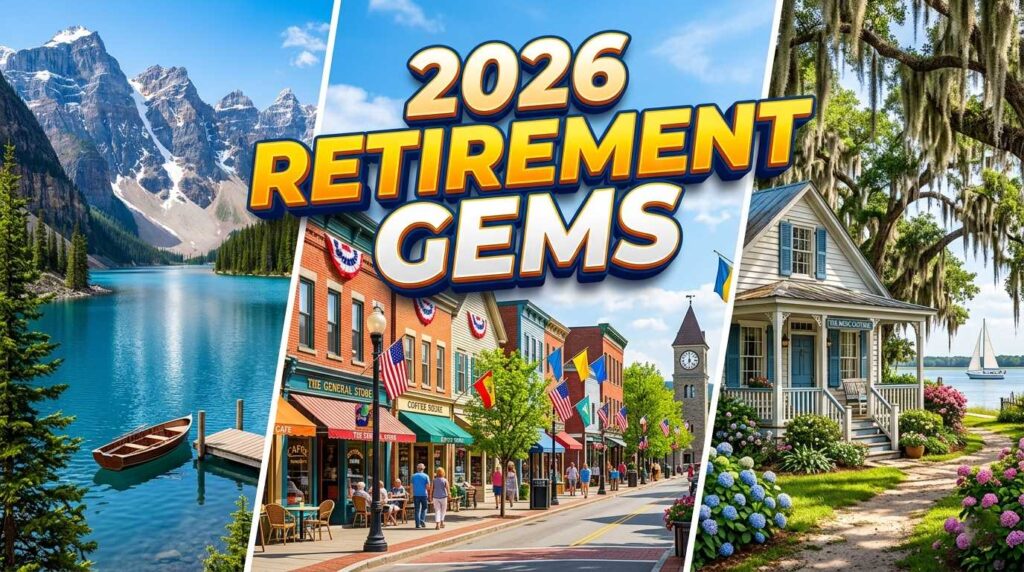
There’s a certain kind of conversation that happens in the months before retirement. If you are searching for the best small towns to retire in the US in 2026, you might find that the room gets quiet when you mention a smaller community—because you’ve discovered a hidden gem.
They’re onto something.
The best small towns to retire in the US in 2026 offer something the usual suspects simply can’t: affordability that’s genuinely sustainable on a fixed income, a pace of life that matches how many retirees actually want to spend their days, and communities where people still know their neighbors’ names. Avoid the heavy traffic. You won’t find $18 avocado toasts here. Most importantly, you will never feel like a tourist in your own city.
We analyzed the official cost of living data and healthcare access metrics to build this best small towns to retire in us 2026 list. These aren’t sleepy backwaters — they’re places where people are actively choosing to build the retirement they actually wanted, rather than the one they defaulted into.

What Makes a Small Town Actually Retirement-Ready?
Before the list, a quick word on criteria — because “small and affordable” isn’t enough on its own. A town can be cheap and also lack a decent hospital within 60 miles, which is a dealbreaker for most retirees over 65.
| Factor | Why It Matters for Seniors | Weight |
|---|---|---|
| Cost of Living | Fixed incomes don’t stretch in expensive markets | ⭐⭐⭐⭐⭐ |
| Healthcare Access | Hospital quality and proximity become critical after 65 | ⭐⭐⭐⭐⭐ |
| State Tax Policy | Some states don’t tax Social Security or pension income | ⭐⭐⭐⭐⭐ |
| Climate | Extreme cold or heat limits mobility and outdoor activity | ⭐⭐⭐⭐ |
| Senior Community | Social connection matters more than most people plan for | ⭐⭐⭐⭐ |
| Walkability & Services | Driving ability decreases with age — proximity matters | ⭐⭐⭐ |
Every town on this list scores well across most of these categories. A few have a specific tradeoff worth knowing about — I’ll flag it clearly when it exists.
Ranking the Best Small Towns to Retire in US 2026
1. Brevard, North Carolina
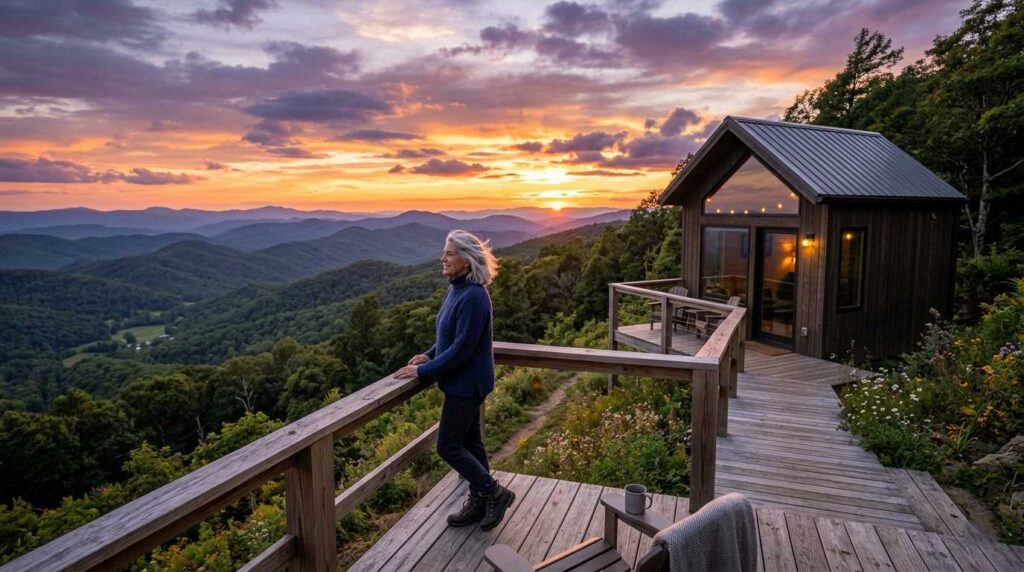
Tucked into the Blue Ridge Mountains about 45 minutes from Asheville, Brevard has been quietly accumulating retirees for a decade without losing the qualities that made it worth moving to. The downtown is genuinely walkable. There’s a legitimate arts scene, a symphony, and a waterfall within 15 minutes of anywhere in town. Median home prices hover around $320,000 — steep compared to 2019, but still manageable compared to most Southeast destinations with this combination of beauty and infrastructure.
North Carolina doesn’t tax Social Security income, and property taxes in Transylvania County are among the lowest in the state. The nearest major medical center is in Asheville — about 40 minutes — which is the one genuine tradeoff here for anyone with significant healthcare needs.
At a Glance: Population ~9,000 · Avg. home price ~$320K · State income tax: No tax on SS · Climate: Four seasons, mild summers · Nearest hospital: 40 min (Asheville)
2. Oxford, Mississippi
Oxford surprises people. It has a university (Ole Miss), which means it has the restaurants, bookstores, cultural events, and general intellectual energy of a much larger place — packed into a town of about 25,000. The cost of living is genuinely low. You can still find a comfortable three-bedroom home for under $250,000 in the neighborhoods outside downtown. Mississippi has some of the most senior-friendly tax policies in the country: no tax on retirement income, no tax on Social Security, and relatively low property taxes.
The summers are hot and humid — that’s the honest tradeoff. If you’re coming from the Midwest or Northeast, June through September will take adjustment. The rest of the year is mild and lovely.
At a Glance: Population ~25,000 · Avg. home price ~$245K · State income tax: No tax on retirement income · Climate: Hot summers, mild winters · Nearest hospital: In-town (Baptist Memorial)
3. Beaufort, South Carolina
Beaufort is the kind of place people visit for a long weekend and immediately start looking at real estate listings. Spanish moss. Antebellum architecture. The Intracoastal Waterway running through town. It’s genuinely beautiful — and unlike Hilton Head 45 minutes down the road, it hasn’t been entirely taken over by resort pricing.
South Carolina exempts the first $15,000 of retirement income from state taxes and offers generous property tax exemptions for residents over 65. The healthcare situation is solid — Beaufort Memorial Hospital is well-regarded and a larger medical center in Savannah is about an hour away.
At a Glance: Population ~14,000 · Avg. home price ~$365K · State income tax: First $15K retirement income exempt · Climate: Warm, humid, mild winters · Nearest hospital: In-town
4. Prescott, Arizona
Prescott is what a lot of people are actually looking for when they say Arizona — without realizing Arizona has this option. At 5,400 feet elevation, Prescott sits above the desert heat. Summers are warm but not Phoenix-brutal. Winters are cool and occasionally snowy, but nothing like the Midwest. The downtown Courthouse Plaza is one of the most genuinely pleasant town squares in the American West.
Arizona doesn’t tax Social Security income. Prescott has a significant and well-established retiree community, which means the infrastructure built around that demographic — medical specialists, senior activities, transportation options — is unusually good for a town its size.
At a Glance: Population ~46,000 · Avg. home price ~$430K · State income tax: No tax on SS · Climate: High desert, mild summers, cool winters · Nearest hospital: In-town (Dignity Health)
5. Traverse City, Michigan
Every list like this skews South and West. Traverse City is the argument for the Midwest, and it’s a good one. Situated on the shores of Grand Traverse Bay in northern Michigan, it has genuinely stunning natural beauty — the kind that costs $800/night in other parts of the country. Here, you can live near it.
The winters are real. That’s the honest part. If you’ve spent your career in a cold climate and don’t mind it, Traverse City offers world-class cherries (seriously), excellent healthcare through Munson Medical Center, a thriving arts and food scene, and home prices that feel almost reasonable by 2026 standards — around $350,000 median.
At a Glance: Population ~15,000 · Avg. home price ~$350K · State income tax: Michigan exempts most pension/SS income · Climate: Cold winters, beautiful summers · Nearest hospital: In-town (Munson Medical)
6. Natchitoches, Louisiana
You may not have heard of it. Most people haven’t — which is part of what makes it interesting. Natchitoches (pronounced NAK-uh-tish, just to save you the confusion) is the oldest city in Louisiana, founded in 1714, and it has a historic district that’s genuinely remarkable. Brick streets. Antebellum homes. A river walk along Cane River Lake that locals use daily.
Louisiana exempts Social Security income from state taxes and offers substantial property tax exemptions for seniors over 65. The cost of living is among the lowest on this list — a comfortable home for under $200,000 is still very much available here. The tradeoff: summers are intensely hot and humid, and the healthcare infrastructure, while improving, is more limited than larger markets.
At a Glance: Population ~17,000 · Avg. home price ~$185K · State income tax: SS exempt · Climate: Very hot summers, mild winters · Nearest hospital: In-town (Natchitoches Regional)
7. Hannibal, Missouri
Missouri is one of the most underrated retirement states in the country, and Hannibal — Mark Twain’s hometown, sitting on a bluff above the Mississippi River — is one of its best-kept secrets. The cost of living is remarkably low. Missouri exempts Social Security income for most retirees and has no estate tax. Home prices in Hannibal remain well under $200,000 for comfortable single-family homes.
It’s a smaller town than most on this list — about 17,000 people — which means it’s genuinely quiet. For the right person, that’s the whole point. For someone who needs the stimulation of a larger city, it may feel isolating after a while.
At a Glance: Population ~17,000 · Avg. home price ~$165K · State income tax: SS exempt for most retirees · Climate: Four seasons, hot summers · Nearest hospital: In-town (Hannibal Regional)
8. Port Townsend, Washington
Washington State has no income tax at all — none — which makes it remarkably attractive for retirees with significant retirement account income. Port Townsend is a Victorian seaport town on the Olympic Peninsula, about two hours from Seattle by ferry and car. It has the kind of arts-and-crafts culture that forms organically in beautiful, slightly remote places: woodworking studios, letterpress print shops, galleries, excellent local restaurants.
It rains. A lot. That’s the Pacific Northwest reality. If gray skies genuinely affect your mood, this isn’t your place. If you find rain cozy and the green landscape that comes with it deeply satisfying, Port Townsend is close to magical.
At a Glance: Population ~10,000 · Avg. home price ~$490K · State income tax: None · Climate: Mild, rainy, no extreme temperatures · Nearest hospital: In-town (Jefferson Healthcare)
9. Hot Springs, Arkansas
Arkansas is one of the most aggressively retirement-friendly states in the country from a tax perspective, and Hot Springs delivers on the lifestyle side. National Park designation means the surrounding area is permanently protected — no suburban sprawl eating into the scenery. The historic bathhouse row is genuinely unique. Lake Hamilton provides a water-oriented lifestyle that rivals far pricier markets.
Arkansas exempts Social Security and the first $6,000 of other retirement income from state taxes. Home prices are low — median around $200,000 — and the overall cost of living consistently ranks in the bottom quarter nationally.
At a Glance: Population ~38,000 · Avg. home price ~$200K · State income tax: SS exempt + $6K retirement income exempt · Climate: Mild four seasons · Nearest hospital: In-town (National Park Medical Center)
10. Fredericksburg, Texas
Texas has no state income tax, period. Fredericksburg sits in the Texas Hill Country — wine country, actually, with more than 50 wineries within a short drive. The German heritage of the town means the architecture and food culture are genuinely distinctive. The main street, known as Hauptstrasse, is walkable and full of good restaurants, boutiques, and year-round events.
It has gotten more expensive. That’s the honest update for 2026 — Fredericksburg discovered by affluent Texans fleeing Austin prices, and home prices have climbed accordingly. Median is now around $450,000. It’s still on this list because the tax situation, the lifestyle quality, and the community infrastructure make it worth the premium for the right buyer.
At a Glance: Population ~12,000 · Avg. home price ~$450K · State income tax: None · Climate: Hot summers, mild winters · Nearest hospital: 30 min (Kerrville)
11. Aiken, South Carolina
Aiken doesn’t make as many lists as it should. It has everything: a strong equestrian and polo culture that gives it a distinctive character, genuinely beautiful historic neighborhoods, a well-regarded regional medical center, and all the tax advantages of South Carolina. The cost of living is lower than Beaufort and the pace is even more relaxed.
Augusta, Georgia — home to excellent medical facilities and a larger airport — is just 20 minutes away. That proximity to urban infrastructure without urban pricing is genuinely rare and genuinely valuable.
At a Glance: Population ~31,000 · Avg. home price ~$270K · State income tax: First $15K retirement income exempt · Climate: Warm, mild winters · Nearest hospital: In-town + Augusta 20 min
12. Las Cruces, New Mexico
New Mexico exempts Social Security income from state taxes and offers significant deductions on other retirement income. Las Cruces sits in the southern part of the state at 3,900 feet elevation — warm, sunny, and dry without the extreme summer heat of Phoenix or Tucson. The White Sands National Park is an hour away. The local food culture, shaped by New Mexican chile cuisine, is one of the most distinctive and genuinely excellent in the country.
New Mexico State University gives the city a cultural and intellectual energy disproportionate to its size. Healthcare through MountainView Regional Medical Center is solid, and El Paso — a major medical hub — is 45 minutes south.
At a Glance: Population ~111,000 · Avg. home price ~$225K · State income tax: SS exempt · Climate: Sunny, dry, warm · Nearest hospital: In-town (MountainView Regional)
Side-by-Side Comparison: All 12 Towns
| Town | State | Avg. Home Price | SS Taxed? | State Income Tax | Best For |
|---|---|---|---|---|---|
| Brevard, NC | North Carolina | ~$320K | No | 4.75% | Nature lovers, arts |
| Oxford, MS | Mississippi | ~$245K | No | No retirement tax | Culture, low cost |
| Beaufort, SC | South Carolina | ~$365K | No | Partial exempt | Coastal beauty |
| Prescott, AZ | Arizona | ~$430K | No | 2.5% | Active seniors, mild heat |
| Traverse City, MI | Michigan | ~$350K | No | 4.05% | Nature, four seasons |
| Natchitoches, LA | Louisiana | ~$185K | No | Partial exempt | History, lowest cost |
| Hannibal, MO | Missouri | ~$165K | No | Partial exempt | Quiet, very affordable |
| Port Townsend, WA | Washington | ~$490K | No tax | None | Arts, no income tax |
| Hot Springs, AR | Arkansas | ~$200K | No | Partial exempt | Outdoors, national park |
| Fredericksburg, TX | Texas | ~$450K | No tax | None | Wine country, lifestyle |
| Aiken, SC | South Carolina | ~$270K | No | Partial exempt | Equestrian, understated |
| Las Cruces, NM | New Mexico | ~$225K | No | Partial exempt | Sunshine, food culture |
The Money Question: How Far Does $3,000/Month Go in These Towns?
For retirees living primarily on Social Security — the average benefit in 2026 sits around $1,900/month — the cost of living gap between these towns and major metros isn’t just nice to have. It’s the difference between a comfortable life and a stressful one.
💰 Rough Monthly Budget Comparison: $3,000/Month
In Austin, TX or Denver, CO: Covers rent (possibly shared), groceries, utilities, basic transportation. No cushion. No extras.
In Hannibal, MO or Hot Springs, AR: Covers mortgage payment on an owned home, groceries, utilities, transportation, entertainment, and leaves $400–$600 in savings each month.
The difference isn’t lifestyle. It’s stress.
If you’re doing the broader financial math on retirement income — particularly around how part-time or consulting work fits alongside Social Security — the guide on earning income while collecting Social Security covers the rules clearly. It’s worth understanding before you finalize any retirement budget.
Before You Move: Three Questions Worth Asking Yourself
A spreadsheet comparison of home prices and tax rates can only tell you so much. The towns that work best for retirement are the ones that match how you actually want to spend your days — not just the ones that look best on paper.
Before committing to any of these places, it’s worth spending time there. Not a vacation — a stay. Rent something for two or three weeks during a non-peak season. Go to the grocery store. Sit in the coffee shop on a Tuesday morning. Find out whether the pace feels like relief or like boredom.
Three specific questions to investigate while you’re there:
Where would I go if I needed a cardiologist? Not just “is there a hospital” but “is there the specific kind of specialist I might eventually need, and how long would the wait be?” For some conditions, being two hours from a major medical center is a dealbreaker. For others, it’s a perfectly manageable tradeoff.
What would I do on a Tuesday in February? Not the beautiful Saturday in October that made you fall in love with the place. The ordinary Tuesday in the off-season, when the tourists are gone and the weather is whatever it is. That’s your actual retirement.
Is there anyone here I’d want to become friends with? Social isolation in retirement is a genuine health risk — more than most people plan for. The quality of a potential community matters as much as the tax rate. Does the town have the kinds of organizations, activities, and gathering places where you’d actually meet people you’d want to spend time with?
If the answers to those three questions work, everything else is details.
Planning the Visit Before the Move
Most of the towns on this list are worth a proper scouting trip before any serious decisions are made. If you’re thinking about combining a retirement research trip with genuine travel — exploring multiple destinations in one journey — the broader guide to retiring in the US has useful context on how to approach that kind of research trip efficiently.
And if the international retirement angle has ever crossed your mind — Portugal, Mexico, Panama — those are separate conversations worth having. The guide on health insurance for Americans living abroad over 50 covers one of the biggest practical hurdles for anyone considering that route.
Frequently Asked Questions – Best Small Towns To Retire in US 2026
Based on current median home prices and overall cost of living, Hannibal, Missouri and Natchitoches, Louisiana are among the most affordable on this list — with comfortable homes available well under $200,000 and overall monthly costs that work on Social Security income alone. Mississippi’s Oxford is similarly affordable with the added benefit of university-town culture.
For Social Security specifically, the most favorable states on this list are Washington (no income tax at all), Texas (no income tax), Mississippi (no tax on retirement income), and Arizona (Social Security exempt). Florida — not on this list because it skews large — is also worth mentioning as a no-income-tax state popular with retirees.
Almost always yes. Renting for six to twelve months before buying gives you a full seasonal cycle, time to understand different neighborhoods, and the freedom to change your mind without a major financial consequence. Home prices in several of these towns have moved significantly in the past two years — patience often pays off here more than in larger markets.
More important than many people initially think, especially in the first several years of retirement when travel tends to be frequent. Most of the towns on this list are within 45 to 90 minutes of a regional airport with connections to major hubs. For the towns that are further out — Port Townsend, Traverse City — the natural beauty is the deliberate tradeoff for the reduced access.
This varies significantly by town and is worth researching specifically rather than assuming. Towns with established retiree communities — Prescott, Hot Springs, Aiken — typically have better senior care infrastructure than towns where retirement migration is newer. If aging in place with access to in-home care is important, ask specifically about home health aide availability in any town you’re seriously considering.
The Right Town Is the One That Fits Your Life
The best retirement town in America is not the one at the top of any magazine’s list. It’s the one where you wake up on a Wednesday morning with no particular plans and feel, without trying, like you’re exactly where you’re supposed to be.
The twelve towns above represent a genuine range of climates, cultures, price points, and personalities. One of them probably fits the life you’re trying to build better than the default answers most people settle for.
Go find out which one that is.