
This Florida travel guide for seniors 2026 cuts through the tourist traps and tells you what actually makes Florida worth visiting — city by city, season by season, with practical tips for travelers over 60.

Florida gets a reputation as the place Americans go when they stop making decisions. That’s not fair, and it’s not accurate. Yes, there are retirees who drift toward Fort Lauderdale because everyone they know went to Fort Lauderdale. But the seniors who actually enjoy Florida — who come back year after year, or who eventually move there — are the ones who chose their part of the state deliberately.
Because here’s what most people don’t realize: Florida is enormous. The drive from Pensacola in the northwest to Key West in the south is longer than the drive from New York City to Cleveland. The Gulf Coast feels nothing like the Atlantic Coast. The nature and solitude of the central lakes region feels nothing like Miami. And the Florida Panhandle has more in common with rural Georgia than it does with South Beach.
This Florida travel guide for seniors in 2026 is organized around that diversity. We’ll cover the best destinations for different types of travelers, the practical realities of visiting as a senior, the best times of year to go, and the specific things that make Florida genuinely worth the trip — including a few places that most visitors never discover.
When Should Seniors Visit Florida? The Honest Seasonal Breakdown
The single most important decision a senior traveler makes about Florida isn’t where to go — it’s when. Get the timing wrong and you’re either fighting hurricane-season humidity or competing with half of North America for a restaurant table in January.
| Season | Dates | What to Expect | Best For | Avoid If… |
|---|---|---|---|---|
| Peak Season | Dec–April | Perfect weather, 70s–low 80s, dry, sunny. Expensive. Crowded. | First-timers, snowbirds, beach lovers | You’re on a budget or hate crowds |
| Shoulder Season | April–May, Oct–Nov | Warm, less crowded, good deals. Occasional rain. Still beautiful. | Value-conscious seniors, nature travelers | You need guaranteed perfect beach weather |
| Summer | June–August | Hot (90s+), very humid, afternoon thunderstorms daily, peak hurricane risk | Budget travel, theme parks (shorter lines) | You have breathing or heat-related health concerns |
| Early Fall | September | Least expensive. Hurricane risk highest. Many locals leave. | Adventure travelers willing to monitor weather | You can’t reschedule if a storm hits |
💡 The Sweet Spot for Senior Travelers: Late October through mid-December and mid-April through May. Prices are 20–40% lower than peak season, weather is genuinely excellent, and you won’t need reservations made six months in advance to get a decent table for dinner.
The Best Florida Destinations for Seniors — City by City
Florida is too large and too varied to treat as a single destination. Here’s an honest, specific breakdown of where different types of senior travelers will be happiest.
St. Petersburg & Clearwater Beach — Best Overall for Seniors

If you could only recommend one area of Florida to a senior traveler who’d never been, St. Pete and Clearwater would be it. Clearwater Beach consistently ranks as one of the best beaches in America — white powder sand, calm Gulf water that’s warm and gentle rather than rough Atlantic surf — and the surrounding area has enough art, food, and culture to keep non-beach people equally happy.
St. Petersburg itself has transformed over the past decade into a genuinely vibrant city with a world-class art museum (the Salvador Dalí Museum), a walkable downtown, excellent restaurants, and a waterfront that locals actually use rather than just photograph. The area is flat, which matters a lot for seniors with mobility considerations.
| Best for | Beach lovers, arts, food, first-time Florida visitors |
| Don’t miss | Salvador Dalí Museum, Pier 60 sunset, Fort De Soto Park (stunning and quiet) |
| Getting around | Car recommended; Looper trolley connects beach to downtown |
| Senior tip | Fort De Soto is 15 minutes south — far fewer crowds than Clearwater Beach, equally beautiful water |
| Avg. hotel (peak) | $180–$320/night beachfront; $90–$140/night inland |
Sarasota — Best for Culture, Arts & Quieter Beaches
Sarasota has a reputation as Florida’s cultural capital, and it earns it. The Ringling Museum — a sprawling complex with a Baroque art museum, circus museum, Ca’ d’Zan mansion, and beautiful grounds — is genuinely world-class. The Sarasota Ballet, the Sarasota Orchestra, and a thriving theater scene give it a cultural depth that most Florida beach towns simply don’t have.
Siesta Key Beach, about 20 minutes from downtown, regularly wins “best beach in America” rankings — and unlike Clearwater, it doesn’t feel like a theme park. The sand is 99% pure quartz crystal, which means it stays cool even in summer. For a senior traveling alone or as a couple who wants quiet beauty over buzzing nightlife, Sarasota is hard to beat.
| Best for | Culture, arts, quieter pace, world-class beaches without the crush |
| Don’t miss | The Ringling, Siesta Key Beach at sunrise, St. Armands Circle for dining |
| Getting around | Car recommended; downtown is walkable |
| Senior tip | The Ringling offers free admission on Mondays — arrive early, it gets busy by 11am |
| Avg. hotel (peak) | $160–$280/night; vacation rentals often better value for longer stays |
Naples — Best for Upscale Relaxation & Nature Access
Naples is Florida’s version of a quiet luxury destination. The Fifth Avenue South shopping and dining district is walkable and genuinely pleasant. The beaches are pristine and less crowded than the Gulf Coast further north. And the proximity to Everglades National Park and the Ten Thousand Islands makes it one of the best bases for nature-focused senior travelers in the entire state.
The Naples Pier at sunset is one of those experiences that earns its reputation — dolphins frequent the area, and watching the sun drop into the Gulf from there on a clear January evening is genuinely spectacular. This is a slower, quieter Naples than what you’d find in peak snowbird season (January–March), when it fills with affluent seasonal visitors. The shoulder seasons are when it really shines.
| Best for | Nature, upscale dining and shopping, quiet beaches, wildlife |
| Don’t miss | Naples Pier at sunset, Corkscrew Swamp Sanctuary (boardwalk, no strenuous hiking), Everglades day trip |
| Getting around | Car essential — not a walkable city outside the downtown core |
| Senior tip | Corkscrew Swamp Sanctuary has a fully accessible 2.5-mile boardwalk — flat, shaded, and extraordinary |
| Avg. hotel (peak) | $200–$400/night; significantly cheaper in shoulder season |
St. Augustine — Best for History, Architecture & Atmosphere
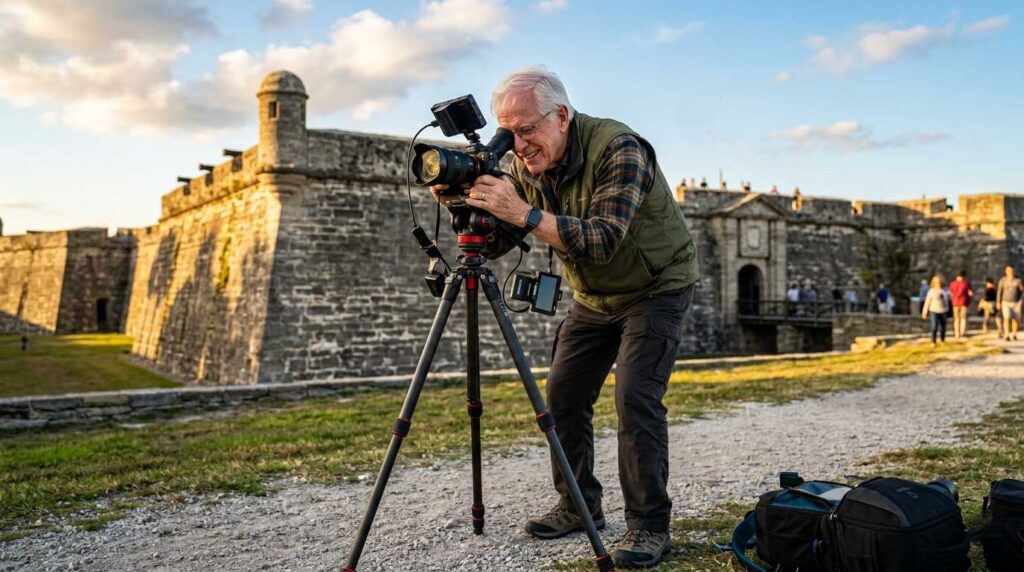
St. Augustine is the oldest continuously occupied European-established settlement in the United States, founded by Spanish colonists in 1565 — and it looks the part. Walking through the old city, with its narrow cobblestone streets, Spanish colonial architecture, and the massive Castillo de San Marcos fort dominating the waterfront, feels genuinely unlike anywhere else in America.
For seniors who travel for history and culture rather than beaches, St. Augustine may be the single best destination in Florida. The historic district is largely walkable, though the cobblestones can be challenging for anyone with mobility issues — comfortable shoes are essential. The beaches at Anastasia State Park, about 10 minutes away, are beautiful and far less commercialized than most Florida beach towns.
| Best for | History lovers, architecture, atmosphere, walkable culture |
| Don’t miss | Castillo de San Marcos, the Lightner Museum, Flagler College tour, Anastasia State Park beach |
| Getting around | Historic district is walkable; Old Town Trolley offers hop-on/hop-off for less walking |
| Senior tip | Cobblestones on St. George Street are uneven — wear thick-soled shoes, not sandals. Electric carts available for rent. |
| Avg. hotel (peak) | $130–$220/night — more affordable than Gulf Coast options |
The Florida Keys — Best for Atmosphere, Snorkeling & Bucket List Moments
The Keys aren’t for everyone, and it’s worth being honest about that before you go. The Overseas Highway connecting the islands is undeniably spectacular — driving across open ocean with turquoise water on both sides, stopping at islands with their own distinct characters — but Key West itself can feel surprisingly crowded and commercial during peak season.
The best strategy for senior travelers is to skip Duval Street in Key West (too crowded, too loud, focused on younger visitors) and focus instead on the quieter pleasures: the Ernest Hemingway Home, the Key West Butterfly and Nature Conservatory, the sunset celebration at Mallory Square, and the extraordinary snorkeling and glass-bottom boat tours at John Pennekamp Coral Reef State Park near Key Largo.
| Best for | Bucket list, snorkeling, unique atmosphere, Hemingway history |
| Don’t miss | John Pennekamp glass-bottom boat tour, Hemingway Home, Mallory Square sunset, Islamorada fishing village |
| Getting around | Car required — the islands are strung along one highway |
| Senior tip | Stay in Key Largo or Islamorada for better value than Key West; day-trip to KW rather than staying there |
| Avg. hotel (peak) | $200–$450/night Key West; $120–$200 Key Largo/Islamorada |
Amelia Island — Florida’s Best-Kept Secret for Seniors

Most tourists never make it to Amelia Island. It’s in the far northeastern corner of Florida, near the Georgia border, and it requires deliberate effort to reach — which is precisely what makes it so good. The main town, Fernandina Beach, has a Victorian historic district that rivals St. Augustine without the tourist crowds. The beaches are wide, largely undeveloped, and often nearly empty even during peak season.
For senior travelers who value a quiet, beautiful, historically rich destination over the typical Florida beach experience, Amelia Island is worth the extra effort to reach. It also tends to be significantly less expensive than comparable Gulf Coast destinations.
| Best for | Quiet, understated travelers who want beauty without the crowds |
| Don’t miss | Centre Street historic district, Fort Clinch State Park, Cumberland Island day trip (Georgia, accessible by ferry) |
| Getting around | Car essential; Fernandina Beach downtown is walkable |
| Senior tip | Jacksonville airport is 35 min away — easier to fly into than most Florida destinations |
| Avg. hotel (peak) | $110–$200/night — significantly less than Gulf Coast equivalents |
📍 Visual Recap: Which Florida Destination is Your Match? You’ve just read about Florida’s diverse regions, from the historic streets of St. Augustine to the quiet luxury of Naples. Before we move into the essential driving and money-saving tips, watch this 8-minute highlight reel to see which of these locations truly feels like your next getaway.
Senior-Specific Florida Travel Tips: What Most Guides Don’t Tell You
Florida Driving: More Challenging Than You’d Expect
Florida has some of the most complicated road infrastructure in America — confusing interchanges, frequent construction, and (during peak season) a mix of confident locals and disoriented tourists that creates genuinely stressful driving conditions. If you’re not comfortable driving in heavy traffic or navigating unfamiliar highways, consider basing yourself in a single walkable area rather than trying to cover the whole state.
The good news: Uber and Lyft are widely available in all major Florida destinations, and in cities like St. Pete and Sarasota, you can easily go carless for several days at a time if you choose your hotel location wisely.
Heat, Humidity and Health: The Real Story
Florida heat is not the same as desert heat. The humidity is the issue. When the temperature is 88°F with 85% humidity, it feels significantly hotter and is significantly more taxing on the cardiovascular system than a dry 95°F. Seniors with heart conditions, blood pressure concerns, or COPD should plan outdoor activities before 10am and after 5pm from May through October, carry water consistently, and have air-conditioned rest stops planned into every active day.
⚠️ Sun Protection in Florida: The UV index in Florida is consistently higher than most of the continental US. Seniors are more susceptible to sun damage and heat-related illness than younger travelers. SPF 50+, a wide-brimmed hat, and light long sleeves for outdoor time between 10am–4pm are not overcaution — they’re standard practice for anyone who lives there year-round.
How to Save 20–40% on Florida Travel as a Senior
The most reliable savings strategy: travel in shoulder season (October–November or April–May) rather than peak season. Hotel rates in Clearwater Beach that run $280/night in February often drop to $140–$160 in November for the same room. Restaurants are easier to get into. State parks aren’t overrun. And the weather is genuinely excellent.
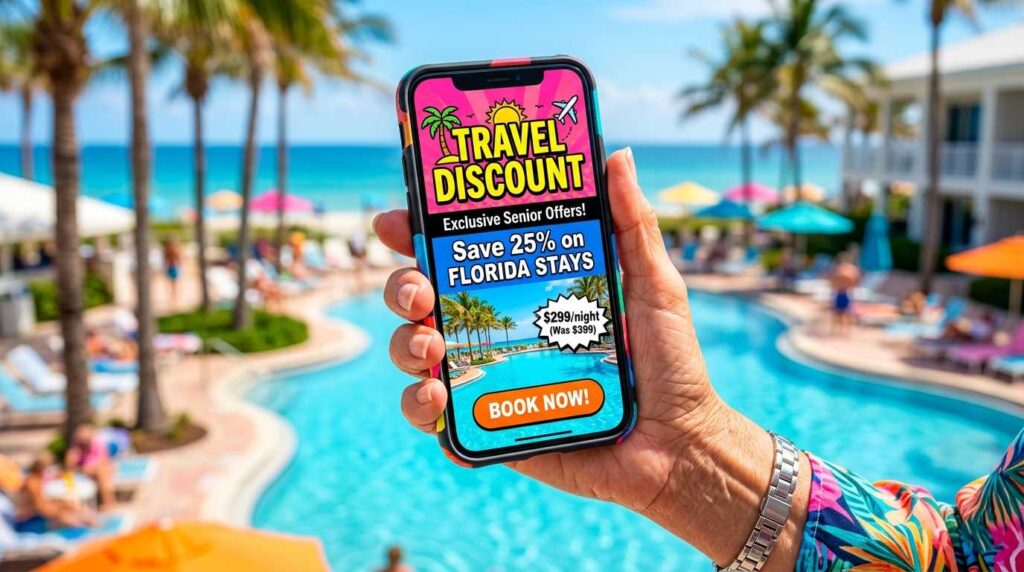
Additional savings worth knowing:
| Savings Opportunity | What You Get | How to Access |
|---|---|---|
| Florida State Parks Senior Pass | Free or discounted entry to 175+ Florida State Parks | Available to Florida residents 65+; visitors can still get discounts at the gate |
| America the Beautiful Senior Pass | Free entry to all US National Parks and federal recreation sites (includes Everglades, Dry Tortugas) | store.usgs.gov — $80 lifetime for age 62+, $20/year |
| AARP Member Discounts | 10–15% off at many Florida hotels, car rentals, and attractions | aarp.org/benefits-discounts/travel |
| Vacation Rental vs. Hotel | Kitchen access saves $40–$70/day on meals for longer stays | VRBO, Airbnb — look for entire home rentals with full kitchen |
| Tuesday–Thursday travel | Flights typically 15–25% cheaper mid-week | Google Flights — check price calendar for lowest fare days |
Accessibility in Florida: What Seniors With Mobility Concerns Need to Know
Florida’s flatness is its biggest accessibility advantage — most of the state sits at sea level or close to it, which means almost no hills, stairs, or elevation changes that would challenge someone with limited mobility. Beach wheelchairs are available at no charge at most major Florida beaches through the Florida Beach Wheelchair Lending Program — you reserve online through county parks and recreation departments.
The destinations that score highest for accessibility:
- Clearwater Beach — accessible beach boardwalk, beach wheelchairs available, flat terrain throughout
- St. Petersburg downtown — fully accessible waterfront, flat streets, accessible museums
- Corkscrew Swamp Sanctuary (near Naples) — 2.5-mile boardwalk with no stairs, wheelchair accessible throughout
- Everglades National Park Anhinga Trail — flat, paved, 0.8 miles, one of the best wildlife viewing trails in America
- Kennedy Space Center (east coast) — fully wheelchair accessible, excellent senior programming
Thinking About Moving to Florida? What to Know Before You Decide
A trip to Florida and a life in Florida are two very different things. Many seniors visit in February, fall in love with the weather and the sunsets, and start fantasizing about moving. Some of that fantasy holds up — Florida genuinely has exceptional weather from November through April, no state income tax, and a well-developed infrastructure for older adults. Some of it doesn’t survive contact with August humidity, hurricane season anxiety, and property insurance costs that have climbed significantly in recent years.
The honest advice: visit in different seasons before you commit. The February you fell in love with isn’t the July you’d be living through. If the numbers still work and the lifestyle still fits after you’ve seen all four seasons — or at least November through May, which is what most Florida retirees actually experience — then it’s worth exploring seriously.
For seniors considering other domestic retirement options alongside Florida, the guide to the best small towns to retire in the US in 2026 covers alternatives across the country that offer similar tax advantages with different trade-offs. And if an international option has crossed your mind, the Costa Rica retirement guide for Americans is worth a read alongside this one.
Frequently Asked Questions – Florida Travel Guide For Seniors 2026
St. Pete and Clearwater is the most forgiving first Florida destination — excellent beaches, walkable city center, world-class art museum, good medical facilities nearby, and a range of accommodation options at different price points. It gives you the best introduction to what Florida does well without overwhelming you with its extremes.
Generally yes — the major tourist areas are well-patrolled and tourist-infrastructure-rich. The same common-sense precautions that apply anywhere apply here: don’t leave valuables visible in a parked car, be aware of your surroundings in unfamiliar areas after dark, and keep your phone and wallet in a front pocket or close bag rather than an easily-accessed backpack. The beach towns covered in this guide are all considered safe for solo travelers including seniors.
For domestic travel, Medicare covers emergencies nationwide, so you won’t face the uninsured catastrophe that can happen internationally. However, travel insurance that covers trip cancellation and interruption is worth considering for Florida specifically because of hurricane season (June–November). If your travel dates overlap with hurricane season, cancellation insurance is genuinely prudent — storms can redirect or cancel trips with little warning.
Seven to ten days is the sweet spot for a first visit. Less than five days and you won’t have time to truly settle in and explore beyond the obvious tourist spots. More than two weeks in one location for a first visit often leads to “running out of things to do” fatigue unless you’ve specifically planned for a slow, residential-style stay. For a first trip, consider basing yourself in one area for 5–7 days rather than trying to island-hop across the whole state.
Miami Beach during spring break (March–April) unless you specifically enjoy that atmosphere. Orlando theme parks in summer — the lines are brutal and the heat is extreme; visit in fall or winter if you’re going at all. Duval Street in Key West during peak season. And any “airboat tour” operation you find advertised on a roadside sign — look for licensed, established operators with reviews rather than whoever is waving a flag at the highway exit.
Go in Shoulder Season. Choose Your Part of Florida. Don’t Rush It.
The seniors who love Florida most are the ones who resist the instinct to see everything in one trip. They pick a corner of the state, they stay long enough to find their favorite restaurant and their favorite beach access point, and they go back. That’s when Florida stops being a tourist destination and starts being a place — with its own particular light, its own rhythm, its own version of a perfect afternoon.
The perfect afternoon in Sarasota is not the same as the perfect afternoon in St. Augustine or the Keys. That variety — within one state, within a couple of hours of driving — is what makes Florida worth the trip, the planning, and the occasional battle with peak-season traffic.
Pick your Florida. Then go find it.
Planning more senior travel? Explore these guides: