
This Costa Rica American retirees guide covers what the real estate brochures skip — healthcare realities, the visa that changed in 2024, which towns are genuinely livable, and what $2,500 a month actually buys you in 2026.

There’s a version of Costa Rica retirement that exists primarily in travel magazine spreads and expat Facebook groups. It features a hammock between two palm trees, a fresh pineapple within arm’s reach, and a monthly budget that seems to defy the laws of economics. This guide is not that version.
This is the version told by the 50,000+ American retirees who actually live there — some of whom are genuinely, deeply happy with their decision, and some of whom learned things the hard way that they wish someone had told them before they shipped their furniture to Central America. Both groups have something useful to say.
The Costa Rica American retirees guide for 2026 gives you both perspectives — the genuine appeal and the genuine complications — so you can make a decision based on reality rather than fantasy. Because the reality is actually quite compelling, once you understand what you’re actually signing up for.
Why Costa Rica Has Been the Top International Retirement Destination for Americans for 20 Years
The numbers are real. International Living has ranked Costa Rica among the top five international retirement destinations for Americans consistently since the early 2000s. The reasons aren’t mysterious:
| Factor | The Reality |
|---|---|
| Proximity to the US | 4–6 hour flight from most major US cities. Miami to San José is under 3 hours. You’re never truly far from home. |
| Political stability | Costa Rica has had no military since 1948 — one of the most stable democracies in Latin America, with a 75-year track record |
| Climate variety | You can choose year-round spring weather (Central Valley, 3,800 ft elevation), Pacific coast dry season, or Caribbean lushness — multiple climates in a country the size of West Virginia |
| Universal healthcare | The Caja Costarricense de Seguro Social (CCSSS) — the national health system — is accessible to legal residents including retirees at very low monthly contributions |
| English widely spoken | In tourist areas, expat communities, and among professionals, English is common. Full Spanish immersion is possible but not required to function. |
| Natural environment | 25% of the country is protected national park or reserve — biodiversity, beaches, volcanoes, and cloud forests within hours of anywhere |
| Established expat infrastructure | Decades of American retirees means developed communities, English-language services, familiar products in stores, and a support network |

The Pensionado Visa: What Changed in 2024 and What It Means for You
The Pensionado visa is the most popular path to legal residency in Costa Rica for American retirees, and it changed significantly in 2024 in ways that most online guides haven’t caught up with yet.
🛂 Pensionado Visa — 2026 Requirements
| Minimum monthly income | $1,000/month from a permanent source (Social Security, pension, annuity, or rental income qualifies) |
| Income source required | Must be a permanent, ongoing income — not savings accounts or one-time distributions |
| 2024 change | New requirement: applicants must now maintain a Costa Rican bank account and show proof of local spending — a bureaucratic addition that slows the process |
| Processing time | 12–24 months currently — longer than the 6–12 months commonly cited in older guides |
| Work allowed? | No local work permitted — but remote work for foreign companies or clients is generally accepted in practice |
| Benefits once approved | Import duty exemptions on household goods (one-time), vehicle import discount, 50% off entertainment and sports events, 20% off medical services at many facilities |
| Strong recommendation | Hire a local Costa Rican immigration attorney (typically $1,500–$2,500 USD) — the process is navigable but paperwork errors cause significant delays |
The $1,000/month requirement is intentionally accessible — for most Americans with Social Security income, this threshold is reachable. If your monthly Social Security benefit is $1,500, you qualify. Many couples qualify even more easily since the requirement covers both spouses.
What Does Life in Costa Rica Actually Cost in 2026?
Costa Rica is no longer the extreme-budget destination it was a decade ago. Prices have risen significantly — particularly in popular expat areas — and the “retire on $1,200 a month” figures you’ll still see floating around online reflect a reality that no longer exists in 2026 for most retirees who want a reasonable quality of life.
Here’s an honest monthly budget breakdown for three different scenarios:
| Expense | Budget Lifestyle (Atenas/Grecia) | Comfortable (Escazú/Tamarindo) | Premium (Santa Ana/Manuel Antonio) |
|---|---|---|---|
| Rent (2BR) | $600–$900 | $1,000–$1,600 | $1,800–$3,000+ |
| Groceries | $250–$350 | $350–$500 | $500–$800 |
| Utilities (elec/water/internet) | $100–$160 | $150–$220 | $220–$350 |
| Transportation | $100–$200 | $200–$400 | $300–$600 |
| Healthcare (Caja + private) | $150–$250 | $200–$350 | $300–$500 |
| Dining & entertainment | $200–$350 | $350–$600 | $600–$1,200 |
| Miscellaneous | $150–$250 | $200–$400 | $300–$600 |
| Monthly Total | $1,550–$2,460 | $2,450–$4,070 | $4,020–$7,050+ |
💡 The Honest Takeaway: A comfortable retirement in Costa Rica in 2026 costs roughly $2,500–$3,500/month for most American couples. That’s meaningfully less than comparable lifestyle in a US metro area, but it’s not the $1,500/month dream some older guides describe. The value is real — but calibrate expectations to 2026 prices, not 2015 prices.
The Best Towns for American Retirees in Costa Rica
Costa Rica’s geography creates dramatically different living environments within a small country. The Central Valley (where San José sits at 3,800 feet elevation) has perennial spring-like weather — highs in the mid-70s year-round — while the Pacific coast has a distinct dry and rainy season, and the Caribbean coast is hot and wet most of the year. Here’s what each major expat area actually offers.
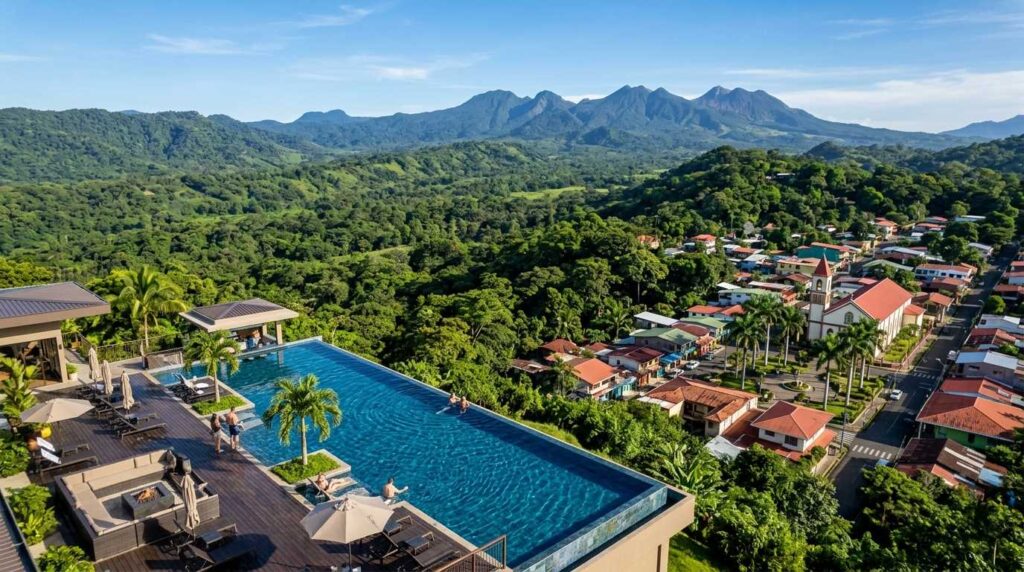
Atenas — Best Climate on Earth (Seriously)
National Geographic once named Atenas as having the best climate in the world — and while that’s a bold claim, the reality is genuinely remarkable. At 2,300 feet elevation on the Pacific slope of the Central Valley, Atenas avoids both the Central Valley fog and the coastal heat. Temperatures average 75°F year-round with cool nights. It’s a small town (population ~25,000) with a growing expat community, good local services, and a 45-minute drive to San José for anything it doesn’t have. If you want to dive deeper into budget breakdowns, safe neighborhoods, and medical care options, explore our comprehensive breakdown of Atenas Costa Rica for American retirees.
| Climate | 72–78°F year-round, low humidity, gentle breezes |
| Expat community | Growing — smaller and more integrated with local community than larger expat hubs |
| Cost level | Budget to moderate — among the more affordable expat areas |
| Nearest city | San José (45 min) and Jacó beach (40 min) |
| Best for | Retirees who prioritize climate above all else, want authentic local experience, moderate budget |
Escazú / Santa Ana — Upscale Convenience, American-Style Amenities
Escazú is the Beverly Hills of Costa Rica — upscale shopping centers, international restaurants, English-speaking dentists and doctors, Whole Foods-equivalent supermarkets, and a large enough expat community that you can go a full week without needing to use Spanish. It’s also the most expensive neighborhood in the country. Seniors who value convenience, modern amenities, and easy access to world-class private healthcare (CIMA Hospital, ranked among the best in Central America, is here) will find Escazú highly livable. If you want to see if this premium lifestyle fits your budget, read our comprehensive breakdown of escazu costa rica for american retirees.
| Climate | Central Valley spring weather, mild year-round |
| Expat community | Very large — most Americanized area in Costa Rica |
| Cost level | Premium — comparable to moderate US suburban costs |
| Key advantage | CIMA Hospital — private international hospital with US-trained doctors, English-speaking staff, excellent cardiac and orthopedic care |
| Best for | Seniors with complex healthcare needs, those who want American-style conveniences, couples where one partner isn’t sure about the move |
Tamarindo — Beach Town With Full Expat Infrastructure
Tamarindo is a beach town on the Pacific coast that has grown substantially over the past decade, with a large enough expat and tourist community to support supermarkets, English-language services, yoga studios, good restaurants, and a social scene. It has two seasons: a gorgeous dry season from December through April with reliable sunshine, and a rainy season (May–November) that many expats describe as lush and beautiful but wet. The tradeoff from the Central Valley: heat (85–90°F highs) and humidity are significant from May through November.If you are exploring Tamarindo Costa Rica for american retirees, you will find that this coastal hub offers unparalleled convenience alongside its high-energy lifestyle.
| Climate | Dry season (Dec–Apr): perfect. Rainy season (May–Nov): hot, humid, daily rain |
| Expat community | Large, active, younger-skewing than Central Valley communities |
| Cost level | Moderate to high — beach premium applies |
| Key consideration | Nearest major private hospital is 45–60 min away — important for seniors with ongoing medical needs |
| Best for | Beach lovers, active seniors, those who can handle the rainy season |
Grecia / San Ramón — Authentic Costa Rica at Budget Prices
Grecia and San Ramón are Central Valley towns that offer similar climate advantages to Atenas with an even stronger authentic Costa Rican character and lower costs. These aren’t expat resort towns — they’re real communities where you’ll need some Spanish to navigate daily life and where you’ll be genuinely living in Costa Rica rather than in a bubble of American convenience. For seniors who find the latter appealing, these towns represent the best value proposition in the country. (If you want to look closer at costs, areas, and hidden drawbacks, read our detailed Grecia Costa Rica for American retirees guide).
| Climate | Spring-like Central Valley weather, cool evenings |
| Expat community | Small but growing — predominantly integrated with local community |
| Cost level | Budget — lowest rental costs of any decent expat area |
| Spanish requirement | Moderate — you’ll need basic Spanish for daily interactions |
| Best for | Budget-conscious seniors, those who want genuine cultural immersion, adventurous retirees |
🎥 Visualizing Your Future Home: If you’re torn between the mountain breezes of Atenas and the surf vibes of Tamarindo, watch this expert breakdown of the top 10 retirement spots. Kristin, who lived in Costa Rica for 8 years, provides a boots-on-the-ground look at real estate prices and local amenities that you won’t find in a brochure.
Healthcare in Costa Rica: The Full Picture
Healthcare is the factor that most determines whether Costa Rica works as a retirement destination for any given senior. Get it right, and you have access to genuinely high-quality care at a fraction of US costs. Get it wrong — arrive without understanding the system, choose a location too far from quality facilities, or underestimate the language barrier in medical contexts — and you’re in a vulnerable position.

The Two-Track System
Costa Rica has two parallel healthcare systems that most retirees use in combination:
🏥 The Caja (Public System): The national health insurance system — Caja Costarricense de Seguro Social — covers legal residents for a monthly contribution based on income (typically $70–$120/month for retirees). It covers everything from routine checkups to major surgeries. The quality varies — excellent at top hospitals like Hospital México and Hospital San Juan de Dios, longer waits for non-emergency procedures. Specialist referrals go through the system, which can be slow.
🏨 Private Clinics and Hospitals: Costa Rica has an excellent private healthcare sector, particularly in San José and surrounding areas. CIMA Hospital in Escazú, Clínica Bíblica, and Hospital La Católica are internationally accredited with English-speaking doctors and same-day appointments for most needs. An out-of-pocket specialist consultation costs $60–$120. Most procedures cost 40–70% less than US equivalent. Many retirees use the Caja for serious/long-term care and private clinics for quick access and specialist visits.
⚠️ Medicare Does Not Work in Costa Rica: US Medicare coverage stops at the US border. This is the single most important healthcare planning point for American seniors considering Costa Rica. You need either the Caja (requires legal residency), private international health insurance, or the financial resources to pay out-of-pocket for private care. Factor this cost into your planning before you make any decisions.
What Retirees Who Moved There Say Nobody Told Them
This section exists because the gap between the brochure version of Costa Rica and the lived version is significant enough that people deserve to know about it before committing.
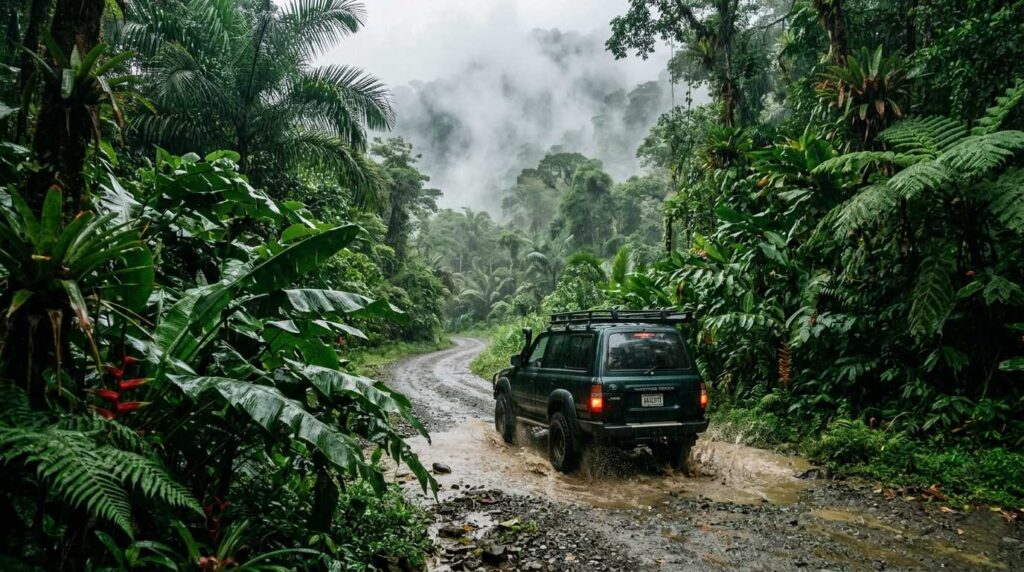
The Roads
Costa Rican roads outside of major urban areas are genuinely challenging. Potholes the size of small craters. Steep unpaved mountain roads. Flooding during rainy season that can make roads impassable. For seniors with vision concerns or those unfamiliar with driving in developing-country conditions, this is a real consideration. A 4WD vehicle isn’t a luxury in many parts of Costa Rica — it’s a practical necessity.
The Bureaucracy
Costa Rica runs on paperwork and patience. The residency process moves slowly. Setting up utilities requires documents you don’t expect. Banking as a foreigner involves hoops that would frustrate anyone accustomed to US systems. This isn’t unique to Costa Rica — it’s a feature of most countries for foreigners — but it’s a genuine adjustment that surprises people who imagined a smoother transition.
The Rainy Season
The Central Valley and Pacific coast rainy season (May–November) is more intense than most people expect. Not a gentle afternoon shower but sustained heavy rain that can last all day, several days in a row. Roads flood. Mold becomes an active management issue in your home. The landscape is extraordinarily green and lush — but for seniors who moved for sunshine and ended up living six months in grey, it has caused real regret. If you’re planning to visit, visit in September or October — the heart of the rainy season — before you commit to living there year-round.
The Social Reality
Some seniors find the expat community in places like Escazú and Tamarindo to be an immediate social lifeline. Others find it cliquey, transient, and less satisfying than the deep friendships they left behind in the US. Building genuine community — not just a social calendar — takes time in a foreign country in a way it doesn’t when you’re embedded in a neighborhood you’ve lived in for years. This is worth thinking about honestly before you go, especially for anyone who is widowed or moving alone.
Costa Rica vs. Panama vs. Mexico: How They Compare for American Retirees
| Factor | Costa Rica | Panama | Mexico |
|---|---|---|---|
| Monthly budget (comfortable couple) | $2,500–$3,500 | $2,000–$3,200 | $1,800–$3,000 |
| Visa ease for retirees | Moderate — Pensionado $1,000/mo minimum | Easy — Jubilado visa $1,000/mo, fast processing | Easy — Residente Permanente or Rentista |
| English widely spoken | Yes in tourist/expat areas | Yes in Panama City and Boquete | Varies — less so outside resort areas |
| Healthcare quality | Excellent (Caja + private) | Excellent in Panama City | Very good in major cities |
| Safety | Good — one of safest in Central America | Good in expat areas | Varies significantly by region |
| US flight access | 4–6 hrs from most US cities | 3–5 hrs from East Coast | 2–5 hrs depending on region |
| Climate variety | Excellent — multiple climates | Good — Boquete highlands are exceptional | Good — highlands like San Miguel very popular |
For a detailed look at one of the most popular Mexico destinations, the San Miguel de Allende retirement guide covers that option thoroughly. And for Panama specifically, the Panama City guide for American seniors is worth reading alongside this one before you decide between the two.
Frequently Asked Questions – Costa Rica American Retirees Guide 2026
Costa Rica is consistently ranked among the safest countries in Latin America and has one of the lowest homicide rates in the region. Petty theft is the primary safety concern in tourist areas — particularly phone and bag theft — rather than violent crime. Standard precautions (don’t flash expensive items, use trusted taxis or apps, be aware of surroundings after dark) are the appropriate response. Most American retirees living there report feeling generally safe, with the same urban caution you’d apply in any mid-size US city.
In established expat areas like Escazú, Tamarindo, and Atenas, you can function in English for most daily needs. However, basic Spanish — enough to communicate with household workers, navigate government offices, and handle medical situations — is genuinely important for quality of life and emergency preparedness. Most retirees who are happy long-term in Costa Rica invested at least 6–12 months in Spanish lessons. Apps like Duolingo are a starting point; structured classes with a local tutor are more effective.
Technically, the Pensionado visa does not permit local employment. However, remote work for foreign companies or clients — consulting, freelancing, online business — exists in a practical gray area that most retirees navigate without issue. Costa Rica introduced a Digital Nomad Visa in 2021 that specifically allows remote workers to live and work legally in the country for up to two years, which may be a better path for retirees who want income flexibility. Consult an immigration attorney on the specifics for your situation.
Spend at least 3–4 weeks on a scouting trip — not a vacation. Rent an apartment rather than staying in a hotel, in the specific area you’re considering. Go grocery shopping. Deal with a small bureaucratic task. Drive the roads. Talk to expats who’ve been there 5+ years, not just the enthusiastic newcomers. Visit during both dry and rainy season if possible before making a final decision. The Association of Residents of Costa Rica (ARCR) offers relocation consultations and is a trusted resource for Americans in the process.
Yes — US citizens are taxed on worldwide income regardless of where they live, which is unusual among developed nations. You’ll still file a US tax return every year. However, the Foreign Earned Income Exclusion and Foreign Tax Credit can reduce your US tax liability significantly if you’re earning income abroad. Social Security benefits have specific rules about taxation when living overseas. Work with a US CPA who specializes in expat taxation before you make any moves — the tax implications are real and require planning.
Pura Vida Is Real — But So Is Everything Else
Pura Vida — “pure life” — is the Costa Rican phrase that means everything from “hello” to “no problem” to a whole philosophy of living lightly and appreciating what you have. It’s not a marketing slogan. It’s a genuine cultural attitude that permeates daily interactions in a way that makes life there feel measurably different from American urban life — less rushed, less transactional, more present.
The seniors who thrive in Costa Rica are the ones who show up ready to adapt — to slower bureaucracy, to a different relationship with weather, to learning a language, to building community from scratch. They find that what they get in return — the extraordinary natural beauty, the healthcare value, the gentler pace, the warmth of Costa Rican culture — is worth every adjustment.
The ones who struggle are the ones who tried to recreate American life in a tropical setting and were frustrated when the fit wasn’t perfect. Costa Rica isn’t America with better weather and cheaper groceries. It’s a different country, with a different culture, and a different set of tradeoffs. The question isn’t whether those tradeoffs are good or bad — it’s whether they’re right for you specifically.
Take the scouting trip. Talk to people who’ve been there five years. Visit in the rainy season. Then decide.
Comparing All Costa Rican Retirement Towns for Seniors: