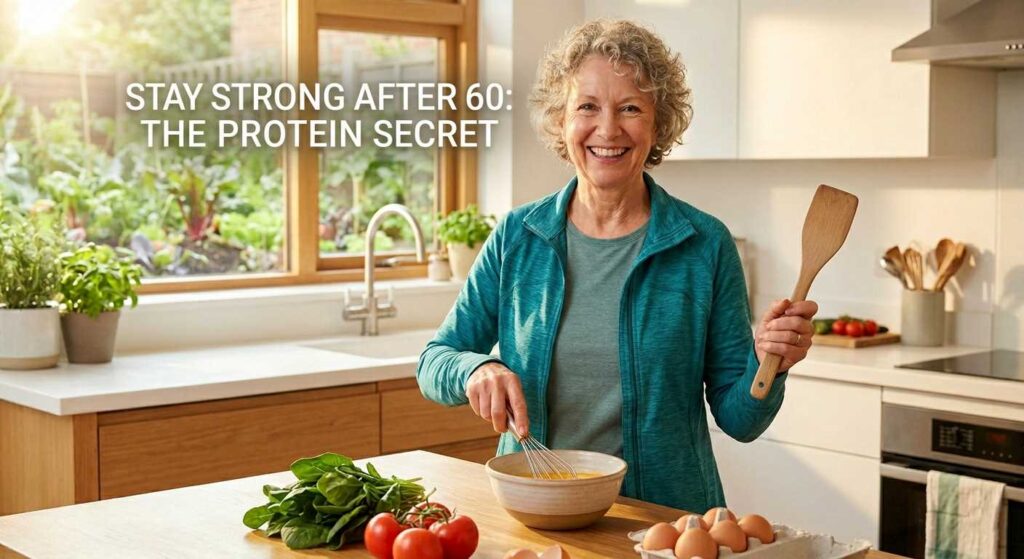
Finding the right high protein breakfast for seniors is more than just a morning routine—it’s a vital strategy for longevity. Here’s something your doctor may not have told you directly: after age 60, the average American loses 1–2% of their muscle mass every single year. By 70, many seniors have lost 20–30% of the muscle they had at 40, and by 80, some have lost half.
This condition has a name — sarcopenia — and it’s one of the most significant predictors of falls, fractures, disability, and loss of independence in older adults. The American College of Sports Medicine estimates it affects up to 30% of adults over 60 and more than 50% of adults over 80.
But here’s what the same research shows, clearly and consistently: sarcopenia is not inevitable.
Two things slow it dramatically. One is resistance exercise. The other — and this is where most seniors are leaving significant gains on the table — is protein. Specifically, getting enough protein early in the day, when your muscles are most primed to use it.
The three options in this guide each take under five minutes to prepare. Each delivers the ideal high protein breakfast for seniors with 25 to 40 grams of protein—the threshold research suggests for meaningful muscle synthesis. And each is designed for the taste preferences, nutritional needs, and practical realities of seniors who want to stay strong, active, and independent for as long as possible.
⚠️ Before we start: If you have kidney disease, diabetes, or other conditions that affect protein metabolism, consult your physician before significantly increasing protein intake. The general guidance in this article is appropriate for healthy older adults without these conditions.
🔬 Why Seniors Need More Protein Than You Were Probably Told
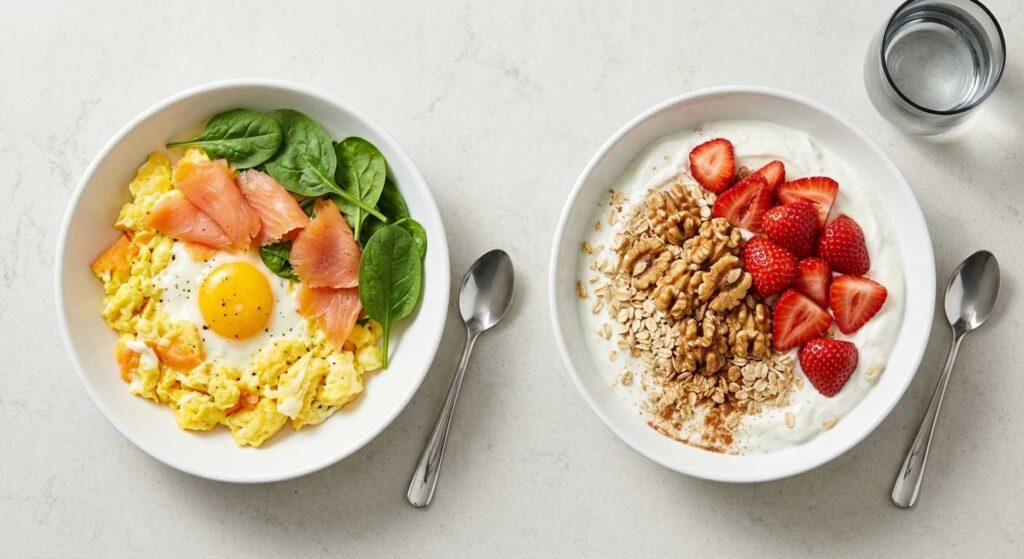
For decades, the standard dietary recommendation for protein was 0.8 grams per kilogram of body weight per day. A 150-pound (68 kg) person would need about 54 grams of protein daily. This recommendation was based primarily on research in younger adults — and it’s now widely considered inadequate for seniors.
The emerging consensus in geriatric nutrition, supported by research published in the Journal of the American Medical Directors Association, is that older adults need significantly more:
📊 Protein Needs: Young Adults vs. Seniors
| Group | Min. Daily Protein | Optimal Daily Protein | Per Meal Target |
|---|---|---|---|
| Young Adults (20–40) | 0.8g/kg/day | 1.0–1.2g/kg/day | 20–25g |
| Seniors 60+ (active) | 1.0–1.2g/kg/day | 1.2–1.6g/kg/day | 25–40g |
| Seniors 60+ (sedentary) | 1.0g/kg/day | 1.2–1.4g/kg/day | 25–35g |
Based on PROT-AGE Study Group recommendations and European Society for Clinical Nutrition and Metabolism (ESPEN) guidelines
For a 165-pound (75 kg) active senior, achieving a high protein breakfast for seniors is a key part of reaching the optimal 90 to 120 grams of daily protein intake recommended by experts. The typical American senior gets barely half this amount, particularly at breakfast — the meal most commonly skipped or replaced with low-protein options like toast, cereal, or fruit alone.
Why Breakfast Protein Matters Most
Research from the American Journal of Clinical Nutrition shows that older adults who consume 30 or more grams of protein at breakfast demonstrate greater muscle protein synthesis rates throughout the day compared to those who spread the same total protein more unevenly — with most at dinner. Your muscles are most responsive to protein in the morning, particularly within two hours of waking and especially if you’ve done any morning exercise. These three recipes are designed specifically to provide a high protein breakfast for seniors that takes advantage of this morning metabolic window.
💪 Breakfast #1: The 5-Minute Egg White Scramble
🥚 Why Egg Whites Are a Senior Muscle Superfood
Egg whites are a perfect foundation for a high protein breakfast for seniors because they are one of the highest-quality, cholesterol-free protein sources available — with a biological value (a measure of how effectively the body uses dietary protein) of 100, meaning nearly every gram is utilized for muscle maintenance and repair. They’re also virtually fat-free and cholesterol-free, making them appropriate for seniors managing cardiovascular risk factors who might otherwise limit whole eggs.
One liquid egg white carton (available at any grocery store) eliminates the mess of separating eggs and allows you to pour exactly the amount you need. One cup of liquid egg whites provides approximately 26 grams of protein alone.
🛒 Ingredients (1 serving)
- 1 cup liquid egg whites (or 6 large egg whites, separated)
- ¼ cup non-fat cottage cheese (adds 7g protein and a creamy texture)
- 2 tablespoons diced bell peppers (any color)
- 1 tablespoon diced onion
- 1 small handful fresh spinach
- Salt, pepper, garlic powder to taste
- Cooking spray or ½ teaspoon olive oil
👨🍳 Method (Exactly 5 Minutes)
- Heat a non-stick skillet over medium heat. Spray with cooking spray.
- Add peppers and onion. Cook 1 minute, stirring occasionally.
- Add spinach. Stir until wilted, about 30 seconds.
- Pour in egg whites. Add cottage cheese directly on top.
- Scramble gently with a spatula, folding rather than stirring aggressively, until just set — about 2 minutes.
- Season and serve immediately.
📊 Complete Nutrition Profile
| Protein | Calories | Carbs | Fat | Sodium |
| 35g | 280 kcal | 8g | 4g | 420mg |
💡 Senior-Specific Tips
- Low cholesterol concern: Egg whites contain zero cholesterol. This breakfast is appropriate for seniors on cardiac diets where whole eggs are limited.
- Add whole eggs if desired: Using 3 egg whites + 1 whole egg adds yolk nutrients (vitamin D, B12, choline) while keeping cholesterol manageable.
- Soft texture version: For seniors with dental sensitivities, cook on lower heat longer for a softer, more custard-like texture.
- Meal prep: Dice peppers and onions for the entire week on Sunday. Store in a container. Morning prep drops to 3 minutes.
🥣 Breakfast #2: The Protein-Powered Oatmeal
🌾 Why This Oatmeal Is Different From What You’re Eating Now
Standard oatmeal — even the “healthy” kind — is a carbohydrate delivery vehicle with modest protein content. A standard serving of rolled oats provides about 5 grams of protein. Filling, yes. Adequate for muscle maintenance? Not remotely.
This version transforms traditional oatmeal into a genuine high protein breakfast for seniors by building muscle-supporting protein directly into the preparation. — not by adding a protein powder that makes it taste like a supplement. The result is genuinely delicious, familiar, and satisfying.
The secret is cooking the oats in milk rather than water and stirring in Greek yogurt after cooking — a technique that preserves the yogurt’s live cultures while adding a creamy tang and significant protein boost.
🛒 Ingredients (1 serving)
- ½ cup old-fashioned rolled oats
- ¾ cup low-fat milk (or unsweetened soy milk for non-dairy)
- ¼ cup water
- ½ cup plain non-fat Greek yogurt (stirred in after cooking)
- 1 tablespoon natural almond butter or peanut butter
- ½ scoop unflavored or vanilla whey protein powder (optional — adds 12g protein if needed)
- ¼ cup fresh or frozen blueberries
- ½ teaspoon cinnamon
- 1 teaspoon honey or maple syrup (optional)
👨🍳 Method (Exactly 4 Minutes)
- Combine oats, milk, and water in a microwave-safe bowl.
- Microwave on high for 2.5 to 3 minutes, stopping once halfway to stir (prevents overflow).
- Remove from microwave. Immediately stir in Greek yogurt and almond butter until fully incorporated. The residual heat warms the yogurt without destroying its beneficial cultures.
- Add protein powder now if using — stir thoroughly until no lumps remain.
- Top with blueberries and cinnamon. Add honey if desired.
📊 Complete Nutrition Profile (without protein powder)
| Protein | Calories | Carbs | Fat | Fiber |
| 28g (32g with protein powder) | 380 kcal | 46g | 9g | 5g |
💡 Senior-Specific Tips
- The blueberry benefit: Blueberries aren’t just sweet — a 2022 study in Nutrients found regular blueberry consumption associated with reduced muscle damage markers in older adults. This is a functional ingredient, not decoration.
- Digestive comfort: Oats contain beta-glucan fiber that supports digestive health — important for seniors who often experience constipation. The milk and yogurt provide calcium critical for bone health alongside the muscle-supporting protein.
- Blood sugar management: The protein and fat in this recipe significantly slow the glycemic response compared to oatmeal made with water. For seniors managing blood sugar, this matters.
- Overnight oats variation: Combine all ingredients except blueberries the night before. Refrigerate. Eat cold or microwave for 60 seconds in the morning. Zero morning prep time.
🥗 Breakfast #3: The Cottage Cheese Power Bowl
🧀 The Cottage Cheese Renaissance — And Why Seniors Should Pay Attention
Cottage cheese has had a remarkable nutritional reappraisal in recent years. Long dismissed as a diet food from a previous era, it’s now recognized as one of the most protein-dense, casein-rich, slowly-digesting protein sources available — properties that are specifically valuable for older adults.
Unlike whey protein (which is absorbed rapidly), casein protein — the primary protein in cottage cheese — is digested slowly, providing a sustained amino acid release over several hours. This prolonged amino acid availability is particularly beneficial for seniors, because older muscles are slower to respond to protein stimulation and benefit from longer exposure to elevated amino acid levels.
One cup of 2% cottage cheese provides 25 grams of protein, 200 milligrams of calcium, and significant amounts of selenium, phosphorus, and B vitamins — a nutritional profile that outperforms most other breakfast options gram for gram.
🛒 Ingredients — Savory Version (Recommended for Morning)
- 1 cup 2% cottage cheese (low-sodium if managing blood pressure)
- ½ avocado, sliced or diced
- 4–5 cherry tomatoes, halved
- 2 tablespoons pumpkin seeds (pepitas)
- 1 tablespoon extra virgin olive oil
- Everything bagel seasoning or everything-but-the-bagel spice blend to taste
- Optional: 2 soft-boiled eggs on top (adds additional 12g protein)
🛒 Ingredients — Sweet Version (Alternative)
- 1 cup 2% cottage cheese
- ½ cup mixed berries (fresh or thawed frozen)
- 1 tablespoon chia seeds
- 1 tablespoon honey or pure maple syrup
- ¼ teaspoon vanilla extract
- 2 tablespoons chopped walnuts
👨🍳 Method (Exactly 3 Minutes)
- Spoon cottage cheese into a bowl.
- Arrange toppings. For the savory version: add avocado, tomatoes, and pumpkin seeds, then drizzle with olive oil and season. For sweet version: add berries, chia seeds, walnuts, and drizzle with honey.
- Serve immediately.
That’s it. Three minutes, zero cooking, no cleanup beyond a bowl and spoon.
📊 Complete Nutrition Profile (Savory Version, with 2 eggs)
| Protein | Calories | Carbs | Fat | Calcium |
| 38g (26g without eggs) | 420 kcal | 14g | 24g | 280mg |
💡 Senior-Specific Tips
- Sodium awareness: Standard cottage cheese can be high in sodium. Look for low-sodium versions (Hood or Good Culture brands offer these). For seniors managing blood pressure, the low-sodium version reduces sodium by 40–50%.
- The avocado advantage: Avocado provides monounsaturated fat and potassium — both heart-healthy nutrients that also reduce muscle cramping. The healthy fat also improves absorption of fat-soluble vitamins in the meal.
- Texture for dental comfort: The cottage cheese bowl requires no chewing of hard or chewy items — ideal for seniors managing dental sensitivity or denture fit.
- Pre-assembled option: Assemble the bowl the night before without the avocado (which browns). Add fresh avocado in the morning. Total morning time: 30 seconds.
📅 Your 7-Day High-Protein Breakfast Rotation
Variety prevents breakfast fatigue — the most common reason people abandon healthy eating habits. Here’s a simple weekly rotation using these three breakfasts plus two common-sense high-protein additions:
| Day | Breakfast | Protein | Time |
|---|---|---|---|
| 🌅 Monday | Egg White Scramble | 35g | 5 min |
| 🌅 Tuesday | Protein Oatmeal | 32g | 4 min |
| 🌅 Wednesday | Cottage Cheese Power Bowl (Savory) | 38g | 3 min |
| 🌅 Thursday | Overnight Oats (Tuesday’s recipe, prepared Wednesday night) | 32g | 0 min (prep night before) |
| 🌅 Friday | Egg White Scramble (vary the vegetables) | 35g | 5 min |
| 🌅 Saturday | Cottage Cheese Bowl (Sweet version) | 28g | 3 min |
| 🌅 Sunday | Protein Oatmeal (add extra toppings — relaxed day) | 32g | 5 min |
🛒 Your High-Protein Breakfast Shopping List
Everything you need for one week of these breakfasts. Most items are available at any major grocery store, and many are already pantry staples:
🧊 Refrigerated
- Liquid egg whites (32 oz carton)
- 2% cottage cheese (24 oz tub)
- Plain non-fat Greek yogurt (32 oz)
- Low-fat milk or unsweetened soy milk
- 2 avocados
- Cherry tomatoes
- Bell peppers (assorted colors)
- Fresh spinach (5 oz bag)
- Fresh blueberries or berries
🥫 Pantry
- Old-fashioned rolled oats
- Natural almond butter or peanut butter
- Pumpkin seeds (pepitas)
- Chia seeds
- Chopped walnuts
- Extra virgin olive oil
- Cinnamon
- Everything bagel seasoning
- Honey or pure maple syrup
Estimated weekly grocery cost for these breakfasts: $25–$40 depending on store and location — approximately $3.50 to $5.70 per breakfast. Significantly less expensive than most restaurant breakfast options and far more nutritionally complete.
🏋️ The Exercise Connection: Maximizing Your Protein Investment
While a high protein breakfast for seniors does significant work in preserving muscle mass, combining it with light resistance exercise produces even better results. Protein combined with resistance exercise does dramatically more. If you’re eating 30–38 grams of protein at breakfast but doing no physical activity that stimulates muscle, you’re getting perhaps 60% of the potential benefit.
You don’t need a gym. You don’t need weights. Research published in the JAMA Internal Medicine consistently shows that even light resistance exercise — resistance bands, bodyweight exercises, chair-based strength work — combined with adequate protein intake produces meaningful improvements in muscle mass and strength in seniors over 60.
A 15-minute morning movement routine combining these breakfasts with basic resistance exercises — wall push-ups, seated leg raises, standing calf raises — creates the full anabolic stimulus that makes this protein investment pay its maximum return.
For a complete morning movement routine designed specifically for seniors, see our guide on Morning Exercises for Seniors.
🔗 The Bigger Picture: Active Aging and Financial Independence
There’s a connection worth making explicit. The seniors who are building consulting practices, running online businesses, and maintaining active professional lives well into their 60s and 70s share a common characteristic beyond professional ambition: they take their physical health seriously as a professional asset.
Cognitive sharpness, sustained energy, physical stamina for travel and client meetings, and the confidence that comes from feeling physically capable — these aren’t separate from professional success at this life stage. They’re prerequisites for it.
The three-minute cottage cheese bowl and the five-minute egg white scramble aren’t just good nutrition. They’re part of the infrastructure of an active, engaged, professionally productive senior life.
If you’re building that life — through consulting, remote work, or digital income — our Make Money Online After 50 Master Guide is the place to start. For the home environment that supports both healthy eating habits and productive work, see our guide on Ergonomic Home Office Setup for Seniors.
Muscle loss is not inevitable. Sarcopenia is not your destiny. Three breakfasts, under five minutes each, delivering 30–38 grams of protein — that’s all the intervention the research says you need to start protecting what decades of living have built. Start tomorrow morning.
❓ Frequently Asked Questions: High-Protein Breakfasts for Seniors
Nutritional Requirements for Aging Muscles
Adults over 60 need 25-40g of protein per meal to overcome anabolic resistance. Our recipes are designed to meet this vital threshold.
Safety and Dietary Considerations for Seniors
For healthy seniors, 25-40g per meal is safe and research-backed. Consult a doctor only if you have pre-existing kidney or liver disease.
Yes. Egg whites are cholesterol-free. One cup provides 26g of high-quality protein without adding fat or LDL concerns.
Efficiency and Practical Breakfast Solutions
It contains slow-digesting casein for 5-7 hours of amino acid release, plus calcium for bone health. No cooking required!
The cottage cheese power bowl (3 mins) or overnight oats (prepared the night before) are the most efficient high-protein options.
Impact of Nutrition on Mobility and Safety
Protein preserves leg strength and balance. Higher protein intake is linked to lower fall rates. Check our Morning Exercises for Seniors guide for the physical side.
Medical Disclaimer:
The information provided in this guide is for educational and informational purposes only and is not intended as medical advice. SeniorGig Guide is not a medical organization. While we focus on modern retirement and active lifestyle strategies, you should always consult with a healthcare professional or your physician before making significant changes to your diet or exercise routine, especially if you have pre-existing health conditions like kidney disease or diabetes. Reliance on any information provided in this article is solely at your own risk.