
Senior walking groups are one of the most powerful — and most underused — tools for healthy aging in America today. Not because walking is complicated. Because community is.
The research is unambiguous: older adults who walk regularly with a social group live longer, maintain sharper cognitive function, experience fewer falls, and report significantly higher life satisfaction than those who exercise alone — or don’t exercise at all. The Centers for Disease Control and Prevention identifies walking as the most accessible form of physical activity for adults over 50, and social fitness for over 50 — exercise done in community — produces health benefits that solo exercise simply doesn’t replicate.
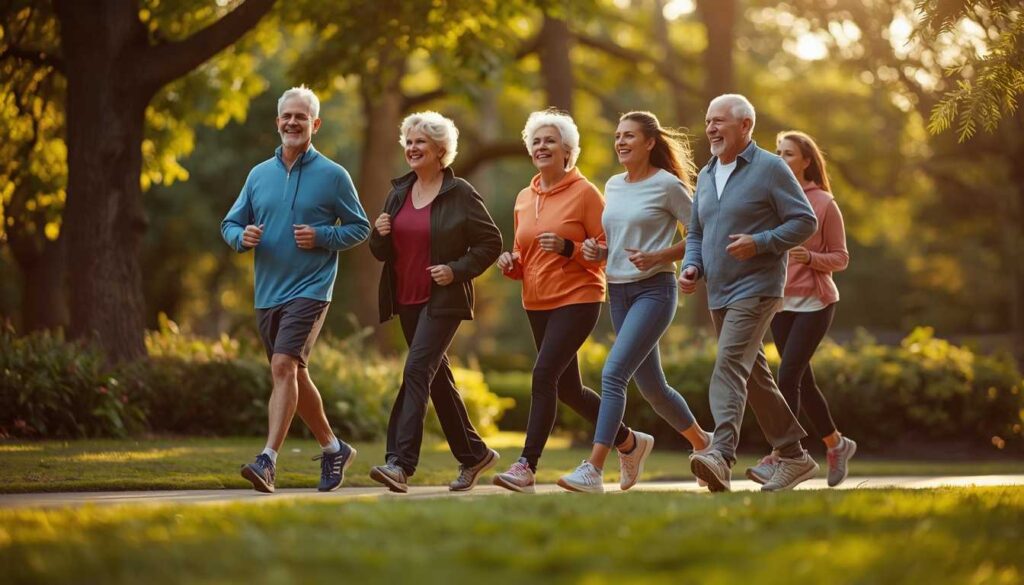
Yet most seniors who would love a walking group don’t have one. Not because their neighborhood lacks interested people. Because nobody started one.
This guide teaches you exactly how to start one — from the first conversation to the first walk to a thriving weekly community that keeps going long after you’ve established it. Every step explained completely, every tool recommended practically, every mistake identified in advance.
You don’t need a fitness background. Organizational experience isn’t required either. All it takes is a neighborhood, a pair of walking shoes, and the willingness to send a few messages.
🚶 Why Senior Walking Groups Succeed Where Solo Exercise Fails
Before the how-to, the why — because understanding what makes walking groups so effective for seniors specifically helps you build one that lasts.
💪 Physical Benefits
- Reduces cardiovascular disease risk by up to 35%
- Improves bone density and reduces fracture risk
- Maintains muscle mass alongside protein intake
- Lowers blood pressure and blood sugar
- Reduces fall risk through improved balance and coordination
🧠 Mental and Social Benefits
- Reduces cognitive decline risk by 30–40%
- Decreases depression and anxiety symptoms
- Combats social isolation — a serious senior health risk
- Creates accountability that dramatically improves consistency
- Builds neighborhood community and genuine friendships
A 2019 study published in the British Journal of Sports Medicine analyzed data from 1.2 million adults and found that team and social exercise produced mental health benefits 20% greater than equivalent solo exercise. Group walking specifically showed the highest adherence rates of any exercise form for adults over 60 — meaning people who walk with a group actually keep doing it, while solo exercisers typically quit within 3 months.
That’s the fundamental insight: a walking club isn’t just a nicer way to exercise. It’s a structure that makes exercise actually happen — consistently, enjoyably, and for years rather than weeks.
🗺️ Step-by-Step: Building Your Senior Walking Club from Scratch
📌 Step 1: Find Your First 3–5 Walking Partners (Week 1)
You don’t need a committee, a nonprofit, or a formal organization to start. You need three to five people who will show up for the first walk. That’s it. Everything else comes later.
Where to find them:
- 🏘️ Nextdoor app — Post in your neighborhood group: “Starting a senior walking group, looking for 3–4 walking partners for Tuesday/Thursday mornings. Anyone interested?” Nextdoor is hyperlocal and specifically used for exactly this kind of community building. Download at nextdoor.com
- ⛪ Your faith community — Bulletin boards, announcements, and post-service conversations are among the most effective ways to find interested senior walkers in your area
- 🏥 Your doctor’s office or physical therapist — Many practices have community bulletin boards or can mention your group to patients interested in exercise
- 📫 A simple flyer — One page, large print, your phone number, posted at the library, community center, coffee shop, and grocery store
- 👥 Direct personal invitation — Think of three neighbors you see regularly. Ask them directly. “I’m starting a Tuesday morning walking group — would you be interested?” In-person asks work better than digital ones for this age group
Your first message or flyer needs only four things: What it is (morning walking group for adults 55+), When (specific day and time), Where to meet, and How to respond (your phone number or email).
📌 Step 2: Plan Your First Walk (Week 1–2)
Your first walk sets the culture of your group. A few decisions made now prevent problems later:
⏰ Choose Your Schedule Strategically
For most senior walking groups, Tuesday and Thursday mornings between 7:30 and 9:00am consistently produce the best attendance. Why: weekday mornings have fewer conflicts than weekends, morning temperatures are cooler in summer months, and the routine creates a dependable weekly anchor.
Start with one day per week. Add a second day only after consistent attendance on the first.
🗺️ Plan a Comfortable First Route
Your first route should be:
- Flat or gently rolling — Save hills for after you know your group’s fitness range
- 1–1.5 miles maximum — First walks should leave everyone feeling good, not exhausted
- On sidewalks or paved paths — Uneven terrain creates fall risk and self-consciousness about pace
- With a clear meeting point — A parking lot, a park entrance, a specific street corner
- With a restroom option somewhere along the way — This matters more than most guides acknowledge
🌡️ Set a Weather Policy Before You Need One
Decide in advance what weather cancels a walk. A common policy: cancel if temperature is below 32°F or above 95°F, or if there’s rain or lightning. Reliable communication is what keeps senior walking groups organized, so always text members about weather cancellations the evening before.
📌 Step 3: Run Your First Walk (Week 2–3)
Arrive 10 minutes early. This is non-negotiable. The walk organizer should always be there before everyone else — it signals reliability and respect for members’ time.
The first walk agenda (this is simple on purpose):
- Introductions (5 minutes): Everyone shares their name and one sentence about why they wanted to join. This creates immediate human connection.
- Pace conversation (2 minutes): “We’ll walk at a pace where everyone can talk comfortably without being out of breath. If you need to slow down, just say so — no explanations needed.”
- Walk (30–45 minutes)
- Brief close (5 minutes): Confirm next walk date and time. Collect phone numbers or emails for future communication. Ask if anyone has suggestions for next week’s route.
The most important thing you’ll do on the first walk: Make sure nobody finishes feeling like they were too slow, too out of shape, or unwelcome. The entire first walk is about safety, warmth, and making people want to come back.
📌 Step 4: Build Your Communication System (Week 2–3)
A walking club without a reliable communication system loses members to confusion and missed notifications. Set up a simple group communication channel immediately after your first walk:
For groups where everyone has a smartphone: A group text message thread is the simplest and most reliable option. Create a group text with all members’ numbers. Name it something memorable: “Tuesday Walkers” or “[Your neighborhood] Walking Group.”
For mixed groups (some members without smartphones): Maintain a phone call list for members without text capability. One brief call the evening before each walk keeps everyone informed.
For larger groups (10+ members): Consider a free GroupMe or WhatsApp group, which allows easier management of larger message threads and lets members join/leave without the organizer updating everyone’s contact list manually.
What to communicate:
- Walk confirmation (evening before): “Walk is on for tomorrow at 8am at [meeting point]. Weather looks good!”
- Cancellations (as early as possible, always with reason): “Canceling tomorrow’s walk — forecasted lightning storms. See everyone next Tuesday!”
- Route changes: “This week we’re trying the park loop instead of the usual route — same meeting time and place.”
📌 Step 5: Strategies to Grow Your Senior Walking Groups (Month 2–3)
Once your first four to six walks have happened consistently, you have something real to invite people into — not just an idea. This is when recruiting new members becomes significantly easier.
Growth strategies that work for senior walking groups:
- Ask existing members to bring one friend — The single most effective growth method. Personal invitation from someone they trust beats any flyer.
- Post about the group on Nextdoor after walks — “Our Tuesday morning walking group just completed our fourth walk together. Great group, friendly pace, open to new members. Comment if interested.” Authenticity and momentum are visible in this kind of post.
- Contact your local Parks and Recreation department — Many cities list community exercise groups on their websites or in their senior activity directories. A free listing reaches people you’d never otherwise find.
- AARP’s Create the Good Program — AARP offers a comprehensive “Start a Walking Group” guide that provides step-by-step resources for growing senior walking programs, including promotional materials and community connection strategies. Visit the AARP Create the Good guide for current program details and downloadable resources.

📱 The Best Walking Apps and Trackers for Senior Walking Groups in 2026
Technology can meaningfully enhance a senior walking group — tracking progress, motivating members, and creating a sense of shared achievement. Here are the most senior-friendly options:
| App/Tool | Best Feature for Groups | Cost | Senior Ease |
|---|---|---|---|
| Walkadoo | Group step challenges and leaderboards | Free | ⭐⭐⭐⭐⭐ |
| MapMyWalk | Route planning, distance/pace tracking, sharable routes | Free (premium $5.99/mo) | ⭐⭐⭐⭐ |
| Pacer | Group step counts, health insights, simple interface | Free (premium $4.99/mo) | ⭐⭐⭐⭐⭐ |
| iPhone Health App | Automatic step counting, no setup required | Free (iPhone built-in) | ⭐⭐⭐⭐⭐ |
| Smart Ring (Oura, etc.) | 24/7 health tracking including steps, sleep, heart rate | $299–$399 | ⭐⭐⭐⭐ |
The simplest approach for most groups: Don’t require any app at all for the first month. Let members use whatever tracking method they’re comfortable with — pedometer, phone step counter, or nothing. Once the group has a rhythm, introduce a shared app to those who want it. Forcing technology adoption at the start creates barriers that prevent people from joining.
For seniors interested in more comprehensive health tracking beyond steps, our guide on Best Smart Rings for Seniors covers wearable options that track heart rate, sleep, and activity automatically.
🛡️ Safety First: Essential Guidelines for Senior Walking Groups
⚠️ Before your first walk, establish these safety basics:
👟 Footwear and Equipment
Proper footwear is the most important safety factor in any senior walking program. Walking shoes — not running shoes, not fashion sneakers — should provide lateral stability, cushioned heel support, and a wide toe box. Many seniors benefit from custom orthotics, particularly those with diabetes, arthritis, or previous foot injuries. Encourage members to wear their walking shoes to the first meeting so you can assess whether anyone needs guidance.
🚑 Medical Considerations
Recommend — but don’t require — that members consult their physician before joining if they have heart disease, recent surgery, severe arthritis, or other conditions that might affect exercise safety. Keep a simple roster that includes emergency contact information for each member. Know the location of the nearest medical facility along your walking routes.
🌞 Weather and Environmental Safety
- Sun protection: Sunscreen, hats, and sunglasses should be mentioned at the first walk — skin cancer risk increases with age and cumulative sun exposure
- Hydration: Encourage members to bring water, particularly for summer walks. Dehydration risk is significantly higher in older adults
- Visibility: For early morning or late afternoon walks, bright or reflective clothing improves visibility to drivers
- Ice and uneven surfaces: Winter walks require careful route selection. Consider postponing rather than rerouting when sidewalks are icy — falls on ice are among the most serious injury risks for seniors
📞 The Buddy System for Larger Groups
For groups of eight or more, pair members informally as walking buddies — people who look out for each other during the walk. If someone falls behind, their buddy notices first. This simple structure provides meaningful safety coverage without creating a formal monitoring dynamic that feels patronizing.
🎯 Keeping Your Walking Club Alive: The Long-Term Engagement Secret
Most walking clubs that fail don’t fail because of bad weather or scheduling conflicts. They fail because they become routine without becoming meaningful. The groups that persist for years share one quality: they make members feel genuinely connected, not just physically active.
Build Social Rituals Around the Walks
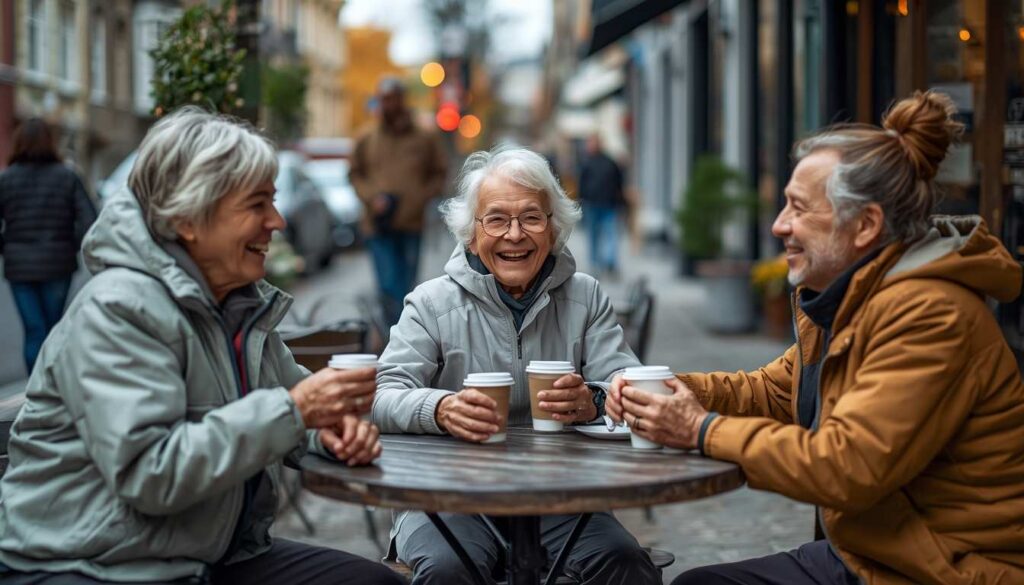
The walk itself should eventually be the center of a slightly larger social event. The most sustainable senior walking groups typically add one simple ritual:
- ☕ Post-walk coffee: A 20-minute stop at a nearby coffee shop or diner after the walk. This is where friendships actually form — not during the walk itself, but in the conversation after it. Many groups report that members who would otherwise drop out keep coming “because of coffee.”
- 🎂 Birthday acknowledgments: A simple card or group text message for member birthdays creates belonging out of proportion to the effort
- 📸 Group photos: A monthly or seasonal group photo builds identity and history. Share in your group text and offer to print copies for members who want them
- 🗺️ Special destination walks: Once a month, plan a walk to somewhere slightly different — a botanical garden, a historic neighborhood, a farmer’s market. The variety maintains interest and provides shared experiences beyond the standard route
The Leadership Succession Plan
Every successful walking club eventually faces the question of what happens when the founder can’t lead a walk. Build leadership redundancy early: identify two or three members willing to lead walks in your absence. A club that depends entirely on one person isn’t a club — it’s a scheduled activity that disappears when that person is unavailable.
📊 Sample First Month Schedule
| Week | Action | Goal |
|---|---|---|
| Week 1 | Post on Nextdoor, invite 3 neighbors personally, hang 2 flyers | Find your founding 3–5 walkers |
| Week 2 | Plan route, confirm date/time, send reminder day before | First walk happens — everyone finishes happy |
| Week 3 | Second walk, collect all contact info, set up group text | Communication system established |
| Week 4 | Third walk, post Nextdoor update, ask members to invite one friend | Growth campaign begins from position of momentum |
🎥 Master Your Technique: Walking Tips for Seniors
Before you head out for your first group session, it’s essential to ensure your technique is safe and effective. Proper posture and foot placement can prevent injury and make your walks much more enjoyable. Watch this expert guide on the five simple ways to improve your walking form:
🔗 The Bigger Picture: Physical Health and Active Senior Life
A walking club is one piece of the active aging picture. For seniors who want to build on their walking foundation:
- Add a morning movement routine to complement your walks — see our Morning Exercises for Seniors guide
- Support your walking with the right nutrition — our High-Protein Breakfast for Seniors guide shows how to fuel your body for active mornings
- Track your progress with the right technology — read our Best Smart Rings for Seniors guide for wearable health tracking options
- For the social and professional side of active senior life, our Make Money Online After 50 Master Guide shows how physical vitality supports professional engagement well into your 60s and 70s
The seniors thriving most fully in 2026 are not the ones who chose between physical health and professional engagement. They’re the ones who built both — and discovered that each one makes the other more sustainable.
Your neighborhood has people who want to walk together. They just don’t know each other yet. You can change that with one Nextdoor post and a Tuesday morning. Start this week.
❓ Frequently Asked Questions- Senior Walking Groups
Three to five people is the ideal founding size. Smaller than three lacks the social dynamic that makes group walking motivating. Larger than ten for a first walk creates coordination challenges before you have systems in place. Most successful senior walking clubs start with four founding members and grow naturally from there.
For comprehensive toolkits, safety tips, and advocacy resources, we recommend exploring America Walks. They provide excellent community-driven resources that help local groups stay organized and motivated. You can find their expert guides at AmericaWalks.org.
Early to mid-morning — between 7:30 and 10:00am — works best for most senior walking groups. Morning temperatures are cooler in summer, energy levels are typically higher before midday fatigue sets in, and morning exercise produces stronger mood and cognitive benefits throughout the day than afternoon or evening exercise. Avoid peak midday heat in summer months and early morning darkness in winter by adjusting start times seasonally.
The most effective approach is a “no walker left behind” policy with a flexible social pace. Walk in a loose group rather than a tight line, allowing natural variation. For groups with significant speed differences, a simple out-and-back route allows faster walkers to turn around earlier while slower walkers complete a shorter distance — everyone still walks together at the start and finish. Emphasize that pace is never a measure of worthiness in your group from the very first walk.