
Athens is not the city most Americans picture. It’s grittier, more layered, and far more livable than anyone expects. This comprehensive Athens travel guide for seniors tells you exactly how to see the historic city, get around it, and afford it without surprises in 2026.
There is a version of Athens that exists in most American imaginations: white columns, ancient marble, goat yogurt, and blue skies. That Athens is real — the Acropolis at sunrise genuinely does take your breath away in a way that photographs cannot prepare you for. But there’s also the Athens that seasoned travelers discover: a city of rooftop bars, serious food, neighborhood kafeneios where old men argue over backgammon, covered markets overflowing with spices and cheeses, and a cultural life that quietly rivals any European capital.
For Americans over 55 visiting Greece, Athens is almost always the entry point — and too often, it’s treated as nothing more than that. This tailored Athens travel guide for seniors is built on a different premise: Athens deserves three days minimum, not just one obligatory afternoon. Treat it right, and it becomes the highlight of your trip.
📋 Contents
- → Why an Athens Travel Guide for Seniors is Essential
- → Best Time to Visit Athens for Seniors
- → Getting Around Athens: The Honest Senior Guide
- → Top Sights for Seniors: What to See & What to Skip
- → Best Neighborhoods to Explore (and One to Avoid)
- → Best Day Trips from Athens for Seniors
- → Food, Dining & Kafeneio Culture
- → Where to Stay in Athens: Senior-Friendly Picks by Budget
- → Real Costs in Athens 2026
- → Frequently Asked Questions
Why an Athens Travel Guide for Seniors is Essential
Ask most Americans over 55 what they know about Athens, and you’ll hear: “the Acropolis.” Ask the ones who have actually spent time there what stands out most, and you’ll hear something different — the neighborhood coffee shop where the owner asked them where they were from and spent an hour telling them about his grandmother; the rooftop restaurant where they ate octopus and watched the sun set behind the Parthenon; the morning market in Monastiraki where the smells alone were an education in Greek cuisine.
Athens has a quality that most guidebooks underserve: it is, at its core, a city that runs on human connection. Greeks take pride in the concept of philoxenia — love of strangers — and in Athens, you feel it in small daily moments. This makes it an unusually welcoming destination for solo senior travelers, couples on a once-in-a-lifetime trip, and anyone who wants to feel genuinely received rather than merely tolerated as a tourist.

💡 Quick Answer — Is Athens Good for Seniors? Yes — with preparation. Athens is walkable in its historic core, English is spoken everywhere tourists go, the food is excellent and affordable, and the historical density per square kilometer is unmatched in Europe. The main challenge is hills and uneven stone streets, which require sensible footwear and some planning. With a good base neighborhood and a few logistical adjustments, seniors consistently rate Athens among their favorite European city experiences.
If you prefer a visual overview before diving into the details, this excellent, up-to-date guide provides a great layout of what to expect in the city:
Best Time to Visit Athens for Seniors
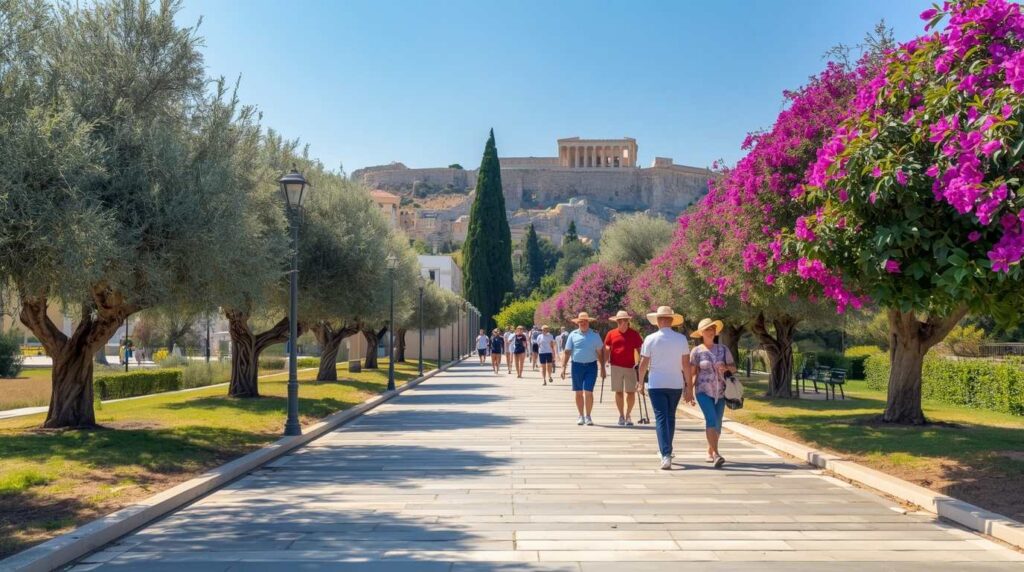
This is the single most important decision for senior travelers planning an Athens trip, and most general travel guides get it wrong by prioritizing summer (peak season for flights and package tours) when summer is actually the worst time for most seniors to visit.
| Season | Temperatures | Crowd Level | Senior Verdict |
|---|---|---|---|
| April – May | 18–26°C (64–79°F) | Moderate, growing | ✅ Best choice. Flowers, mild weather, shorter queues, lower prices |
| June – August | 28–38°C (82–100°F) | Extremely crowded | ⚠️ Challenging. Heat stroke risk at outdoor sites; Acropolis exposed and brutal midday |
| September – October | 22–30°C (72–86°F) | Declining, pleasant | ✅ Excellent choice. Summer heat fading, crowds thinning, locals returning |
| November – March | 8–16°C (46–61°F) | Low | 🔵 Fine for museums. Some sites shorter hours; rain possible; very affordable |
⚠️ Summer Heat Warning for Seniors: The Acropolis hill is fully exposed marble and stone — zero shade — and midday temperatures in July-August routinely hit 36–40°C (97–104°F). Heat exhaustion is a genuine medical risk, not a minor inconvenience. If you must visit in summer, the Acropolis opens at 8am — arrive at the gate by 7:45am, be done and back in the shade by 10:30am. The afternoon is for air-conditioned museums and covered tavernas.
Athens Travel Guide for Seniors: Getting Around the City
Athens has a reputation for chaos, but for seniors staying in the right central neighborhoods, daily logistics are simpler than they appear. Here’s what you actually need to know — explained plainly, without assuming any prior experience with European public transport.
🚶 Walking (Your Primary Mode)
The historic center of Athens — Plaka, Monastiraki, Syntagma Square, Koukaki, the Acropolis Museum — is compact and walkable. Distances that look long on a map are often 10–15 minutes on foot. The challenge is the terrain: Athens is built on several hills, the streets are often ancient stone or marble (beautiful, but slippery when wet), and curb cuts for accessibility are inconsistent. Wear proper supportive footwear — not sandals, not flip flops. Your feet will thank you after day three.

🚇 Metro (Safe, Simple, Air-Conditioned)
Athens has a clean, modern metro system that seniors find far easier than most European subway systems. Why? Because it has only three lines. Line 1 (green) runs north-south. Line 2 (red) and Line 3 (blue) cover most central tourist areas. The signage is in both Greek and English. Stations are elevator-equipped. A single ticket costs €1.40 and is valid for 90 minutes — you can transfer between lines on the same ticket. The airport express (Metro Line 3 to Syntagma) costs €10 per person and takes about 40 minutes. This is almost always the best way to arrive from the airport if you’re reasonably mobile.
🚕 Taxis & Bolt/Uber (For When You’re Tired)
Athens taxis are metered and affordable by US standards. The app-based ride service Beat (similar to Uber) operates widely in Athens and is arguably easier for seniors — you see the price before you get in, you don’t need to speak Greek to communicate the destination, and you can pay by card. A typical cross-city fare runs €6–€12. Bolt also operates in Athens. Standard yellow taxis are abundant and generally reliable — always insist on the meter being on. Flag drop is €1.29; most short trips cost €5–€8.
🚌 Buses (Skip Them Your First Few Days)
Athens has an extensive bus network, but the system is genuinely confusing for first-time visitors — routes overlap, schedules vary, and stops are not always clearly marked in English. Unless you’re staying longer-term or have a specific reason, stick to the metro and taxis for your first several days. The Athens bus pass is good value for longer stays (5-day pass: €9), but for a short visit, apps and taxis simplify life considerably.
🦽 Accessibility Note: Athens is improving but not fully accessible. The Acropolis path is paved and has elevator access to the main plateau (from the south entrance side). The Acropolis Museum is fully accessible with elevators and ramps. Plaka’s cobblestone streets are charming but challenging for walkers with mobility issues — a walking stick is genuinely useful. The metro has elevators at all major stations. If you use a wheelchair or rollator, email your hotel in advance and they’ll advise on the most manageable routes for your specific needs.
Top Sights in Our Athens Travel Guide for Seniors
Not every attraction in Athens makes equal sense for travelers over 55. This section is ranked by senior experience value — not by what every guidebook lists automatically.
🏛️ 1. The Acropolis & Parthenon — Essential, With Planning
This is non-negotiable — the Parthenon is genuinely one of the most extraordinary things built by human hands, and standing in front of it produces a particular kind of silence that even jaded travelers describe as affecting. But go prepared. The walk from the south entrance to the top involves about 20 minutes of uphill walking on paved paths. The site itself is open stone plateau. Wear your best walking shoes. Bring water. Go first thing in the morning. Book tickets online in advance at etickets.tap.gr — the queue in peak season is long and standing in sun is miserable. Adult admission: €20 standard, reduced to €10 for EU citizens over 65 (non-EU seniors still pay full price).
🏺 2. The Acropolis Museum — Don’t Miss This

Most visitors treat the Acropolis Museum as an afterthought to the site itself. Seniors who’ve been to both consistently say the museum is equally — sometimes more — moving. The building is a masterpiece of modern architecture: fully air-conditioned, fully accessible, with floor-to-ceiling glass walls that frame views of the Acropolis itself as you walk through the exhibits. The top floor holds the original Parthenon friezes (and their controversially absent sections, shown as plaster replicas where British-held originals should be). Budget two hours minimum. Admission is €10. There’s a good café and restaurant on the premises. Address: Dionysiou Areopagitou 15, Makrigianni — five-minute walk from the Acropolis south entrance.
🌿 3. The National Archaeological Museum — For the History-Minded
Athens’ National Archaeological Museum is one of the great museums of the world — not one of the hyped ones, but actually one of the greatest repositories of ancient Greek objects anywhere. The Antikythera Mechanism (a 2,000-year-old analog computer recovered from a shipwreck) alone is worth the visit. So are the Cycladic figures, the gold Mycenaean masks, and the extraordinary bronze statues. It’s not in the tourist center — it’s in the Exarchia neighborhood, a 20-minute walk or short taxi from Syntagma. Admission: €12. Allow three hours. Closed Mondays. Air-conditioned and large enough that you can sit and rest between galleries.
🌄 4. Areopagus Hill (Mars Hill) — Short, Manageable, Stunning View
This is the hidden senior gem of Athens. Areopagus is a small rocky outcrop directly adjacent to the Acropolis entrance — it takes about 10 minutes to climb and delivers one of the best views in the city: the Agora laid out below, the Acropolis above you, and Athens spreading out in every direction. It’s free. It’s short. The Apostle Paul stood here and addressed the Athenians — the spot where he preached is marked with a bronze plaque. Go early morning or late afternoon for the light. The rocks can be slippery; there are metal handholds installed at the steepest sections.
🛍️ 5. Monastiraki Flea Market — Saturday Morning Ritual
On Saturday mornings, the streets around Monastiraki Square fill with one of Europe’s most atmospheric flea markets — antique dealers, second-hand book sellers, vintage clothing, folk art, religious icons, and a great deal of fascinating junk. Even if you buy nothing, the experience is pure Athens: coffee in hand, wandering through stalls while locals do the same. The permanent covered antiques shops on Ifestou Street operate daily. The Saturday street market runs from about 8am to 3pm and is best visited before 11am before the crowds peak.
⚠️ What to Reconsider for Seniors
The Ancient Agora: Historically fascinating (this is where Socrates argued philosophy), but the site is largely ruins with uneven ground and minimal shade. If mobility is any concern, view it from the Thiseio elevated walkway — you see the whole thing without the terrain challenge. Lycabettus Hill: The highest point in Athens with panoramic views — reachable by funicular if the climb isn’t appropriate — but the funicular has been intermittently closed for maintenance. Check current status before planning around it.
Best Neighborhoods to Explore in Athens
🏡 Plaka — The Classic Choice
Plaka is the oldest continuously inhabited neighborhood in Athens — a warren of neoclassical houses, flower-draped lanes, and tourist-oriented tavernas at the base of the Acropolis. It’s the most tourist-facing area of Athens and feels it (souvenir shops are abundant), but it’s also genuinely charming, walkable, and perfectly positioned for the Acropolis and the Monastiraki market. Staying here means being 10 minutes’ walk from most major sights. The streets are narrow and shaded, which matters enormously in summer.
☕ Koukaki — The Senior Sweet Spot

Koukaki sits on the south side of the Acropolis and is the neighborhood that experienced Athens travelers increasingly prefer. It’s residential and local — the coffee shops are full of Athenians, not tourists; the tavernas serve what Greeks actually eat. It’s a 10-minute walk to the Acropolis Museum and 15 minutes to Plaka. Hotels and apartments here cost meaningfully less than Plaka or Syntagma, and the morning bakery walk feels more like living in Athens than visiting it. For seniors who want authentic daily life alongside genuine sightseeing access, Koukaki is the recommendation.
🛒 Monastiraki/Psyrri — For the Curious Explorer
Monastiraki is the beating heart of central Athens — chaotic, noisy, fascinating, and alive at all hours. Psyrri, just west of it, has gentrified in the last decade into a creative district of small bars, art galleries, and interesting restaurants. This area rewards the senior traveler who enjoys human density and the energy of a real city. The noise and pace can be tiring — don’t stay here if you’re sensitive to that — but for lunch and an afternoon, it’s some of the best people-watching in Greece.
⚠️ Omonia Square Area — Worth Knowing
Omonia Square, in the 2000s a rough neighborhood, has improved but remains the least recommended area in central Athens for senior travelers. There’s nothing dangerous about walking through it in daylight, but it’s not an area to base yourself, and there’s little reason to seek it out unless you’re going to the National Archaeological Museum nearby. Knowing this saves you from accidentally choosing a hotel that’s technically “central Athens” but not in the areas described above.
Best Day Trips from Athens for Seniors
Athens’ geographic position makes it one of Europe’s great day-trip hubs. You can reach ancient Delphi, the ruins of Mycenae, the theater of Epidaurus, or a sailing day among nearby islands all within a comfortable day’s round trip. For seniors, the key question is not just what to see but how to get there without exhaustion. Organized tours from Athens are excellent value and remove all logistics — your hotel concierge can book them, or search for tours on Viator or GetYourGuide using terms like “senior-friendly” or “private Athens day trip.”
| Day Trip | Distance from Athens | Best For | Senior Tip |
|---|---|---|---|
| Cape Sounion | 70km, 1.5 hrs by car | The Temple of Poseidon on a dramatic cliff — sunset views are extraordinary | Afternoon trip; organized bus tours run daily from Athens center |
| Nafplio & Mycenae | 120km, 2 hrs by car | Ancient lion gate at Mycenae; beautiful Nafplio waterfront for lunch | Full day; consider a private driver or organized tour rather than renting |
| Epidaurus | 150km, 2.5 hrs | The most perfectly preserved ancient theater in the world — 15,000 seats, still in use | Often combined with Nafplio; summer evening performances (check calendar) |
| Delphi | 180km, 3 hrs | Oracle’s sanctuary on the slopes of Mount Parnassus; dramatic mountain scenery | Long day (depart 7am); organized coach tours most comfortable |
| Hydra Island | Ferry from Piraeus port, 2 hrs | No cars or motorbikes on the island — just donkeys, boats, and silence | Most accessible island day trip; flat harbor walk; ferries run frequently |
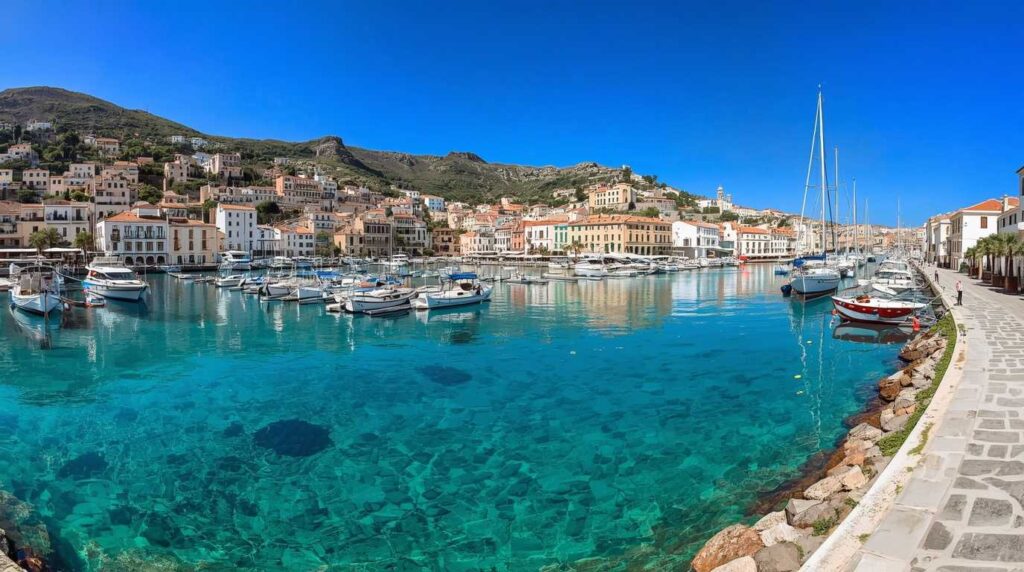
If you are considering a deeper exploration of the Peloponnese — Nafplio, Mystras, the Mani — see our dedicated senior travel guides for those regions. A day trip to Nafplio gives you a taste; the full Peloponnese deserves its own week.
Food, Dining & Kafeneio Culture in Athens
Greek cuisine in Athens is both better and more nuanced than most Americans expect. The tourist version — moussaka, souvlaki, Greek salad — is fine. But behind it is a food culture of genuine depth: the mezze tradition of sharing small plates; the regional variety between Cretan olive oil dishes, Aegean seafood, and mainland grilled meats; the slow culture of the kafeneio (coffee house) where a single Greek coffee and a glass of water can legitimately occupy two hours of your morning without anyone looking at you sideways.
What to Order and Where
Breakfast: Greeks typically eat a small breakfast — a koulouri (sesame bread ring from street vendors, about €0.80) and a coffee is standard. Hotel breakfasts exist but are not a cultural focus. For a proper morning meal, look for a zacharoplasteion (pastry shop) and order tiropita (cheese pie) or spanakopita (spinach pie) — €1.50–€2.50 each, served warm.
Lunch: The main meal for Greeks, typically between 2–4pm. A proper taverna lunch — appetizers, a main, bread, house wine, water — runs €15–€25 per person in the Plaka/Monastiraki area and €10–€18 in Koukaki or local neighborhoods. Avoid restaurants that have photos on the menus facing the Acropolis — price and quality correlate inversely with tourist proximity in Athens as in most cities.

Dinner: Greeks dine late — 9pm is normal, 10pm is not unusual. If you want to eat at 6:30pm, you’ll be the only table. This isn’t a problem — service will be attentive — but it means the authentic atmosphere of a full Athens taverna comes later than American dining rhythms. Dinner mains run €12–€24 in good local restaurants; seafood (psarotaverna) is higher.
Coffee culture: Greek coffee (ellinikos kafes) is made in a small pot, served in a demitasse, and sipped slowly — the grounds settle to the bottom. Freddo espresso (cold espresso over ice) and freddo cappuccino are Athens inventions and are the default order for most locals. A coffee at a kafeneio costs €2–€3 and buys you indefinite table time. This is not rudeness — it’s the culture. Sit, watch the world, have a second coffee. You’re doing it right.
🍽️ Athens Food Tour Recommendation: For seniors visiting Athens for the first time, a guided food tour of the central market area (Varvakios Agora) and Monastiraki is one of the most rewarding 3-hour experiences in the city. You’ll try 10–15 different foods, learn the context for each, and discover streets you wouldn’t find independently. Devour Athens runs well-regarded small-group tours; search their current schedule at devourtours.com. Tours typically run €80–€100 per person.
Where to Stay: Athens Travel Guide for Seniors
Athens offers a broad range of accommodation — from historic boutique hotels in Plaka to modern design hotels near Syntagma to quieter apartment rentals in Koukaki. For seniors, the most important factors are: elevator access (specify this when booking — not all Athens buildings have lifts), walkability to at least some sights, and proximity to a metro station for longer trips. Here’s how the options break down:
| Budget Level | What to Expect | Approximate Nightly Rate (2026) | Best Area |
|---|---|---|---|
| Budget | Clean, basic hotels; some without elevator; shared breakfast area | €55–€90 | Monastiraki, outer Plaka |
| Mid-Range | 3-star hotels with elevator, AC, included breakfast; some have rooftop terraces with Acropolis views | €90–€160 | Koukaki, Syntagma, inner Plaka |
| Upscale | 4–5 star hotels; full amenities; concierge who speaks excellent English; rooftop pools | €160–€350+ | Syntagma, Kolonaki, Vouliagmeni (beach suburbs) |
| Apartment Rental | More space, kitchen access, quieter nights; good for stays of 5+ days | €70–€130/night (Airbnb/Vrbo) | Koukaki, Pangrati, Mets |
✅ Senior Booking Checklist: Before confirming any Athens hotel booking, verify: (1) Elevator/lift access to all floors. (2) Air conditioning in room (essential May–October). (3) Distance to nearest metro station. (4) Whether breakfast is included or available on-site. (5) Check if the property is on a pedestrian street vs. a main road for noise level. Athens traffic noise can be significant — rooms facing interior courtyards or back streets sleep better.
Real Costs in Athens in 2026
Athens is not cheap by Southeast Asia standards, but it remains significantly more affordable than Paris, London, or Amsterdam — and offers far more history per euro than any of them. Here’s what a realistic senior couple should budget:
| Expense | Budget Option | Mid-Range | Comfortable |
|---|---|---|---|
| Hotel (per night, couple) | €60–€90 | €100–€160 | €170–€300+ |
| Meals (per day, couple) | €35–€55 (tavernas + street food) | €60–€100 | €100–€180 |
| Transport (metro, taxis) | €5–€10/day | €10–€20/day | €20–€50/day |
| Entry fees (2–3 sites/day) | €15–€25/person | €20–€35/person | €30–€50/person (guided tours) |
| Coffee + snacks | €8–€12/day, couple | €12–€20/day | €20–€35/day |
| Daily Total (couple) | €120–€190 | €200–€330 | €340–€610 |
A 7-day Athens trip for a couple at mid-range comfortable level — including flights from the US East Coast — realistically runs $4,500–$7,500 all-in, depending on flight timing and hotel standard. As any good athens travel guide for seniors will note, the quality of experience for history-focused travelers is hard to match anywhere in Europe. For more guidance on managing travel budgets, explore our smart travel resources for seniors.
🗺️ Practical Athens: Language, Safety & Senior-Specific Tips
Language: English is spoken almost universally in hotels, restaurants, tourist sites, and shops throughout central Athens. Greeks who work in tourism typically speak English well — many speak it excellently. In residential neighborhoods slightly off the tourist path (Pangrati, Mets, Exarchia), older residents may not speak English, but younger ones almost always do. Learning a few Greek words — efharisto (thank you), parakalo (please/you’re welcome), yia sas (hello/goodbye — formal) — earns visible warmth from locals and is worth five minutes of practice.
Safety: Athens is one of the safest large cities in Europe for tourists. Violent crime against visitors is rare. The concerns worth noting are pickpocketing in crowded areas (Monastiraki flea market, metro Line 1 between Piraeus and the center, very crowded tourist sites) — keep your valuables in a front pocket or secure cross-body bag. Traffic is chaotic: Greek drivers treat pedestrian crossings as suggestions rather than law. Look both ways at crossings and don’t assume a green walk signal means vehicles have stopped. Otherwise, Athens is a city where you can walk freely at night, explore side streets without concern, and generally feel as safe as anywhere in Western Europe.
Currency: Greece uses the Euro. Euros are widely accepted everywhere. Credit cards (Visa, Mastercard) work in virtually all hotels and restaurants; some small tavernas and market stalls are cash-only. Inform your US bank before travel to avoid card blocks. ATMs (called ATM or ΑΤΜ) are abundant throughout central Athens; use ones attached to major banks rather than freestanding machines to minimize fees.
Pharmacy access: Greek pharmacies (farmakio — look for the green cross sign) are excellent. Pharmacists in Athens generally speak English and can advise on over-the-counter medications. Many US prescription medications are available without prescription in Greece. Keep copies of your prescriptions regardless. Athens has multiple major private hospitals with English-speaking staff for medical emergencies — Hygeia and Mitera are the most recommended for English-speaking patients.
Frequently Asked Questions — Athens Travel Guide for Seniors
Three full days is the minimum to cover the Acropolis, the Acropolis Museum, the National Archaeological Museum, Plaka, and Monastiraki without feeling rushed. Four to five days allows you to add a day trip (Cape Sounion or Nafplio), explore quieter neighborhoods at a comfortable pace, and actually sit in a kafeneio long enough to feel you’ve experienced Athens rather than photographed it. Seniors who allow themselves five or more days consistently report it was the right decision — the city reveals itself slowly.
The main Acropolis path from the south entrance has been paved and is accessible to most mobile seniors — it’s a steady uphill walk, not a stair climb, and the grade is manageable with rest stops. There is also an elevator that operates on the south side for visitors who cannot manage the incline at all — ask at the entrance gate and staff will direct you. People with serious hip or knee replacements visit regularly. The main variable is time of year: in cool weather, the walk is genuinely easy; in July-August heat, it’s taxing for anyone. If you use a cane, bring it. If you have genuine mobility limitations, the Acropolis Museum gives you the artifacts without the hill.
In spring and fall, advance booking for the Acropolis is strongly recommended (online tickets at etickets.tap.gr) but not always strictly necessary if you arrive at opening time. From mid-June through August, booking 3–5 days ahead is essentially mandatory if you want to avoid an hour-long queue in full sun. The Acropolis Museum, National Archaeological Museum, and most other Athens sites do not require advance booking and rarely have significant queues even in summer. For popular guided day trips (Delphi, Nafplio/Mycenae), book 2–4 days ahead in peak season.
For mobile seniors, the Metro Line 3 (blue line) from the airport to Syntagma Square is clean, air-conditioned, straightforward, and costs €10 per person. It takes about 40 minutes and runs every 30 minutes from approximately 6:30am to midnight. If you’re traveling with significant luggage, arriving late at night, have any mobility concerns, or just prefer door-to-door simplicity, a pre-booked private transfer from the airport runs €40–€55 for a sedan and €55–€75 for a larger vehicle — well worth it for a stress-free arrival after a transatlantic flight. Your hotel can arrange this or you can book through the airport taxi desk at arrivals.
Yes — and here’s the honest argument. The Acropolis and its museum represent two and a half millennia of human civilization in concentrated form. The islands are beautiful; the Acropolis is singular. Most seniors who spent three days in Athens before heading to the islands describe Athens as a highlight that recontextualized everything they saw afterward. That said, if your heart is genuinely set on the islands and Athens truly doesn’t appeal, even a single overnight in Athens with a morning at the Acropolis is better than flying straight through. The Parthenon is one of those things worth seeing even if it’s not the top of your list — it tends to become the top of your list once you’re standing in front of it.
The City That Invented the Idea of the City
The word “metropolis” is Greek. So is “democracy,” “philosophy,” “theater,” “academy,” and “gymnasium.” Athens didn’t just build the Parthenon — it invented the vocabulary that Western civilization still uses to think about how to live together.
For American seniors who have spent careers in institutions, communities, and conversations shaped by those ideas, Athens is not just a tourist destination. It’s a homecoming of sorts — a chance to see where the ideas that shaped your world came from, expressed in stone and light on a hill above a city that, for all its modernity, has been continuously inhabited for 3,000 years.
Come with comfortable shoes, a willingness to eat at 9pm, and enough time to let the city reveal itself slowly. We hope this athens travel guide for seniors helps you navigate the ancient streets. Athens rewards patience in the same way the Greeks always have — not with spectacle, but with depth.
Discover more Greece travel and retirement guides for seniors:
Thank you for this warm tribute to Athens, travel and taming misgivings. I’m planning a trip at 80. WooHoo