

Effective cognitive decline prevention seniors strategies are not inevitable; they are actionable. Science confirms that specific lifestyle choices significantly reduce the risk of cognitive issues. This cognitive decline prevention seniors guide covers what actually works — with the research behind it — and translates it into a daily action plan you can start this week.
Here is what the neuroscience of the past decade has established with growing confidence: the brain is not a fixed organ that simply deteriorates with age. It retains remarkable plasticity — the ability to form new connections, reorganize, and compensate — throughout life. And the lifestyle factors that protect this plasticity are not mysterious. They’re largely the same factors that protect cardiovascular health, metabolic health, and overall physical function.
The inconvenient truth: most people spend more time researching brain health supplements — the majority of which have limited evidence behind them — than implementing the interventions that actually have substantial research support. This guide flips that. We’ll cover what works, what the evidence says, what doesn’t work despite popular belief, and how to build it into daily life without it becoming a second job.
📋 Contents
- → Understanding Cognitive Decline: What’s Normal, What Isn’t
- → The Modifiable Risk Factors (The Ones You Can Control)
- → Exercise: The Single Most Powerful Intervention
- → Sleep: The Brain’s Cleaning System
- → Diet: The MIND Diet Evidence
- → Social Connection: The Overlooked Protector
- → Mental Stimulation: What Works and What Doesn’t
- → Supplements: The Honest Evidence Review
- → The 12-Week Brain Health Action Plan
- → Frequently Asked Questions
Understanding Cognitive Decline: What’s Normal, What Isn’t

Not all cognitive changes with age represent decline in a meaningful sense. Understanding the distinction between normal aging and concerning changes is the foundation for appropriate response.
| Normal Age-Related Change | Potentially Concerning Change |
|---|---|
| Taking slightly longer to recall a name or word | Forgetting familiar names you’ve known for years |
| Occasionally forgetting why you walked into a room | Getting lost in familiar locations |
| Needing more time to learn new technology | Difficulty following familiar routines or recipes |
| Occasional lapses in attention | Increased confusion, disorientation in time or place |
| Processing speed somewhat slower than at 40 | Difficulty managing finances, medications, or daily tasks |
| Finding multitasking harder than it used to be | Personality or behavior changes without clear cause |
If you or a family member notices consistent patterns from the right column, consult a physician. Many potentially concerning changes have treatable causes — thyroid dysfunction, vitamin B12 deficiency, medication interactions, depression, sleep apnea — that can be reversed with treatment. Don’t assume it’s Alzheimer’s without a proper evaluation.
The Modifiable Risk Factors — The Ones You Can Control
Expert Insight: What Truly Matters?
If you’re looking for evidence-based science on brain longevity, watch this discussion between Dr. Peter Attia and Dr. Andrew Huberman regarding the most critical modifiable factors for cognitive decline prevention seniors can control. They emphasize that while age is the primary risk factor, optimizing sleep, managing metabolic health (like Type 2 diabetes), and consistent, structured exercise are the most powerful interventions we have [00:13:51], [00:14:11].
The Lancet Commission on Dementia Prevention, Intervention and Care — the most comprehensive ongoing analysis of dementia risk — identified 14 modifiable risk factors that together account for approximately 45% of dementia cases worldwide. This is the single most important number in brain health: nearly half of all dementia may be preventable through lifestyle modification.Understanding cognitive decline prevention seniors efforts is critical, as nearly half of all dementia cases are linked to these modifiable factors.
| Risk Factor | Estimated % of Dementia Cases Attributable | When It Matters Most |
|---|---|---|
| Hearing loss (untreated) | 7% | Midlife (45–65) |
| High LDL cholesterol | 7% | Midlife |
| Depression | 3% | Any age |
| Physical inactivity | 2% | Midlife |
| Diabetes | 2% | Later life |
| Smoking | 2% | Any age |
| Hypertension | 2% | Midlife |
| Obesity | 1% | Midlife |
| Excessive alcohol | 1% | Any age |
| Traumatic brain injury | 3% | Any age |
| Air pollution | 3% | Later life |
| Social isolation | 5% | Later life |
| Low education | 5% | Early life |
| Vision loss (untreated) | 2% | Later life |
💡 Two Underappreciated Takeaways: First, untreated hearing loss is the single largest modifiable dementia risk factor — far larger than diet or brain training. If you have hearing loss and aren’t using hearing aids, this is your most impactful intervention. Second, social isolation contributes as much to dementia risk as all cardiovascular risk factors combined. Your social life is a medical intervention.
Exercise: The Single Most Powerful Intervention
If you are looking for specific routines to get started, our guides on morning exercises for seniors and yoga for mobility over 60 are excellent ways to integrate consistent physical movement into your day without needing heavy equipment.

If there is one intervention in brain health research that rises above all others in both the strength and consistency of the evidence, it is aerobic exercise. The mechanism is clear: aerobic exercise increases production of Brain-Derived Neurotrophic Factor (BDNF) — sometimes called “Miracle-Gro for the brain” — which promotes the growth of new neurons and synaptic connections, particularly in the hippocampus, the brain’s primary memory center.
What the Research Shows
- A landmark study from the University of British Columbia found that regular aerobic exercise increased hippocampal volume by approximately 2% in older adults — effectively reversing 1–2 years of age-related volume loss
- The FINGER trial (Finland) — a 2-year randomized controlled trial — showed that a multidomain lifestyle intervention including aerobic exercise prevented cognitive decline compared to controls
- A meta-analysis of 39 studies found that regular physical activity reduced dementia risk by 28% and Alzheimer’s risk by 45%
The Exercise Prescription for Brain Health
Consistent exercise is the cornerstone of cognitive decline prevention seniors initiatives.
| Exercise Type | Minimum Effective Dose | Optimal for Brain Health | Why It Works |
|---|---|---|---|
| Aerobic (walking, swimming, cycling) | 150 min/week moderate intensity | 30 min, 5x/week at moderate intensity (can hold a conversation but breathing harder) | BDNF production, hippocampal growth, vascular health |
| Resistance/strength training | 2x/week | 2–3x/week, all major muscle groups | Reduces insulin resistance, inflammation; improves executive function |
| Balance and coordination (yoga, tai chi) | 1x/week | 2–3x/week | Requires complex motor learning; activates multiple brain regions simultaneously |
💡 The Walking Insight: For seniors who currently do little exercise, studies show that even walking 40 minutes three times per week produces measurable hippocampal volume increases within 12 months. You don’t need a gym. You need consistent moderate-intensity walking. That’s the floor, not the ceiling — but it’s enough to make a meaningful neurological difference.
Sleep: The Brain’s Cleaning System
Sleep’s role in brain health has been dramatically reframed by neuroscience in the past decade. During deep sleep, the brain’s glymphatic system activates — essentially a waste clearance mechanism that flushes out metabolic byproducts including amyloid-beta and tau proteins, the very proteins that accumulate into the plaques and tangles associated with Alzheimer’s disease.This is a vital component of any cognitive decline prevention seniors plan.
The implication is stark: chronic sleep deprivation isn’t just bad for mood and energy. It literally reduces the brain’s ability to clear the toxic proteins associated with neurodegenerative disease. Studies have found that even a single night of poor sleep increases amyloid-beta levels in the brain — and that chronic short sleep (under 7 hours) is significantly associated with increased dementia risk.
Sleep Optimization for Brain Health
- Target 7–9 hours per night — both short and long sleep (9+ hours) are associated with increased dementia risk
- Treat sleep apnea aggressively — untreated sleep apnea is strongly associated with cognitive decline; CPAP treatment has shown cognitive benefits in studies
- Maintain consistent sleep/wake timing — circadian rhythm consistency matters; irregular sleep timing disrupts glymphatic function
- Cool, dark bedroom — core body temperature drop is required for deep sleep onset; keep bedroom at 65–68°F (18–20°C)
- Limit alcohol — alcohol disrupts deep sleep architecture even in moderate amounts; it may help with sleep onset but significantly reduces sleep quality
- Limit screens before bed — blue light suppresses melatonin; avoid screens for 60 minutes before bed or use blue light filtering
Diet: The MIND Diet Evidence

The MIND diet (Mediterranean-DASH Intervention for Neurodegenerative Delay) was specifically developed by nutritional epidemiologist Martha Clare Morris at Rush University Medical Center to protect brain health. In a landmark study, strict MIND diet adherence was associated with a 53% reduction in Alzheimer’s risk, and moderate adherence with a 35% reduction.Adopting this diet is a top-tier recommendation for cognitive decline prevention seniors success.
The MIND Diet: What to Eat More Of
| Food Category | Recommended Frequency | Why It Helps |
|---|---|---|
| Leafy green vegetables (spinach, kale, collards) | 6+ servings/week | Folate, vitamin K, lutein — associated with slower cognitive decline |
| Other vegetables | 1+ servings/day | Antioxidants, anti-inflammatory compounds |
| Berries (blueberries, strawberries especially) | 2+ servings/week | Flavonoids — direct association with slower cognitive decline in multiple studies |
| Nuts | 5+ servings/week | Healthy fats, vitamin E, anti-inflammatory |
| Olive oil | Primary cooking fat | Oleocanthal has anti-amyloid properties in laboratory studies |
| Whole grains | 3+ servings/day | Consistent blood sugar; vascular health |
| Fish | 1+ meal/week | Omega-3 fatty acids (DHA particularly) — structural component of brain cell membranes |
| Beans/legumes | 4+ meals/week | Protein, fiber, blood sugar stabilization |
| Poultry | 2+ meals/week | Lean protein without red meat’s inflammatory effects |
| Wine (optional) | Up to 1 glass/day | Resveratrol (though research remains debated; any alcohol carries risks) |
The MIND Diet: What to Eat Less Of
| Food Category | Limit To | Why |
|---|---|---|
| Red meat (beef, pork, lamb) | <4 servings/week | Saturated fat; inflammatory; vascular impact |
| Butter and margarine | <1 tablespoon/day | Saturated and trans fats |
| Cheese | <1 serving/week | Saturated fat; inflammatory at high intake |
| Pastries and sweets | <5 servings/week | Blood sugar spikes; inflammation; displaces nutrient-dense foods |
| Fried or fast food | <1 serving/week | Trans fats; inflammatory; vascular damage |
Social Connection: The Overlooked Protector
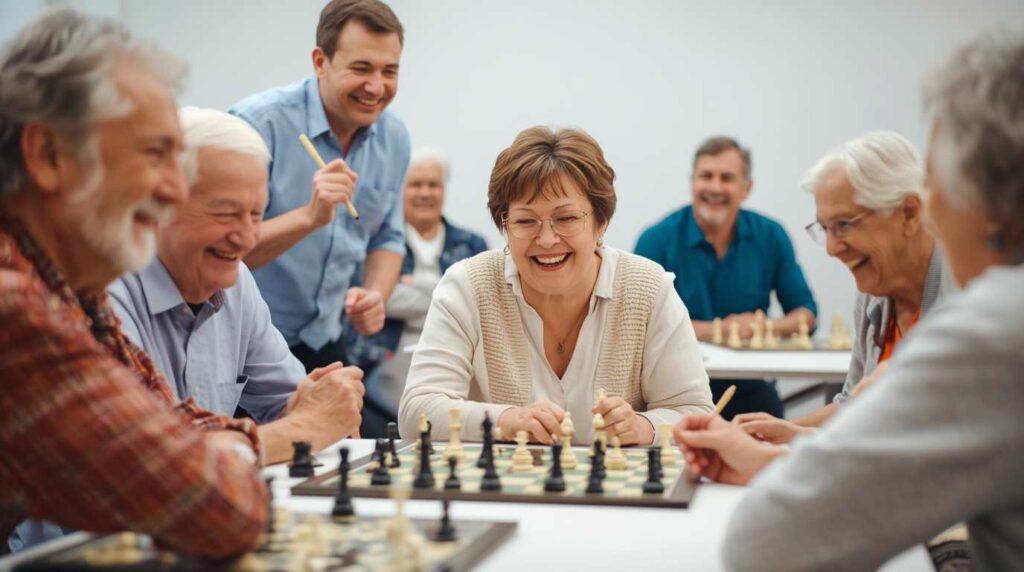
Social isolation is the fifth largest modifiable dementia risk factor — larger than diabetes, smoking, obesity, or hypertension individually. Yet it receives a fraction of the public health attention those conditions do. The mechanism involves multiple pathways: social engagement provides cognitive stimulation, reduces chronic stress (cortisol elevation damages hippocampal neurons over time), and appears to build “cognitive reserve” — the brain’s resilience against pathological changes.
Research from Harvard’s Study of Adult Development (one of the longest-running studies of adult development in history) found that close relationship quality at midlife was a better predictor of cognitive health in later decades than cholesterol levels. The quality of connection matters as much as the quantity — superficial social interaction provides fewer cognitive benefits than meaningful engagement.
🧠 Social Brain Health Checklist
- ☐ At least 2–3 social interactions per week involving meaningful conversation
- ☐ At least one regular group activity (club, class, volunteer work, faith community)
- ☐ Maintained or actively building at least 2–3 close relationships
- ☐ Regular contact with family members across generations (intergenerational contact has specific cognitive benefits)
- ☐ Not relying primarily on screens for social interaction — in-person contact appears to provide greater benefit
Mental Stimulation: What Works and What Doesn’t
Cognitive training has been one of the most marketed and least well-supported interventions in brain health. Here’s the honest evidence review:
What Doesn’t Work (Despite the Marketing)
Dedicated brain training apps and games (Lumosity, BrainHQ, etc.): The evidence for “transfer” — the idea that getting better at a specific brain game improves general cognition — is weak. You get better at the specific task you practice. Meta-analyses have largely failed to show benefits for real-world cognitive function. A 2020 consensus statement from leading cognitive neuroscientists concluded that there is no convincing evidence that current commercially available brain training programs improve general cognitive performance.
What Does Work
Learning genuinely new skills — The key word is “new.” Activities that require ongoing learning of genuinely unfamiliar material activate neuroplasticity mechanisms that already-mastered activities don’t. Learning a new language, learning a musical instrument (especially if you’ve never played), learning a new craft or skill, engaging with genuinely challenging intellectual material — these appear to build cognitive reserve.
Complex novel activities — A study published in Psychological Science found that older adults who engaged in sustained complex activities (digital photography, quilting) for 3 months showed improvements in multiple cognitive areas compared to those who engaged in familiar activities like watching documentaries or doing word puzzles. Challenge and novelty are the operative elements — not just activity.
For those who enjoy gamified challenges, you can try our daily Sudoku for seniors or our memory card game for seniors to keep your mind sharp with fun, short exercises. If you prefer digital assistance, check out our review of the best apps for brain health to help you choose tools that actually offer cognitive benefits.
Reading and writing seriously — Sustained reading of demanding material (not just light entertainment) and regular writing that requires composition and reasoning appear to maintain cognitive function. The mechanism is related to working memory load and linguistic processing demands.
Supplements: The Honest Evidence Review
The supplement industry generates billions of dollars from brain health products. Here is what the research actually supports as of 2026:
| Supplement | Evidence Level | Honest Assessment |
|---|---|---|
| Omega-3 (DHA/EPA) | Moderate — mixed results in RCTs | May benefit those with low dietary fish intake; 1–2g/day DHA+EPA reasonable for non-fish eaters |
| Vitamin D | Associated in observational studies; RCTs mixed | Worth supplementing if deficient (very common in older adults); 1,000–2,000 IU/day; get levels tested |
| Vitamin B12 | Deficiency clearly causes cognitive impairment | Not a brain booster if levels are normal, but deficiency is common in seniors (check levels); supplement if below normal |
| Magnesium L-threonate | Promising animal studies; limited human evidence | Early human data interesting; not yet sufficient for strong recommendation |
| Ginkgo biloba | Large RCTs negative | The GEM study (3,000+ participants) found no benefit for dementia prevention. Not recommended. |
| Phosphatidylserine | Limited evidence | FDA allows qualified health claim but evidence is weak; not recommended as primary intervention |
| Prevagen (apoaequorin) | No credible evidence | One industry-sponsored study; FTC settlement over misleading claims. Not recommended. |
| Curcumin/Turmeric | Promising preclinical; disappointing RCTs | Anti-inflammatory properties in theory; clinical trials for cognitive outcomes have not been convincing |
⚠️ The Supplement Trap: People who take multiple brain health supplements often feel they’ve “covered” their brain health — and this feeling of coverage can reduce motivation to implement the interventions with the strongest evidence (exercise, sleep, diet, social connection). The most effective brain health intervention is not in a capsule. It’s in your running shoes.
The 12-Week Brain Health Action Plan
Rather than trying to implement everything at once — which typically results in implementing nothing — this plan adds one major intervention every 3 weeks:
Weeks 1–3: The Sleep Foundation
Set a consistent sleep and wake time. Address any screen use in the 60 minutes before bed. If you snore loudly or wake feeling unrefreshed, discuss sleep apnea screening with your doctor. Target: 7–8 hours of consistent sleep.
Weeks 4–6: The Exercise Baseline
Begin 30-minute walks 5 days per week. Moderate intensity: you should be able to hold a conversation but feel your breathing is noticeably elevated. Add 2 resistance training sessions per week (body weight, bands, or weights). This doesn’t require a gym membership.
Weeks 7–9: The Diet Shift
Add leafy greens to at least one meal per day. Add berries to breakfast or as a snack at least 4 days per week. Switch to olive oil as primary cooking fat. Add one fish meal per week if not already regular. These additions are more important than eliminations — build the good habits first.
Weeks 10–12: The Social and Mental Activation
Identify one genuinely new skill to begin learning (language, instrument, craft). Schedule 2–3 meaningful social interactions per week if not already regular. Address any hearing or vision issues that have been neglected. Get vitamin B12 and D levels checked.
Frequently Asked Questions
No single lifestyle intervention can guarantee prevention, and genetic risk factors (particularly the APOE4 gene) cannot be modified. However, the Lancet Commission’s analysis suggests that up to 45% of dementia cases worldwide are attributable to modifiable risk factors — meaning a substantial proportion may be preventable or delayable with lifestyle changes. “Prevention” in this context means reducing risk and potentially delaying onset by years, not a guarantee. The interventions with the best evidence are the same ones that reduce cardiovascular disease risk — which makes sense, since vascular dementia is the second most common type and shares many of the same risk factors as heart disease.
Chronic stress is meaningfully harmful to brain health through elevated cortisol, which damages hippocampal neurons over time and can impair memory formation. Acute (short-term) stress is normal and manageable; chronic, unrelenting stress is the problem. Meditation and mindfulness practices have shown positive effects on brain structure in multiple studies — regular meditators show less age-related cortical thinning in certain regions. Even 10–15 minutes of daily mindfulness practice appears to provide measurable benefits. The mechanisms include stress reduction, but also direct effects on attentional control and self-regulatory circuits.
Yes — there’s now good evidence that heavy drinking accelerates brain aging and increases dementia risk substantially. The evidence on light to moderate drinking is more contested. Earlier research suggesting moderate drinking was protective has largely been revised — more careful studies accounting for abstainers who don’t drink due to illness have reduced or eliminated the apparent protective effect. Current guidance from most major health organizations: if you drink, no more than 1 drink per day for women, 2 for men; many experts now suggest lower is better for brain health specifically.
There is no age at which lifestyle interventions become futile. Studies have shown cognitive benefits from exercise in adults in their 70s, 80s, and even 90s. New neuron formation in the hippocampus has been demonstrated in human adults well into old age. The earlier you start, the greater the cumulative benefit — but starting at 75 is dramatically better than not starting at all. The brain retains plasticity throughout life. The question is never “is it too late?” but “what can I do from where I am right now?”
Baseline cognitive testing at 60 or 65 — establishing your personal baseline — makes it easier to detect meaningful changes over time. Ask your primary care physician about the MoCA (Montreal Cognitive Assessment) or similar brief cognitive screening. Some cognitive changes that appear concerning may be due to treatable conditions (B12 deficiency, thyroid disease, depression, medication side effects) that will be missed without a proper evaluation. If you or a family member notices consistent concerning changes from the “normal vs. concerning” table at the beginning of this guide, prompt evaluation by a physician or neurologist is warranted.
The Brain You Protect Is the One That Carries Everything Else
Every goal in this guide — the retirement income, the travel, the family relationships, the work you still want to do — depends on a brain that remains capable of enjoying and engaging with all of it. Cognitive health is not one priority among many. It is the substrate on which every other priority rests.
The interventions with the strongest evidence are not exotic or expensive. They are: move your body consistently, protect your sleep, eat mostly whole food with plenty of plants, stay socially engaged with people you care about, and keep your brain challenged with genuinely new learning. These are not life-altering sacrifices. They are, for most people, already things they know they should be doing — and the cognitive protection they provide is one of the most compelling reasons to actually do them.
Start with the 12-week plan. Pick the first three weeks. Build from there. The research is clear about what works. The only question is whether you’ll use it.
More senior health and retirement resources:
For further evidence-based reading on neurological health, you can visit the National Institute on Aging’s guide on cognitive health.
Medical Disclaimer
The information provided in this article is for educational and informational purposes only and does not constitute professional medical advice, diagnosis, or treatment. Always seek the advice of your physician or other qualified health provider with any questions you may have regarding a medical condition or before starting any new health or exercise program. Never disregard professional medical advice or delay in seeking it because of something you have read here.