
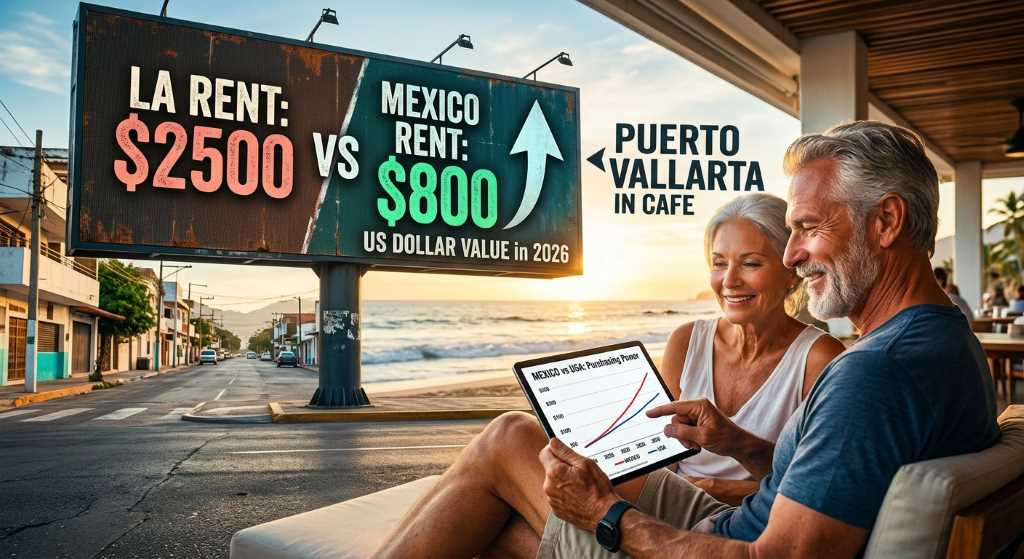
This Mexico retirement guide for Americans in 2026 covers real costs, the best cities for different lifestyles, how the visa works, healthcare realities, and what experienced expats wish someone had told them before they moved.
More American retirees live in Mexico than in any other foreign country. That’s not a new trend — it’s been true for decades — but the numbers have grown significantly in recent years as the combination of lower costs, proximity to the US, established expat infrastructure, and genuinely excellent quality of life in several Mexican cities have become better understood by the retiring Baby Boomer generation.
Mexico is also the retirement destination with the widest gap between perception and reality in either direction. Some Americans arrive expecting an extension of their US life at lower cost and are surprised by the genuine cultural differences. Others never consider it because of safety concerns that don’t reflect the specific experience of living in Mexico’s established expat communities. Both groups are working from incomplete information.
This guide gives you the complete picture — the genuine advantages, the genuine complications, and the specific information you need to decide whether Mexico is actually right for you.
📋 What’s in This Guide
İçerik Haritası — Jump to any section:
- → Why Mexico? The Real Reasons 600,000 Americans Live There
- → The Temporary Resident Visa: What Changed in 2024
- → What It Actually Costs to Live in Mexico in 2026
- → The Best Mexican Cities for American Retirees
- → Healthcare: The Full Picture (Good and Complicated)
- → Safety: The Honest Assessment
- → What Retirees Wish They’d Known Before Moving
- → Frequently Asked Questions
Why Mexico? The Real Reasons 600,000 Americans Live There
The US State Department estimates over 1.5 million American citizens live in Mexico — including approximately 600,000 who are retired. No other country comes close. The reasons aren’t mysterious once you understand the full picture:
| Factor | The Reality |
|---|---|
| Proximity to the US | A 2–4 hour flight from most major US cities. Driving is possible to border states. Grandchildren are never more than a day away. |
| Time zones | Mexico spans US Central and Mountain time zones. You can call your doctor’s office, your bank, your family — without adjusting for a 6-hour gap. |
| Cost of living | Genuinely 40–60% lower than comparable US quality of life — but this varies enormously by city and neighborhood. More on this in the costs section. |
| Climate variety | Year-round spring in Ajijic and San Miguel. Dry Pacific coast. Humid Caribbean coast. High desert. You can choose your weather. |
| Culture and cuisine | UNESCO-recognized cuisine, extraordinary arts and crafts tradition, vibrant local markets, genuine warmth toward foreigners in most regions |
| Established infrastructure | Decades of American expat presence means developed English-language services, familiar products, organized expat communities |
The Temporary Resident Visa: What Changed and What You Need to Know
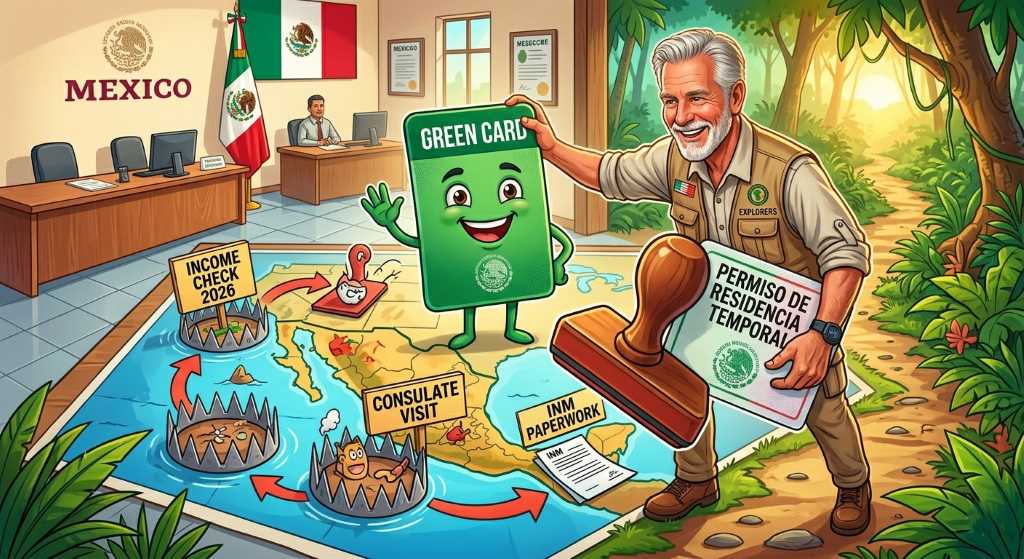
Americans can visit Mexico for up to 180 days as tourists. For longer-term living, you need a Temporary Resident Visa — the standard path for retirees — which allows you to live in Mexico for up to four years before converting to Permanent Residency.
🛂 Temporary Resident Visa — 2026 Requirements
| Minimum monthly income | ~$2,700 USD/month (income requirements are set in Mexican pesos and fluctuate with exchange rates — verify current amount at your nearest Mexican consulate) |
| OR savings requirement | ~$43,000 USD in bank account (verify current peso amount) |
| Where to apply | Mexican consulate in the US — you must apply before entering Mexico |
| Processing time | 2–4 weeks for initial visa; then complete the process at local immigration office in Mexico within 30 days of arrival |
| Duration | 1 year initially, renewable annually up to 4 years total |
| After 4 years | Convert to Permanent Residency — no income requirement, permanent right to live in Mexico |
| Work permitted? | No local employment. Remote work for foreign companies is generally practiced without restriction. |
| Key 2024 change | Mexico significantly raised income and savings thresholds in 2024 — older guides with lower numbers are outdated. Always verify at consulmex.sre.gob.mx |
⚠️ Important: Mexico’s visa income requirements are set in Mexican pesos and change regularly. The dollar equivalents above are approximate based on early 2026 exchange rates. Always check the current requirements directly with a Mexican consulate before planning your move — the numbers in most online articles (including this one) may be outdated by the time you read them.
What It Actually Costs to Live in Mexico in 2026
Mexico’s cost of living varies more dramatically by city and lifestyle than almost any other retirement destination. The gap between living in a modest inland colonial city and living in the expat-heavy tourist zones of Puerto Vallarta can be $1,500–$2,000 per month for the same quality of life.
| Expense | Budget (Ajijic/Guanajuato) | Comfortable (San Miguel/Oaxaca) | Expat Premium (Puerto Vallarta/CDMX) |
|---|---|---|---|
| Rent (2BR) | $500–$800 | $800–$1,400 | $1,400–$2,500 |
| Groceries | $200–$300 | $280–$420 | $380–$600 |
| Utilities (elec/water/internet) | $80–$130 | $100–$160 | $140–$240 |
| Transportation | $80–$150 | $100–$200 | $180–$350 |
| Healthcare (private) | $150–$300 | $200–$380 | $300–$500 |
| Dining & entertainment | $200–$400 | $300–$600 | $500–$1,000 |
| Miscellaneous | $100–$200 | $150–$300 | $200–$400 |
| Monthly Total (couple) | $1,310–$2,280 | $1,930–$3,460 | $3,100–$5,590 |
🔴 WATCH: Why Your 2026 Mexico Budget Just Changed
💡 The Dollar Exchange Advantage: In 2026, the Mexican peso has remained relatively favorable for dollar-denominated income. Your Social Security check, pension, or retirement account withdrawals go significantly further in Mexico than in the US. This exchange advantage is one of Mexico’s most compelling financial arguments for American retirees — but it’s not guaranteed. Exchange rate fluctuations can erode or enhance this benefit over time.
The Best Mexican Cities for American Retirees

Lake Chapala / Ajijic — Largest American Expat Community in Mexico
The Lake Chapala area — specifically the village of Ajijic on the north shore — is home to the largest concentration of American retirees in Mexico, estimated at 20,000–30,000. The infrastructure this creates is remarkable: English-language newspapers, bookstores, medical facilities with English-speaking staff, American-style restaurants alongside authentic Mexican food, and a social calendar that makes meeting people immediately easier than almost anywhere else abroad.
The climate at 5,000 feet elevation is exceptional — year-round temperatures in the 60s and 70s, low humidity, and famous sunsets over the lake. It’s 45 minutes from Guadalajara and its international airport and major hospital system. The honest criticism: it can feel more like an American colony than Mexico, which some people find comforting and others find exactly what they were trying to leave behind.
| Best for | First-time Mexico expats, seniors who want strong English-language community |
| Avg. rent (2BR) | $600–$1,200/month unfurnished |
| Climate | Year-round spring — consistently the best climate argument for the area |
| Healthcare nearby | Several English-speaking clinics in Ajijic; major hospitals 45 min in Guadalajara |
| Honest note | Heavily American — you can go weeks here barely interacting with Mexican culture if you don’t make the effort |
San Miguel de Allende — Most Beautiful Colonial City, Premium Price
San Miguel de Allende is arguably the most beautiful city in Mexico — a UNESCO World Heritage colonial city with cobblestone streets, baroque churches, world-class restaurants, a thriving arts community, and the extraordinary Parroquia de San Miguel Arcángel dominating the skyline. The city has been discovered by travelers and retirees alike, and prices reflect that discovery. It’s considerably more expensive than Lake Chapala while offering a more genuinely Mexican cultural experience balanced with sophisticated international amenities.
| Best for | Art lovers, cultural immersion, sophisticated dining, colonial architecture |
| Avg. rent (2BR) | $900–$1,800/month; much higher for central historic properties |
| Climate | High desert at 6,200 ft — warm days, cool nights, dry. Rainy season June–September. |
| Healthcare nearby | Several private clinics; major hospitals in León (1.5 hrs) and Querétaro (1 hr) |
| Honest note | More expensive than the Lake Chapala area; cobblestone streets are challenging for mobility-limited seniors |
Oaxaca City — Best Food Culture in Mexico, Growing Expat Community
Oaxaca has emerged as one of the most compelling options for American retirees who want genuine Mexican cultural immersion alongside a growing English-speaking community. The food scene is extraordinary — Oaxacan cuisine is considered one of the great regional cuisines of Mexico, and the city is full of exceptional restaurants at remarkably low prices. The arts and crafts tradition (textiles, ceramics, wood carvings) is among the richest in the country. The cost of living remains lower than San Miguel or Lake Chapala.
| Best for | Food lovers, cultural immersion, arts, lower budget |
| Avg. rent (2BR) | $600–$1,100/month |
| Climate | 5,000 ft elevation — warm and dry most of the year, mild rainy season |
| Honest note | More Spanish required than Lake Chapala — English less widely spoken; medical infrastructure more limited than larger cities |
Puerto Vallarta — Pacific Beach Lifestyle, Most Americanized Coastal City
Puerto Vallarta is Mexico’s most popular coastal retirement destination for Americans — warm Pacific beaches, a well-developed English-speaking expat community, good private healthcare infrastructure, and direct flights to dozens of US cities. It is also the most expensive coastal option and the most tourist-oriented. The Zona Romantica neighborhood and the areas north of downtown are where most long-term expats settle — more residential, less resort.
| Best for | Beach lifestyle, LGBTQ+-friendly community, water activities |
| Avg. rent (2BR) | $1,000–$2,000/month — higher near beach |
| Climate | Dry season (Nov–May): perfect. Rainy season (June–Oct): hot, humid, daily rain |
| Healthcare | Several strong private hospitals — CMQ, Hospiten — with English-speaking staff |
| Honest note | Significantly more expensive than inland options; summer heat and humidity is intense |
Healthcare in Mexico: The Full Picture
Healthcare in Mexico is the factor that most determines whether a retirement there works long-term. Get the right setup and you have access to good quality care at dramatically lower cost than the US. Get it wrong and you’re in a vulnerable position when something serious happens.
🚨 The Most Important Healthcare Fact: US Medicare does NOT cover care in Mexico. This is non-negotiable and non-negotiable. Before you move, you must have a plan for healthcare coverage — either Mexico’s IMSS public system (if you qualify), a private Mexican health insurance policy, international health insurance, or sufficient financial reserves for self-pay. Ignoring this is the single most dangerous planning mistake American retirees make.

Your Healthcare Options as an American Retiree in Mexico
IMSS (Mexican public healthcare): Mexico’s public insurance system is available to legal residents for a modest annual contribution (approximately $500–$800 USD/year depending on age). Coverage is comprehensive but quality varies significantly by location — major cities have better IMSS facilities than smaller towns. Wait times for non-emergency specialist care can be long.
Private hospitals and clinics: Mexico has excellent private medical facilities, particularly in Guadalajara, Mexico City, Monterrey, and major expat areas. Private specialist consultations cost $40–$80 USD. A hospital procedure costs roughly 20–40% of the US equivalent. Many doctors trained at US or European universities. English is commonly spoken in private facilities in major cities and expat areas.
International health insurance: Companies like Cigna Global, Bupa Global, and Aetna International offer plans specifically for Americans living abroad. These typically run $200–$600/month depending on age and coverage level, and they cover you both in Mexico and when you return to the US for visits. For health insurance guidance specific to expats over 50, the health insurance guide for Americans abroad over 50 covers the full landscape.
Safety: The Honest Assessment
Mexico’s safety situation is genuinely complex, and both dismissing the concerns and allowing them to prevent you from considering Mexico at all are mistakes.
The US State Department issues travel advisories for Mexican states, and several states carry “Do Not Travel” or “Reconsider Travel” designations due to cartel activity. These designations are serious and should be respected. However, many of the states most popular with American retirees — Jalisco (Lake Chapala, Guadalajara), Guanajuato (San Miguel, Guanajuato city), and Oaxaca — have lower-level advisories and tens of thousands of Americans living there safely.
The key distinction: violence in Mexico is predominantly targeted — between criminal organizations and the officials who confront them. American retirees living in established expat communities, avoiding late nights in unfamiliar areas, and following the same common-sense practices that would serve them in any unfamiliar environment generally report feeling safe. The experience is genuinely different from the impression created by headlines that aggregate violence from across a country larger than Western Europe.
⚠️ Due Diligence Required: Research the specific state and city you’re considering using the US State Department’s Mexico Travel Advisory — updated regularly. Talk to current residents in expat forums and groups. Visit before you commit. The safety picture varies enormously by location, and doing this research is not optional.

What Retirees Wish They’d Known Before Moving to Mexico
“The bureaucracy is real and it’s different from anything I’d experienced”
Banking as a foreigner in Mexico is genuinely frustrating. Opening a bank account requires residency documents, and some banks are more foreigner-friendly than others. BBVA (formerly Bancomer) and Banamex are the most commonly used by expats. Plan for this process to take time and patience, and budget for an immigration attorney to help navigate the residency paperwork — it’s money well spent.
“You’ll need more Spanish than you think”
In Lake Chapala and Ajijic, you can function entirely in English. In most other parts of Mexico — including Oaxaca, Guanajuato, and even significant parts of San Miguel outside the tourist core — basic Spanish is not optional. Medical emergencies are the most critical context: being able to communicate symptoms, understand instructions, and advocate for yourself in a medical setting without a translator is genuinely important for safety. Invest in Spanish lessons before and after you arrive.
“The power outages and infrastructure gaps surprised us”
Mexico’s infrastructure — internet reliability, power consistency, water quality — is improving but varies significantly by area. Power outages during rainy season, inconsistent internet speeds, and the universal requirement to drink bottled or filtered water rather than tap water are genuine quality-of-life adjustments. Most long-term expats adapt comfortably, but they arrive knowing to expect these differences rather than being blindsided by them.
Frequently Asked Questions – Mexico Retirement Guide Americans 2026
Yes — the US taxes citizens on worldwide income regardless of where they live. You’ll still file a US return annually. However, the Foreign Earned Income Exclusion, Foreign Tax Credit, and other provisions can significantly reduce your US tax liability depending on your income structure. Mexico and the US do not have a comprehensive tax treaty, which creates some complexity. Work with a US CPA specializing in expat taxation before you move — the planning done beforehand is worth significantly more than the remediation done afterward.
Yes, with a Temporary Vehicle Import Permit (TIP), which is tied to your temporary residency status. The car must leave Mexico when your permit expires unless you pay significant import duties to register it permanently. Many expats eventually buy a Mexican-plated vehicle rather than dealing with the TIP requirements long-term. Driving in Mexico requires a Mexican auto insurance policy — US insurance is not valid, and driving without local insurance is a serious legal exposure.
Yes, with some limitations. Foreigners cannot directly own property within 50 km of the coast or 100 km of international borders — in these zones, ownership requires a fideicomiso (bank trust) that holds the property on your behalf. Inland properties can be owned directly. Many expats rent rather than buy, particularly in the first few years, to maintain flexibility and avoid the complexities of Mexican real estate transactions. If you do want to buy, hire a licensed Mexican real estate attorney (not just an agent) to protect your interests through the process.
This is much easier than it was a decade ago. WhatsApp is the primary communication platform for both expats and Mexicans — free voice and video calls over WiFi work well. US cell phone plans (T-Mobile and AT&T in particular) include free roaming in Mexico. FaceTime and Zoom work reliably with a decent internet connection. Most long-term expats in established areas have fiber or cable internet that supports reliable video calls. And as noted earlier, a 2–4 hour flight back to the US means family visits are genuinely manageable — not the once-a-year event that living in Europe might require.
Both are excellent choices with different strengths. Mexico offers more geographic variety, more established expat communities, more city options, and lower costs in inland areas. Costa Rica offers political stability that edges Mexico’s, universal healthcare access through the Caja (once you have residency), and a reputation for stronger rule of law. Costa Rica is smaller and more predictable; Mexico is more varied and in some ways more dynamic. For a full comparison, the Costa Rica guide for American retirees covers that destination in full detail.
600,000 Americans Can’t All Be Wrong
The number is real. 600,000 American retirees in Mexico, spread across dozens of communities, representing every conceivable background and lifestyle preference. They’re there because the combination of proximity, affordability, climate, culture, and quality of life delivers something the US simply can’t match at a similar price point.
They’re also there with their eyes open — understanding that Medicare doesn’t travel with them, that Spanish matters, that the bureaucracy takes patience, and that the safety picture requires research rather than assumption. The ones who thrive went in prepared. The ones who struggled went in with unrealistic expectations.
This guide has tried to give you both sides of that picture clearly enough that your expectations are calibrated to reality — whichever way you ultimately decide.
Explore more international retirement options: