
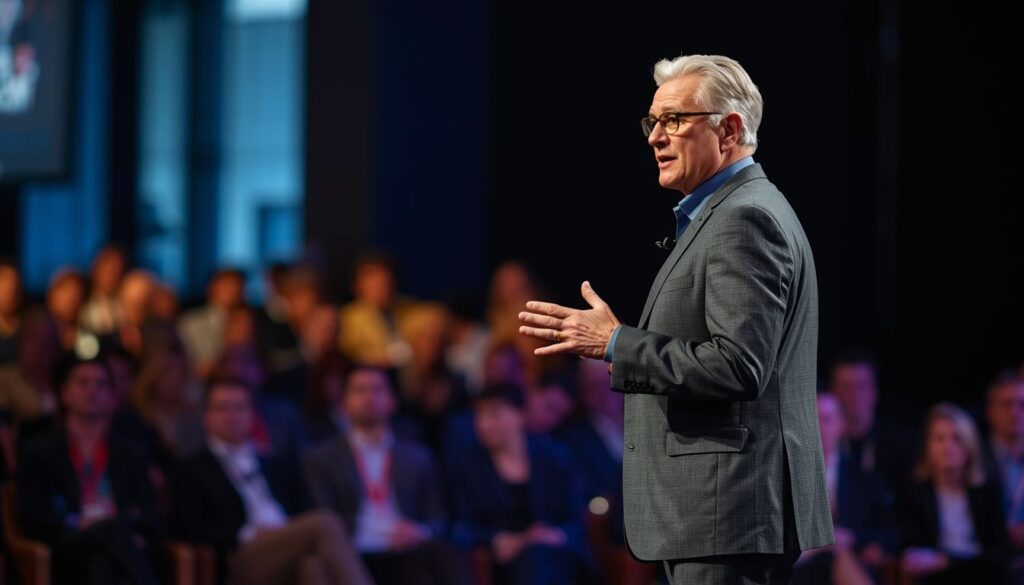
Speaking engagements for seniors are one of the most underexplored high-income opportunities available to retired professionals in 2026. If you spent a career developing genuine expertise in any field — healthcare, finance, leadership, operations, education, law, or dozens of others — there are organizations actively searching for credible voices to speak at their conferences, workshops, and corporate training events. Many of these opportunities pay well, yet most people overlook the potential of speaking engagements for seniors.
This guide changes that. You’ll learn how to position yourself as a speaker, where to find paid opportunities, what different speaking engagements actually pay, and how to build a speaking practice that generates consistent income alongside your other professional activities.
Why Speaking Engagements Work Especially Well for Senior Professionals
The professional speaking market rewards one thing above almost everything else: credibility. Not polish, not youth, not entertainment value — credibility. The sense that this person has been where you’re trying to go, has seen what you’re afraid of, and has something genuinely useful to say.
That credibility takes decades to build. Senior professionals have it. Many younger speakers spend years manufacturing the appearance of authority that seniors already possess authentically.
Consider what a conference organizer is actually buying when they book a speaker: they’re buying the confidence that their audience will leave the room feeling their time was well spent. A retired CFO explaining cash flow management to small business owners, a former hospital administrator discussing team leadership to healthcare managers, or an experienced HR director teaching conflict resolution to emerging leaders — each of these speakers brings lived credibility that no curriculum can replicate.
The market for this kind of authentic expertise-based speaking is large, active, and consistently underserved by senior professionals who don’t realize they qualify.
What Speaking Engagements for Seniors Actually Pay
One of the reasons seniors don’t pursue speaking is that they assume it doesn’t pay meaningfully. The reality is quite different:
| Speaking Context | Typical Fee Range | Notes |
|---|---|---|
| Local business associations / chambers | $0–$500 | Often unpaid but excellent for visibility and referrals |
| Regional professional association conferences | $500–$2,500 | Strong starting point; travel often covered |
| National professional conferences | $2,500–$10,000 | Requires demonstrated expertise and speaking track record |
| Corporate training and workshops | $1,500–$7,500 | Half-day and full-day formats; often repeatable with same client |
| Virtual webinars and online events | $500–$3,000 | No travel; growing market; accessible from home |
| University guest lectures | $200–$1,000 | Honoraria vary; builds academic credibility |
| Keynote speeches (established speakers) | $5,000–$25,000+ | Requires a speaker brand and booking history |
Most senior speakers starting out realistically target the $500 to $3,000 range per engagement — achievable within the first year of active pursuit. Two to three engagements per month at this level produces $12,000 to $108,000 annually, entirely from sharing expertise you’ve already developed.
Finding Your Speaking Topic: The One-Talk Framework
The most common mistake new senior speakers make is trying to speak on everything they know. Generalist speakers get booked rarely and paid modestly. Specialist speakers — those with a specific, memorable talk on a specific, high-demand topic — get booked repeatedly and commanded higher fees.
Your first goal is to develop one signature talk. One clear, specific topic that you own more credibly than almost anyone else because of your specific career history.

How to Find Your Signature Speaking Topic
Answer these three questions. The intersection of your answers is your speaking topic:
- ❓ Question 1
What do people in your field consistently get wrong that you know how to get right?
- ❓ Question 2
What’s the most valuable lesson you learned the hard way that others could learn faster from you?
- ❓ Question 3
What topic do people most frequently ask your opinion on — and what do you tell them that they couldn’t easily find anywhere else?
Examples of Effective Senior Speaker Topics
- A retired ER physician: “The Three Conversations That Prevent 80% of Medical Errors”
- A former HR director: “Why Your Best People Leave — and the One Policy Change That Stops It”
- A retired supply chain VP: “What the Pandemic Taught Us About Supplier Relationships That Everyone Has Already Forgotten”
- A former CFO: “The Financial Metric Your Board Watches That Your Management Team Ignores”
- A retired educator: “Teaching to Minds That Have Changed: Adapting Instruction for the Distracted Generation”
Notice what these topics have in common: each promises a specific insight from genuine insider experience. None of them could be delivered credibly by someone who hasn’t actually lived the expertise.
Building Your Speaker Platform: The Minimum Viable Setup
You don’t need a professional speaking agent, a $10,000 website, or a publicist to start getting speaking engagements. You need three things:
1. A Speaker One-Sheet
A speaker one-sheet is a single-page PDF that tells event organizers everything they need to know to book you. It includes:
- Your headshot and name
- Your speaker bio — two to three sentences emphasizing your expertise credentials
- Your talk title and a 100-word description
- Three to five key takeaways the audience will receive
- Any previous speaking experience (even informal)
- Your contact information
Design it in Canva using a professional template — this takes two to three hours and costs nothing. Save as a PDF. This is the document you send when following up on speaking inquiries.
2. A Speaker Page on Your Website
A dedicated “Speaking” page on your professional website — or a standalone speaking page if you don’t have a full site — provides a permanent, Google-findable destination for event organizers searching for speakers in your field. Event planners frequently search Google for “[topic] speaker” or “[industry] conference speaker.” A speaker page with your topic and credentials captures this traffic. For building the underlying site, see our Personal Website for Seniors guide.
3. A Speaking Sample
A video recording of you speaking — even 5 to 10 minutes on your topic — is the single most valuable asset in your speaker marketing toolkit. Conference organizers and corporate training buyers almost universally want to see a speaker before booking them. Without a video, your pursuit of paid engagements is significantly harder.
How to get a speaking sample when you haven’t spoken professionally yet:
- Record yourself delivering part of your talk in your home office — good lighting, professional background, clear audio
- Offer to speak at a local Rotary Club, professional association, or nonprofit and have someone record it
- Host a free webinar on your topic and record it with Zoom
- Ask a local library or community center if you can present a free session
Imperfect video from a real audience is better than perfect video recorded alone. Your first speaking video doesn’t need to be polished — it needs to show how you come across in front of people.
Where to Find Speaking Engagements for Seniors
Finding paid speaking opportunities requires both inbound (being findable) and outbound (actively seeking) strategies. Here’s where to focus:
Professional Associations in Your Field
Every major industry has at least one national professional association that hosts an annual conference — and dozens of regional chapters that host smaller events throughout the year. These are the most accessible paid speaking opportunities for senior experts because they specifically value deep industry expertise.
To find them: search “[your industry] professional association conference” or “[your profession] annual conference speaker submission.” Most associations post open calls for speakers (called “Call for Proposals” or “CFP”) three to nine months before their events. Submit a specific proposal — your talk title, description, and three audience takeaways — not a vague offer to “speak about your experience.”
Corporate Training and L&D Departments
Large and mid-size companies run internal training programs and bring in outside speakers for leadership development, skills training, and professional development days. Learning and Development (L&D) departments at companies in your industry are active buyers of expertise-based speaking.
Approach: LinkedIn is the best channel. Search “Learning and Development Manager” or “Training Director” at companies in your target industry. Connect, engage with their content, and eventually reach out with a specific proposal relevant to their team. For LinkedIn outreach approach, see our LinkedIn Outreach for Seniors guide.
Speaker Bureaus and Directories
Speaker bureaus represent speakers and match them with event opportunities in exchange for a commission (typically 20–30%). Getting represented by a bureau is harder for new speakers — they prefer speakers with track records — but listing yourself in speaker directories provides free visibility:
- SpeakerHub (speakerhub.com) — Free directory where event organizers search for speakers by topic and location
- SHRM Speaker Bureau — For HR professionals; SHRM is one of the largest professional associations in the US and actively books speakers for its chapters and conferences
- Toastmasters Speaker Database — Useful for building local speaking experience and community visibility
Your LinkedIn Network
Many speaking opportunities come through professional relationships — someone who knows you, respects your expertise, and thinks of you when their organization needs a speaker. A LinkedIn post announcing that you’re available for speaking engagements, describing your topic specifically, consistently generates direct booking inquiries from your professional network. See our LinkedIn Newsletter for Seniors: Authority Guide for how to build your professional voice and attract these opportunities effectively.
Podcast Appearances as Speaking Practice
Industry podcasts are underused by senior speakers as a stepping stone. A podcast appearance is not a paid speaking engagement — but it produces a recording of you delivering your expertise in a conversational format, builds your speaker profile, and consistently generates speaking inquiries from listeners who find your talk compelling. Search “[your industry] podcast” and pitch yourself as a guest with a specific topic angle.
The Virtual Speaking Advantage for Senior Professionals

Virtual speaking engagements — webinars, online panels, virtual conferences — have become a permanent part of the event landscape, and they offer specific advantages for senior speakers:
- No travel required — Eliminating flights, hotels, and logistics makes speaking significantly more accessible for seniors managing health considerations or preferring to minimize travel
- Global reach — A virtual engagement can reach audiences anywhere in the world. A retired American HR director can speak to professional associations in Canada, the UK, or Australia without leaving home
- Lower barrier to entry — Virtual events are cheaper to produce and therefore more willing to book newer speakers who can demonstrate expertise even without an extensive in-person speaking history
- Consistent income potential — Virtual speaking fees of $500 to $3,000 per engagement can be achieved without the logistical overhead that makes in-person speaking more demanding
For the technical setup that makes virtual speaking professional — camera, audio, lighting, background — see our Ergonomic Home Office Setup for Seniors guide. And for remote interview and video call confidence, our Remote Job Interview Tips for Seniors guide covers on-camera presence directly.
Speaking Engagements as Part of Your Broader Professional Strategy
Speaking works best when it feeds your other professional activities rather than operating in isolation:
- Speaking drives consulting inquiries — Audience members who find your talk valuable frequently reach out about working together. A 45-minute conference talk routinely generates more consulting leads than months of LinkedIn outreach. See our How to Start Consulting After 50 guide.
- Speaking builds your book credibility — If you’re writing a book, speaking on its topic builds audience and publisher credibility simultaneously. See our AI Book Writing for Seniors guide.
- Speaking generates course students — Webinar audiences convert to online course students at high rates when the topic directly addresses their professional needs. See our Teachable for Seniors guide.
- Speaking content becomes articles and posts — Every talk you give produces LinkedIn articles, newsletter issues, and blog posts. One 45-minute talk contains enough content for six to eight pieces of written content. See our Substack for Seniors guide.
For the full picture of professional income opportunities that speaking connects to, see our Make Money Online After 50 Master Guide.
Somewhere in your professional history is a talk that needs to be given — a body of experience that an audience somewhere needs to hear. The speaking market in 2026 is actively looking for exactly what you have. The gap is almost never expertise. It’s the decision to pursue the opportunity.
Write your talk title today. One sentence: what you know, who it’s for, and why it matters. That’s where every speaking career begins.
Frequently Asked Questions – Speaking Engagements For Seniors
No — but you need a specific topic, a speaker one-sheet, and ideally a short video sample. Most speaking careers start with unpaid local engagements that produce the credentials and recordings needed to pursue paid bookings.
Start with your professional association’s regional chapter, a local chamber of commerce event, or a free webinar. These build your first video sample and testimonials, which open doors to paid opportunities.
For regional professional associations and corporate training, $500 to $1,500 is a reasonable starting range. Once you have video proof and testimonials, raise rates with each subsequent booking.
Yes. Virtual speaking engagements at $500 to $3,000 per session are widely available and growing. Many senior speakers build entire speaking practices without in-person events — particularly valuable for those preferring to avoid travel.