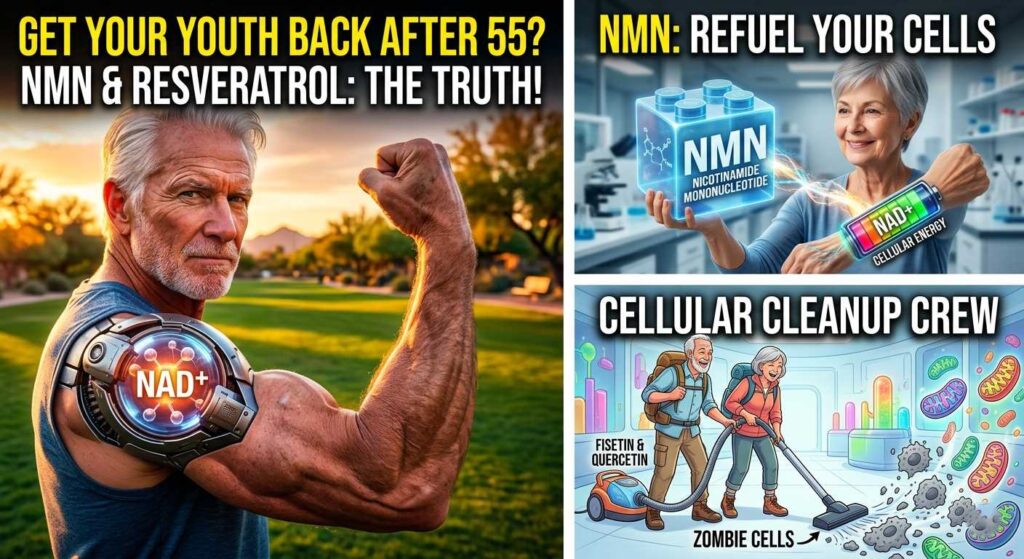
If you’re over 55 and hearing a lot about longevity supplements — NMN, Resveratrol, Spermidine, and the rest — you’re not alone. These compounds are showing up everywhere, from Harvard research labs to your neighbor’s kitchen counter. But what do they actually do? Are they safe? And do you really need them? This guide will walk you through everything in plain English, no science degree required.
📋 In This Guide
- What Are Longevity Supplements?
- Why NAD+ Drops After 50 — And Why It Matters
- NMN: The Most Talked-About Longevity Supplement
- Resveratrol: More Than Just Red Wine
- Spermidine: The Supplement You Haven’t Heard Of Yet
- Fisetin & Quercetin: The Cellular Cleanup Crew
- Side-by-Side Comparison Table
- How to Start: A Practical Guide for Seniors
- Red Flags to Avoid When Buying Supplements
- Frequently Asked Questions
What Are Longevity Supplements, Exactly?
Let’s start from zero. The term longevity supplements refers to a category of compounds — most of them naturally occurring in the human body or in food — that researchers believe may slow down certain aspects of the aging process at the cellular level.
Think of your body’s cells like tiny engines. They run on a fuel called NAD+ (nicotinamide adenine dinucleotide). When you’re young, you have plenty of this fuel, and your cells repair themselves, produce energy efficiently, and keep inflammation in check. After your 40s — and especially after 55 — those fuel levels drop significantly. That drop is connected to fatigue, slower recovery, cognitive fog, and many other signs of aging.
Longevity supplements are designed to address this — and other cellular-level changes — to help your body function more like it did a decade or two ago. They are not a cure for aging, but the science behind several of them is genuinely interesting and increasingly backed by human clinical trials.
Important Note: Always consult your doctor or healthcare provider before starting any new supplement — especially if you take prescription medications or have existing health conditions. This article is for informational purposes only.
Why NAD+ Drops After 50 — And Why It Matters
Before we can talk about specific supplements, it helps to understand NAD+. Consider it the master molecule of aging. It’s involved in over 500 different biological reactions in your body, including:
- Energy production — converting food into usable energy inside your cells
- DNA repair — fixing the small genetic “typos” that accumulate over time
- Cellular communication — helping different parts of your cells “talk” to each other
- Sleep regulation — supporting your circadian rhythm and sleep quality
- Immune response — activating your body’s defense systems
Research published in Cell Metabolism has shown that by the time you reach your 60s, NAD+ levels in muscle tissue can be 50–60% lower than they were in your 20s. That’s a significant drop — and it’s one reason why older adults often feel more fatigued, experience slower muscle recovery, and notice changes in cognitive sharpness.
Here’s the good news: certain compounds called NAD+ precursors — NMN being the most prominent — can help your body produce more NAD+. And other compounds, like Resveratrol, help your body use that NAD+ more effectively. That’s the core logic behind most longevity supplement “stacks” you’ll see discussed online.
NMN: The Most Talked-About Longevity Supplement
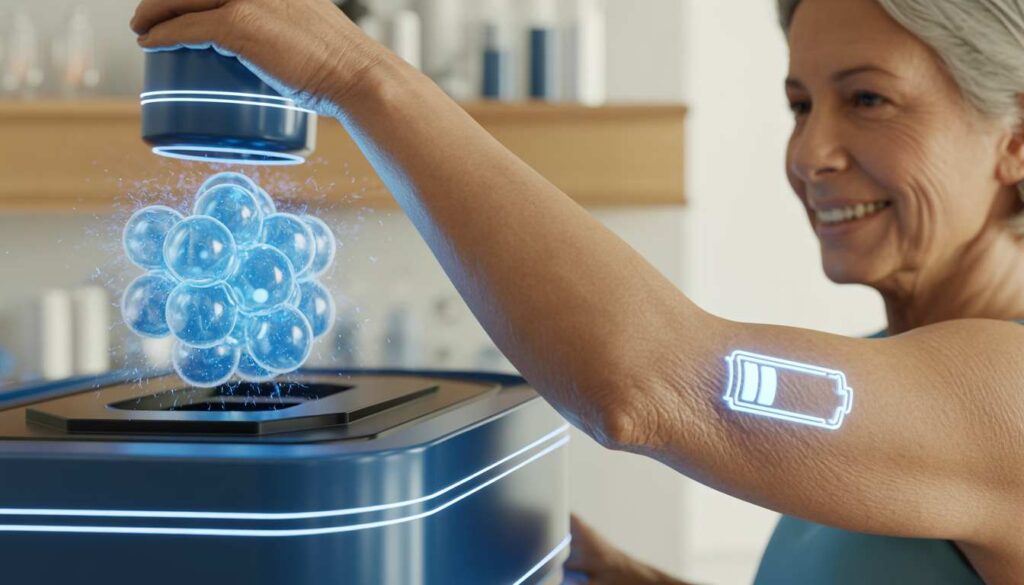
Nicotinamide Mononucleotide, commonly known as NMN, is a term that might be a mouthful, but the concept behind it is quite simple. This compound acts like a building block that your body converts directly into NAD+. You can think of it as adding high-grade fuel to your cellular engine.
Watch: Dr. Andrew Huberman and Dr. Peter Attia Discuss NAD+ and Longevity
To better understand the science behind NAD+ precursors, watch this insightful discussion between Dr. Andrew Huberman (Stanford School of Medicine) and Dr. Peter Attia. They dive deep into the biological pathways of NMN and NR, discussing what the current research actually says about their efficacy for human longevity.
(Note: The technical discussion on NMN and NAD+ pathways begins around the 01:12:00 mark).
What the Research Says
NMN became a household name in longevity circles largely because of Dr. David Sinclair, a professor at Harvard Medical School who publicly stated he takes 1 gram of NMN daily as part of his personal anti-aging routine. While his personal habits aren’t clinical proof, the underlying research is substantial:
- Animal studies consistently show NMN improves mitochondrial function, physical endurance, muscle strength, and cognitive markers
- A 2021 human trial published in npj Aging and Mechanisms of Disease found that NMN was safely absorbed and raised NAD+ levels in blood in healthy adult men aged 65 and older
- A 2022 Japanese study in NPJ Aging found that older adults taking 250 mg of NMN daily showed improved muscle performance compared to a placebo group
That said, human trials are still ongoing, and most researchers are careful to note that results seen in mice don’t automatically translate to humans. The honest assessment: NMN looks promising, particularly for energy and cellular health, but more long-term human data is needed.
What Dose Makes Sense for Seniors?
Most human studies have used doses between 250 mg and 600 mg daily. Longevity experts often suggest starting at 250 mg in the morning (with food) and gradually working up to 500 mg over several weeks. Taking more than 1,000 mg daily is not recommended without medical supervision — more is not always better.
What to Look for When Buying NMN
- Third-party tested — look for COAs (Certificates of Analysis) on the brand’s website
- GMP-certified facilities — this means the manufacturer follows FDA-grade manufacturing standards
- Capsule form — the most reliably absorbed format for older adults
- No unnecessary fillers — a clean ingredients list is a good sign
Reputable brands include Tru Niagen, Wonderfeel, Omre, and PartiQlar. Prices range from about $40–$90 per month depending on the dose. For a broader look at how to evaluate health products as a senior, see our guide on anti-inflammatory nutrition for seniors — many of the same quality principles apply.
Resveratrol: More Than Just a Red Wine Compound
You’ve probably heard that a glass of red wine is “good for your heart.” The compound behind that idea — at least partially — is Resveratrol. It’s a polyphenol found naturally in grape skins, blueberries, and peanuts.
Resveratrol works differently than NMN. Rather than boosting NAD+ directly, it activates special proteins called sirtuins — often described as “longevity genes.” Sirtuins use NAD+ to do their job of protecting DNA, reducing cellular inflammation, and regulating metabolism. In essence, Resveratrol and NMN work as a team: NMN provides the fuel, and Resveratrol helps ensure it’s used efficiently.
What Does the Science Say?
Resveratrol has been intensively studied since the 1990s. Here’s a balanced look at what we know:
- Heart health: Multiple studies suggest Resveratrol supports healthy blood pressure and reduces LDL oxidation (the “bad” cholesterol process that leads to artery damage)
- Blood sugar: A 2012 study in Nutrition, Metabolism & Cardiovascular Diseases found Resveratrol improved insulin sensitivity in older adults
- Brain function: A clinical trial at the University of Maryland found that 200 mg/day of Resveratrol improved memory performance in healthy older adults
- Caveat: Many of the early dramatic results came from animal studies and have been harder to replicate cleanly in humans. Bioavailability (how much your body actually absorbs) is a real challenge with standard Resveratrol — look for “micronized” or “trans-resveratrol” forms which absorb better
Typical Dose for Seniors
Research doses typically range from 100 mg to 500 mg daily. Most longevity-focused protocols use 250–500 mg of trans-resveratrol, taken with food containing some fat (which helps absorption). Some experts recommend pairing it with NMN for synergistic benefits. Dr. Sinclair’s personal regimen reportedly includes 1 gram daily, but that’s at the higher end and should only be considered under medical guidance.
Spermidine: The Supplement You Haven’t Heard Of Yet
The name is unusual, but the science is genuinely compelling. Spermidine is a naturally occurring compound found in wheat germ, mushrooms, soybeans, and aged cheeses. Your body also produces it, but levels decline with age.
What makes Spermidine special is its ability to trigger autophagy — your body’s cellular “self-cleaning” system. Think of autophagy like a trash pickup service inside your cells. Damaged proteins and worn-out cell components get broken down and recycled. When this process slows down with age, cellular debris builds up — and researchers link this accumulation to many age-related diseases, including Alzheimer’s and cardiovascular conditions.
A long-term observational study in The American Journal of Clinical Nutrition found that people who consumed more dietary Spermidine had a significantly lower risk of cognitive decline and overall mortality. A 2021 pilot trial published in Aging (Albany NY) showed Spermidine supplementation improved cognitive performance in older adults at risk for dementia.
Standard supplement doses range from 1 mg to 5 mg daily. Some brands use wheat germ extract as their source, while others use synthetically derived Spermidine. Both appear effective.
Fisetin & Quercetin: The Cellular Cleanup Crew

These two flavonoids — found in strawberries, apples, and onions — belong to a category called senolytics. That word comes from “senescent cells,” which are sometimes called “zombie cells.” Here’s why that matters:
As you age, some of your cells stop functioning normally but don’t die — they become senescent. These zombie cells accumulate and release inflammatory chemicals that damage surrounding healthy cells. This process is increasingly linked to arthritis, cardiovascular disease, and even cognitive decline.
Senolytics like Fisetin and Quercetin essentially help clear these problematic cells out. Research from the Mayo Clinic has shown that Fisetin is one of the most potent naturally occurring senolytics identified to date. Quercetin, which is more widely available and less expensive, appears to work similarly, especially when paired with the antibiotic Dasatinib (a combination being studied in human trials — though this is a prescription medication, not something you’d take on your own).
- Fisetin typical dose: 100–500 mg daily. Some protocols use intermittent high doses (e.g., 500–1,000 mg for 2–3 consecutive days per month)
- Quercetin typical dose: 500–1,000 mg daily, often paired with bromelain or Vitamin C to improve absorption
Side-by-Side Comparison: Longevity Supplements at a Glance
Here’s a quick reference to help you understand the main players in the longevity supplement world:
| Supplement | Primary Mechanism | Key Potential Benefits for Seniors | Typical Daily Dose | Evidence Level | Estimated Monthly Cost |
|---|---|---|---|---|---|
| NMN | NAD+ precursor | Energy, muscle function, cognitive clarity, DNA repair | 250–500 mg | Moderate (growing human trials) | $40–$90 |
| Resveratrol | Sirtuin activator | Heart health, blood sugar, brain function, pairs with NMN | 100–500 mg | Moderate (mixed human data) | $15–$40 |
| Spermidine | Autophagy inducer | Brain health, cellular cleanup, longevity marker | 1–5 mg | Emerging (promising trials) | $30–$60 |
| Fisetin | Senolytic | Removes zombie cells, reduces inflammation, brain protection | 100–500 mg | Emerging (Mayo Clinic research) | $20–$45 |
| Quercetin | Senolytic / antioxidant | Anti-inflammatory, immune support, cellular cleanup | 500–1,000 mg | Moderate (multiple trials) | $10–$25 |
| CoQ10 | Mitochondrial support | Energy production, heart health, especially important if on statins | 100–300 mg | Well-established | $15–$40 |
| Omega-3 (EPA/DHA) | Anti-inflammatory lipids | Heart, brain, joints, inflammation reduction | 1,000–3,000 mg | Strong human evidence | $15–$30 |
Note: Costs are approximate and vary by brand and quantity. Consult a healthcare provider before starting any supplement regimen.
How to Start: A Practical Guide for Seniors
It can feel overwhelming when you see people online talking about taking 5–8 different supplements at once. The good news: you don’t need to start there. Here’s a sensible, step-by-step approach designed specifically for people over 55:
Step 1: Talk to Your Doctor First
This is not just boilerplate advice. Several longevity supplements have real interactions with common medications. For example:
- Resveratrol can amplify the effects of blood thinners like Warfarin
- Quercetin may interact with certain antibiotics and chemotherapy drugs
- NMN may affect blood sugar levels in people with Type 2 diabetes
Bring a list of what you’re considering to your next appointment. Most doctors are open to discussing these options — they’ve been hearing about them more and more.
Step 2: Start Simple — One or Two at a Time
If you’ve been cleared to try longevity supplements, a smart entry point for most seniors is:
- Option A (Budget-conscious): Start with Quercetin + a quality Omega-3. These have strong evidence, are widely available, and are affordable. Total cost: roughly $25–$55/month.
- Option B (More advanced): NMN + Resveratrol combination. This is the most researched pairing and what many longevity enthusiasts start with. Look for products that combine both in a single capsule for convenience. Cost: $60–$120/month.
Give any new supplement at least 8–12 weeks before deciding if it’s working. Cellular health changes are gradual and subtle — you won’t feel dramatically different overnight. The most commonly reported early benefits include improved sleep quality and more steady daytime energy.
Step 3: Track How You Feel
Keep a simple daily log. Note your energy levels (on a scale of 1–10), sleep quality, joint comfort, and mood. After 8 weeks, review your notes. This gives you real, personal data instead of relying on how you think you feel in the moment. You can even use a basic smartphone notes app — or, if you’d like a smarter way to track your health data, check out our article on the best smart rings for seniors, many of which track sleep and recovery metrics that can help you evaluate supplement effects objectively.
Step 4: Build Gradually If You Choose
After 3–4 months, if you’re tolerating your initial supplements well and seeing benefits, you might consider adding Spermidine or Fisetin. Many people find their final “stack” through this iterative process — adding one thing at a time, waiting, and evaluating.
Red Flags: How to Avoid Bad Supplement Products
The supplement industry is largely unregulated in the United States. The FDA does not require manufacturers to prove their products work before selling them. This means you need to be a smart shopper. Here are the warning signs of low-quality or potentially unsafe products:
- 🚩 No third-party testing — Legitimate companies pay independent labs to verify their ingredients. Look for seals from NSF International, Informed Sport, or USP, or COAs (Certificates of Analysis) directly on their website
- 🚩 Outrageous claims — Any product claiming to “reverse aging,” “eliminate wrinkles completely,” or “guarantee 20 extra years of life” is selling you marketing, not science
- 🚩 Proprietary blends with hidden doses — If the label just says “longevity blend: 500 mg” without listing how much of each ingredient, you have no idea what you’re actually getting
- 🚩 No manufacturer contact information — Reputable companies are easy to reach and transparent about where their products are made
- 🚩 Amazon marketplace sellers with no brand identity — Many low-quality supplements are sold by anonymous third parties with no accountability. Stick to brands with established websites, contact information, and verifiable research backing
- 🚩 Pressure tactics and subscription traps — Legitimate supplement brands don’t trap you in impossible-to-cancel subscriptions or use “your supply is almost out” urgency tactics
When in doubt, check resources like ConsumerLab.com, which independently tests hundreds of supplements and publishes pass/fail ratings. Their reports are well worth the modest subscription fee for anyone spending money on longevity supplements.
Longevity Supplements and the Bigger Picture
It’s worth stepping back for a moment to put longevity supplements in perspective. The science is genuinely exciting — but even the most enthusiastic researchers will tell you that supplements work best alongside foundational health habits, not as a replacement for them.
Research consistently shows that the most powerful levers for healthy aging at 55+ are:
- Movement — Regular walking, strength training, or pickleball (which we’ve covered in our pickleball guide for seniors) is one of the best NAD+-supporting activities you can do
- Sleep — Consistently getting 7–8 hours of quality sleep is possibly more impactful for cellular health than any supplement
- Diet — An anti-inflammatory diet rich in colorful vegetables and healthy fats provides many of the same compounds found in supplements — at lower doses but in forms your body already knows how to process
- Stress management — Chronic stress accelerates NAD+ depletion faster than almost anything else
- Social connection — Consistently one of the strongest predictors of longevity in studies spanning decades
Supplements are a meaningful addition to this foundation — not the foundation itself. The people who seem to benefit most from longevity supplements are those who are already doing the basics well and want an additional edge.
What About NR? (The Other NAD+ Supplement)
You may have also seen NR (Nicotinamide Riboside) — another NAD+ precursor. Products like Tru Niagen and Elysium Basis use NR rather than NMN. Both raise NAD+ levels, but they do so through slightly different pathways. NMN is generally considered more direct (it converts to NAD+ in one step) and has more human clinical trial data emerging in recent years. NR has a longer track record of human safety studies but slightly weaker evidence for the same magnitude of benefit.
If you’re on a budget, NR-based products are often less expensive than NMN and still well-supported by research. Either can be a sensible starting point.
CoQ10: The Often-Overlooked Essential for Seniors on Statins
One supplement that deserves special mention for seniors is CoQ10 (Coenzyme Q10). Your cells use CoQ10 to generate energy in mitochondria. Levels decline with age, and — critically — statin medications (used by millions of Americans to manage cholesterol) actively deplete CoQ10 levels further.
If you take a statin like Lipitor, Crestor, or Zocor, talking to your doctor about CoQ10 supplementation is particularly worthwhile. Studies suggest it may help reduce the muscle pain and fatigue that some statin users experience. Typical doses range from 100–300 mg daily, and it’s generally very well-tolerated. The ubiquinol form (rather than standard ubiquinone) is better absorbed, especially for people over 60.
Frequently Asked Questions – Longevity Supplements For Seniors
Generally, yes — the main supplements discussed here (NMN, Resveratrol, Quercetin, CoQ10) have solid safety profiles in human studies and are well-tolerated by most adults. However, the older you are, the more important it is to run things by your physician first, because you’re more likely to be on medications that might interact. NMN and NR have been specifically studied in adults 65 and older and shown to be safe at standard doses.
Absolutely — start with one. There’s no requirement to take a full “stack.” Many seniors start with just a quality Omega-3 or CoQ10 (especially if on statins) and find that’s enough. NMN is a reasonable second step if you want to explore longevity-specific compounds. More isn’t always better, and simplicity makes it easier to tell what’s actually helping.
Results vary widely. Some people report improved energy, better sleep, or faster recovery from exercise within 4–6 weeks. Others notice nothing for 2–3 months, then realize they’ve been feeling gradually better. And some people don’t notice a subjective difference at all, even if blood biomarkers are improving. Setting realistic expectations is important — these are cellular-level changes, not a stimulant or drug with an immediate effect.
This is a great question, because adulteration in the NMN market is a real problem. The most reliable way is to buy from brands that publish their Certificate of Analysis (COA) from an independent third-party lab on their website — not just a logo badge, but an actual document you can review showing what’s in the product. Brands like Wonderfeel, Omre, PartiQlar, and Renue by Science all do this. You can also check ConsumerLab.com for independent verification of specific products.
To a degree, yes — but not at the doses being studied. Resveratrol occurs naturally in red wine and grape skins, but you’d need to drink dozens of glasses daily to get even 50 mg (a sub-therapeutic amount). Quercetin is in onions and apples. Spermidine is in wheat germ, mushrooms, and aged cheese. Fisetin is richest in strawberries. For foundational health benefits, eating these foods regularly is worthwhile. But for the cellular-level interventions being studied, supplement doses are typically far higher than what’s achievable through diet alone.
🌿 Ready to Take the Next Step?
Longevity supplements are one piece of the healthy aging puzzle. Discover how daily movement, smart nutrition, and purposeful activity can multiply whatever you get from supplements — explore the rest of our senior health and lifestyle guides.
If you found this guide helpful, you might also enjoy:
⚠️ Health Disclaimer
Important Note: The content provided in this article is for informational purposes only. Health, nutrition, and supplement use are not our primary areas of expertise, and the information presented here does not constitute medical advice.
Especially for individuals over 55, supplements can interact with prescription medications or affect existing health conditions. We strongly recommend that you consult with your doctor or a qualified healthcare professional before starting any new supplement regimen.