If you’ve been looking for a low-impact, social, and genuinely fun sport to take up in retirement, pickleball might just be the best decision you’ll ever make. Across the United States and beyond, pickleball has exploded in popularity — and seniors are leading the charge.

In this complete guide, we cover everything you need to know: what pickleball is, why it’s perfect for older adults, how to choose the right equipment to protect your joints, and how to plug into a thriving community near you — or online.
📊 Quick Stat: Pickleball is now the fastest-growing sport in America for the third year running, with players over 60 making up the largest and most engaged demographic.
Table of Contents
- What Is Pickleball? A Quick Overview for Beginners
- Health Benefits of Pickleball for Older Adults
- Joint-Safe Equipment Guide: Best Pickleball Paddles 2026
- How to Get Started: A Step-by-Step Guide for Senior Beginners
- Protecting Your Joints: Pickleball Safety Tips for Seniors
- Finding Your Pickleball Community: Local Clubs, Apps & Online Groups
- Pickleball and the Senior Lifestyle: More Than Just a Sport
- Common Pickleball Mistakes Seniors Make (And How to Avoid Them)
- Frequently Asked Questions
- Final Thoughts: Why 2026 Is the Perfect Year to Start
What Is Pickleball? A Quick Overview for Beginners
Pickleball is a paddle sport that combines elements of tennis, badminton, and ping-pong. It’s played on a smaller court (similar to a doubles badminton court), using a solid paddle and a plastic ball with holes in it. Games can be played indoors or outdoors, in singles or doubles format.
The rules are straightforward: you serve underhand, rally the ball over a low net, and score points when your opponent faults. There’s a “no-volley zone” near the net called the Kitchen, which slows the game down and makes strategy more important than pure speed or power — a huge advantage for seniors.
Why Pickleball Is Perfect for Seniors
- Smaller court means less running and easier mobility
- Underhand serving reduces shoulder strain
- Slower ball speed than tennis allows more reaction time
- Social doubles format makes it ideal for meeting people
- Can be played at any skill level — beginners are always welcome
- Equipment is affordable and easy to carry
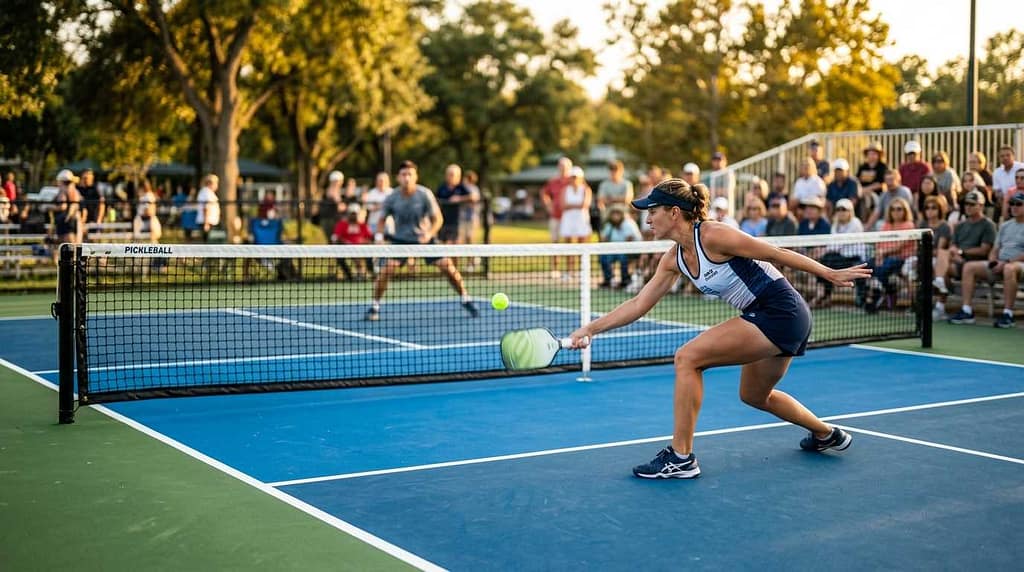
Health Benefits of Pickleball for Older Adults
Beyond the fun, pickleball offers real, measurable health benefits for seniors — both physical and mental.
Physical Benefits
- Cardiovascular fitness: Regular play improves heart health and stamina
- Balance and coordination: Constant movement improves proprioception
- Muscle tone: Engages legs, core, and upper body gently
- Bone density: Weight-bearing activity supports bone strength
- Flexibility: Reaching and pivoting keeps joints mobile
Mental and Social Benefits
- Reduces risk of cognitive decline through strategic play
- Fights loneliness — one of the biggest health risks for retirees
- Boosts mood through physical activity and endorphin release
- Gives structure and purpose to your weekly routine
- Creates a built-in social circle of like-minded players
Looking for more ways to stay active and healthy in retirement? Check out our guide on morning exercises for seniors for complementary routines you can pair with pickleball.
Joint-Safe Equipment Guide: Best Pickleball Paddles for Seniors in 2026
The right paddle can make a massive difference — especially if you have arthritis, tennis elbow, or wrist issues. Here’s exactly what to look for:
1. Paddle Weight: Go Lighter
Lighter paddles (6.5 to 7.5 oz) reduce arm fatigue and strain on elbow and wrist joints. Heavy paddles may seem more powerful, but they’re harder on the body over multiple games.
💡 Tip: Recommended weight for seniors: 7.0 to 7.8 oz. This range offers control without putting stress on joints.
2. Grip Size: Critical for Arthritis Sufferers
A grip that’s too small forces your hand to squeeze harder, increasing strain on the fingers and wrist. Measure your grip size by the distance from the middle crease of your palm to the tip of your ring finger. For most seniors, a 4.25″ to 4.5″ grip works well.
3. Core Material: Polymer Is Your Friend
Modern paddles come with three core types:
- Nomex core: Hard, powerful, loud — harder on joints
- Aluminum core: Medium feel
- Polymer core: Soft, quiet, absorbs vibration — the clear winner for joint protection
4. Surface Material
- Graphite face: Lightweight and responsive, excellent for control
- Carbon fiber face: Outstanding touch and durability, slightly more expensive
- Fiberglass face: More power, slightly heavier — still fine for many seniors
Best Pickleball Paddles for Seniors in 2026
| Paddle | Weight | Core | Best For |
|---|---|---|---|
| Selkirk Amped S2 | 7.6 oz | Polymer | All-around, arthritis-friendly |
| Paddletek Bantam EX-L | 7.4 oz | Polymer | Control players, wrist issues |
| Onix Graphite Z5 | 7.5 oz | Nomex | Players wanting more power |
| Engage Encore Pro | 7.8 oz | Polymer | Beginners and intermediate seniors |
| Gamma Needle | 6.9 oz | Polymer | Seniors preferring ultra-light paddles |
Other Essential Equipment
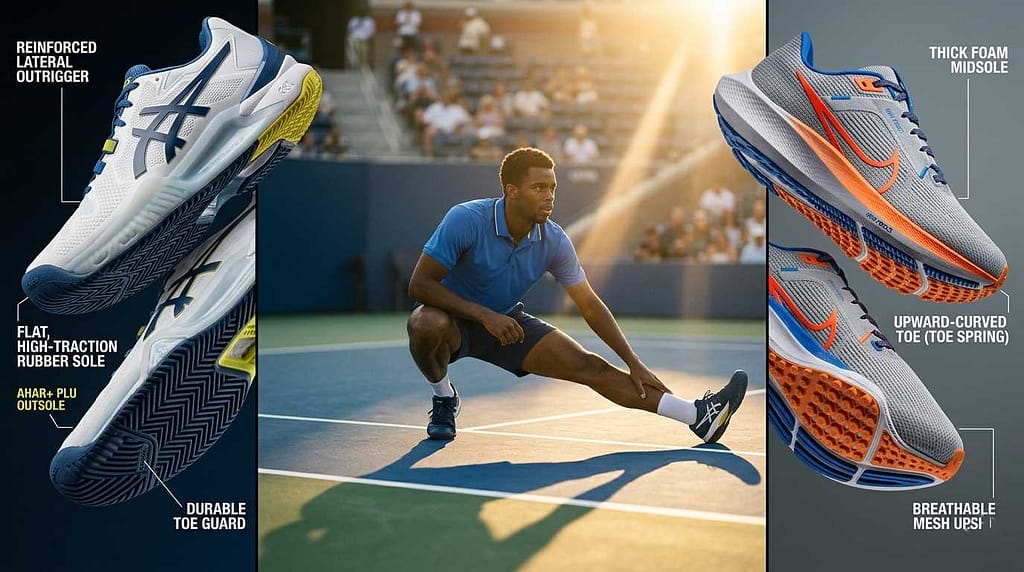
- Court shoes (NOT running shoes): Pickleball requires lateral movement. Look for non-marking court shoes with lateral support — ASICS, New Balance, and K-Swiss make excellent options for seniors
- Knee and elbow sleeves: Compression sleeves provide warmth and light support without restricting movement
- Sunscreen and UV-blocking hat: For outdoor play, sun protection is non-negotiable
- Padded grip tape: Reduces vibration transfer and helps seniors with reduced grip strength
How to Get Started: A Step-by-Step Guide for Senior Beginners
Starting pickleball as a senior is easier than you think. Here’s how to go from curious to court-ready in just a few weeks:
- Watch 2–3 beginner YouTube tutorials to understand the basic rules and scoring
- Find a local recreation center, YMCA, or community center that offers free intro sessions
- Borrow or rent equipment for your first sessions before investing in your own paddle
- Start with open play (drop-in sessions) rather than competitive leagues
- After 3–4 sessions, invest in your own lightweight, polymer-core paddle
- Consider a 2–3 session group lesson with a certified coach
- Join a local club or online community to accelerate your learning
Protecting Your Joints: Pickleball Safety Tips for Seniors
Pickleball is much gentler than tennis, but injuries can still happen — especially if you’re new to racket sports or have pre-existing joint conditions. Here’s how to play smart:
Warm Up Before Every Session
Never step onto the court cold. Spend 10 minutes doing gentle joint circles, leg swings, shoulder rolls, and light walking. A proper warm-up dramatically reduces injury risk.
Technique Over Power
Most senior pickleball injuries come from trying to hit too hard. Focus on control and placement instead of power. The “dink” shot (a soft drop into the kitchen) is one of the most effective shots in pickleball — and one of the easiest on your body.
The Two-Handed Backhand
If you have elbow or wrist concerns, consider switching to a two-handed backhand. It distributes force across both arms and dramatically reduces lateral epicondyle stress (tennis elbow).
Rest and Recovery
- Limit sessions to 60–90 minutes when starting out
- Take rest days between sessions — at least every other day
- Ice joints for 15 minutes after play if you notice any soreness
- Listen to your body — a small ache today becomes a big injury if ignored
Talk to Your Doctor First
If you have existing conditions like osteoarthritis, hip replacement history, or heart disease, speak with your physician before starting. Most will give the green light — but it’s worth a quick check-in.
🔗 Related: Need ideas for low-impact complementary exercises? Visit our morning exercises for seniors guide for stretching and mobility routines that pair perfectly with pickleball.
Finding Your Pickleball Community: Local Clubs, Apps & Online Groups
One of the best things about pickleball is that you don’t need to be a great player to be welcomed. The community is famously friendly and inclusive — especially for seniors.
How to Find Local Pickleball Courts and Clubs
- Places to Play (places2play.org): The largest directory of pickleball courts in North America. Just type in your zip code.
- USA Pickleball (usapickleball.org): The official governing body for pickleball in the US. Their club finder is excellent.
- Your local YMCA or recreation center: Most now have dedicated pickleball times, often with senior-specific sessions
- Facebook Groups: Search “pickleball [your city]” for local communities with hundreds of active members
- Meetup.com: Many cities have active pickleball meetup groups that welcome complete beginners
Online Communities for Senior Pickleball Players
- Pickleball Forum (pickleballforum.com): Great for equipment advice and strategy
- r/Pickleball on Reddit: Active, senior-friendly community with thousands of members
- YouTube: Pickleball Kitchen, Third Shot Sports, and Sarah Ansboury offer excellent senior-level instruction
Playing Pickleball While Traveling
One of the great joys of pickleball is that courts exist almost everywhere. If you’re planning to travel in retirement, check our guides on Algarve travel guide for US retirees, seniors guide to Valencia, and budget-friendly European destinations for seniors — many of these destinations now have active pickleball communities.
Pickleball and the Senior Lifestyle: More Than Just a Sport
For many retirees, pickleball becomes far more than a sport — it becomes a lifestyle and a social hub that keeps them active, engaged, and connected.
Pickleball as Part of Your Active Retirement Plan
A well-rounded retirement involves staying physically active, mentally sharp, socially connected, and financially secure. Pickleball checks the first three boxes beautifully. And if you’re also thinking about ways to earn passive income in retirement, you might even explore becoming a certified pickleball instructor — it’s a growing side hustle for former coaches, teachers, and fitness-minded retirees.
The Social Power of Pickleball
Studies consistently show that social isolation is one of the top health risks for older adults — on par with smoking and obesity. Pickleball directly combats this. Players report making some of their closest friendships through the sport, especially in the 60–75 age group.
“I moved to a new city at 67 and knew no one. Within three months of joining a pickleball club, I had a social circle, a weekly schedule, and people who checked in on me.” — Reader story
Common Pickleball Mistakes Seniors Make (And How to Avoid Them)
1. Playing Too Hard, Too Soon
Enthusiasm is wonderful, but doing five sessions in your first week almost guarantees an overuse injury. Build up gradually — two sessions per week for the first month.
2. Wearing the Wrong Shoes
Running shoes are designed for forward motion, not lateral cuts. Court shoes prevent ankle rolls and give you the stability you need on a pickleball court. This is not optional.
3. Ignoring the Kitchen Strategy
Many beginners rush the net. Learning to stay back and use the kitchen strategically will improve your game and reduce your risk of being caught out of position — and of colliding with your partner.
4. Skipping the Warm-Up
We mentioned it before and we’ll say it again — warming up is the single best injury-prevention habit you can build. Ten minutes before every session, no exceptions.
5. Not Communicating With Your Partner
In doubles, calling “mine” or “yours” on every shot is essential. Many injuries happen when both players go for the same ball and collide. Talk constantly — your partner will thank you.
Frequently Asked Questions: Pickleball for Seniors
Generally, yes — especially indoor pickleball on a forgiving surface. The lateral movements are less intense than tennis, and the smaller court means less total distance covered. Consult your orthopedic surgeon for personalized guidance.
Getting started is very affordable. A quality beginner paddle runs $50–$100. Court shoes from $60–$100. After that, many recreation centers offer free or low-cost open play. Your total startup cost is typically $150–$200.
Look for: lightweight (under 7.8 oz), polymer core, larger grip (4.25″+ circumference), and a comfortable handle length. The Selkirk Amped and Paddletek Bantam series are frequently recommended by arthritis sufferers.
Absolutely. USA Pickleball organizes age-group tournaments with Senior (50+), Senior Pro, and Super Senior (70+) categories. You can compete at recreational, amateur, and even national levels.
For general fitness, 2–3 sessions per week of 60–90 minutes is ideal. This provides cardiovascular benefit while allowing adequate recovery time. Listen to your body and adjust accordingly.
Final Thoughts: Why 2026 Is the Perfect Year to Start Pickleball
There has never been a better time to pick up a paddle. Courts are multiplying, equipment is better than ever, senior-specific programs are everywhere, and the community is extraordinarily welcoming.
Whether you’re 55 or 85, a former athlete or someone who hasn’t played a sport in decades, pickleball meets you where you are. It asks nothing of you except a willingness to show up, learn, and enjoy yourself.
The joint-friendly equipment available in 2026 means you can play without fear of wrecking your knees or elbows. The communities — local and online — mean you’ll never have to play alone. And the health benefits — physical, mental, and social — are backed by a growing body of research.
So find your nearest court, grab a beginner paddle, and give it a try. You might just discover your new favorite part of retirement.
🔗 More Resources from SeniorGigGuide.com:
- Remote work for retirees — earn income from home on your own schedule
- Time management for seniors — balance your new active lifestyle
- Passive income ideas for seniors — build financial security in retirement
- Morning exercises for seniors — warm-up and mobility routines
- Best side hustles for retirees 2026 — including pickleball instruction!