If you’re over 55 and thinking about tracking your health from home, at-home health monitoring kits for seniors have quietly become one of the most useful — and affordable — tools you can own in 2026. You don’t need to be tech-savvy. You don’t need a nursing degree. This guide walks you through exactly what these kits are, which ones are worth your money, and how to actually use them without calling your grandkids for help.
📋 What You’ll Learn in This Article
- What exactly is an at-home health monitoring kit?
- Why monitoring at home matters after 55
- The 6 types of monitors seniors actually use
- Top 5 kits reviewed — no fluff
- Side-by-side comparison table
- Does Medicare cover these? (Important!)
- How to set one up in under 10 minutes
- Warning signs your readings are telling you something
- FAQs seniors actually ask
What Exactly Is an At-Home Health Monitoring Kit?
Think of an at-home health monitoring kit as a personal health checkup you can do in your living room — before breakfast, after a walk, or whenever you feel something’s off. These kits usually contain one or more small devices that measure things like your blood pressure, heart rate, blood oxygen level, or blood sugar. Most of them are about the size of a TV remote.
Twenty years ago, this kind of monitoring required a hospital visit or a home nurse. Today, a good kit costs between $30 and $150, fits in a kitchen drawer, and gives you readings in under 60 seconds. Setup is incredibly simple since you don’t connect anything to your computer. While some fancier options use it, Wi-Fi isn’t a requirement for most devices. You just press a button, wait, and read the number on the screen.
Some kits are “all-in-one” — meaning one box contains several devices. Others focus on a single measurement like blood pressure or blood oxygen. We’ll cover both types below so you can decide which fits your situation.
“Monitoring your vitals at home twice a week gives your doctor more useful data than a single annual checkup — and it takes less time than brushing your teeth.”— American Heart Association guidance on home monitoring, 2025
Why Monitoring at Home Matters More After 55
Here’s a fact most people don’t know: many serious health conditions — high blood pressure, atrial fibrillation (irregular heartbeat), low blood oxygen — have no obvious symptoms in their early stages. You feel fine. You look fine. But something is quietly changing inside your body.
After 55, the risk of these “silent” conditions increases significantly. According to the CDC, nearly 7 out of 10 adults aged 65 and older have high blood pressure — and about 1 in 5 doesn’t know it. That’s not because they ignored it. It’s because they had no way of catching it at home between doctor visits.
This is where at-home health monitoring kits for seniors become genuinely valuable — not as a replacement for your doctor, but as an early-warning system. Think of it like the check-engine light in your car. You still need a mechanic, but the light helps you know when to call one.
📊 Quick Health Facts for Americans Over 55
- 70% of adults 65+ have high blood pressure (CDC, 2024)
- 34 million Americans have diabetes; millions more are undiagnosed (ADA, 2025)
- 3 million older adults visit ERs annually for fall injuries (CDC)
- Early detection through home monitoring can reduce hospitalizations by up to 38% in high-risk seniors (NIH research)
The 6 Types of At-Home Health Monitors Seniors Use Most
Let’s go through each type plainly. No jargon. No assumptions that you already know what these are.
1. Blood Pressure Monitor (Most Important for Most Seniors)
This wraps around your upper arm (like the cuff at the doctor’s office) or your wrist. You press one button, it squeezes gently, and 30 seconds later you have three numbers on the screen: your systolic pressure, your diastolic pressure, and your pulse. That’s it.
What to look for: Upper-arm cuffs are more accurate than wrist monitors for most people. Look for a cuff size that fits your arm — most packages include a sizing guide. The Omron Platinum is the most-recommended brand by U.S. cardiologists for home use. A basic model runs $40–$80.
When to check: Morning before coffee, and again in the evening, 3–4 days per week. Write it down or let the device remember it for you.
2. Pulse Oximeter (Small, Simple, Surprisingly Useful)
This little clip goes on your fingertip. In 10 seconds, it tells you your blood oxygen level (called SpO2) and your heart rate. Normal blood oxygen is 95–100%. If yours reads 92% or below consistently, that’s a conversation to have with your doctor.
During the COVID years, pulse oximeters became a household name. They’re still extremely useful for seniors with respiratory conditions like COPD, asthma, or congestive heart failure. They cost $20–$40 and require no setup at all — just slip it on your finger and read the screen.
3. Blood Glucose Monitor (Essential for Diabetics and Pre-Diabetics)
This one involves a small finger prick using a lancet (a tiny, painless needle). A drop of blood goes on a test strip, and 5 seconds later you see your blood sugar level. Modern lancets barely register as a sensation — most people say it feels like a light tap.
If you’ve been told you’re pre-diabetic, or if diabetes runs in your family, this monitor is worth having. The Contour Next ONE and the iHealth Gluco+ are highly rated for being easy to read and gentle to use. Starter kits typically include the meter, lancets, and test strips for $25–$50.
4. ECG / Heart Rhythm Monitor (For Peace of Mind or Known Heart Issues)
An ECG (electrocardiogram) sounds intimidating, but the home version is simple: you hold a small device between two fingers for 30 seconds, and it records your heart’s electrical pattern. This can detect irregular heartbeats — including atrial fibrillation (AFib), which affects more than 5 million Americans over 65 and significantly raises stroke risk.
The KardiaMobile by AliveCor is FDA-cleared and widely recommended. It’s about the size of a credit card, costs around $99, and pairs with a free smartphone app. Your doctor can view the recordings. If you’ve ever been told your heart “skips beats,” or if you have a history of heart disease, this is worth discussing with your physician.
5. Digital Thermometer (Classic, But Updated)
Modern digital thermometers give accurate readings in 10 seconds under the tongue or in the ear. For seniors, a tympanic (ear) thermometer is the easiest to use — no holding still for a minute, no under-tongue awkwardness. Brands like Braun and iProven make reliable models for $20–$45.
6. Smart Scale with Body Composition
These look like regular bathroom scales but measure more than just weight. A good smart scale also estimates your body fat percentage, muscle mass, and sometimes even bone density. Sudden unexpected weight gain (more than 3–5 pounds in a week) can be an early sign of fluid retention — a warning sign for heart or kidney issues.
The Withings Body+ is a popular senior-friendly option. It has a large, easy-to-read display, syncs to a smartphone app if you want (but shows numbers on the scale even if you don’t), and costs around $100. You don’t need to set it up yourself — most pharmacies will do it for free if you ask.
Top 5 At-Home Health Monitoring Kits for Seniors in 2026
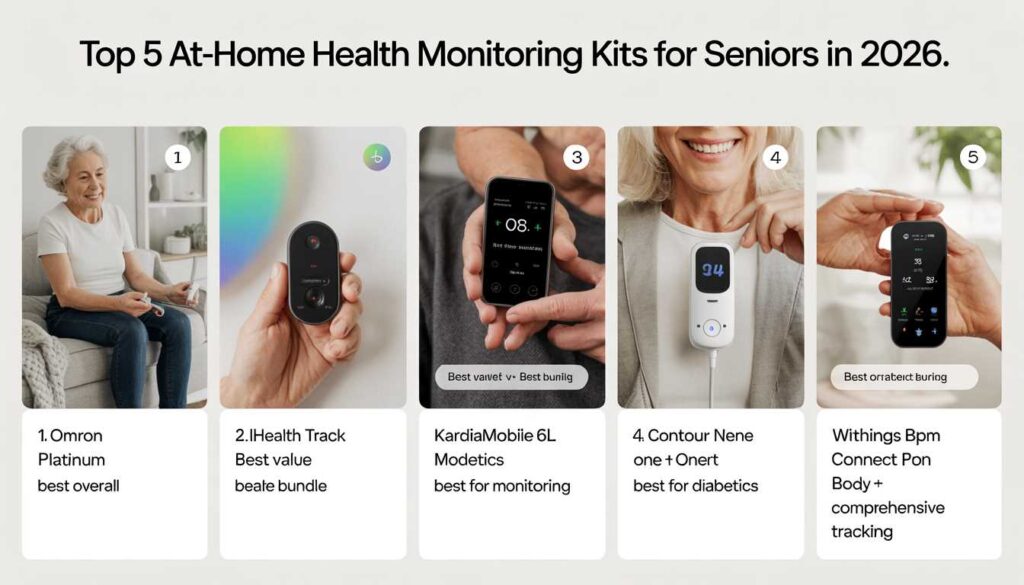
These aren’t paid promotions. These are the kits that consistently earn high marks from cardiologists, geriatric care specialists, and — most importantly — seniors themselves who use them daily.
🥇 1. Omron Platinum Blood Pressure Monitor (BP5450) — Best Overall

Price: ~$75 | Amazon rating: 4.7/5 (90,000+ reviews)
This is the gold standard for home blood pressure monitoring. The cuff is comfortable, the display is large and backlit, and it stores up to 200 readings for two users. There’s a clear “irregular heartbeat” indicator on the screen — a simple icon that lights up if your reading shows anything unusual.
What seniors love about it: No setup required. You unbox it, put in batteries (included), wrap the cuff on your arm, press one button. That’s it. The numbers are large enough to read without glasses from a few feet away.
Limitation: Does not connect to Wi-Fi or share data automatically with your doctor. If you want that feature, the Omron Evolv (around $100) adds Bluetooth.
🥈 2. iHealth Track Kit (Blood Pressure + Pulse Ox Bundle) — Best Value Bundle
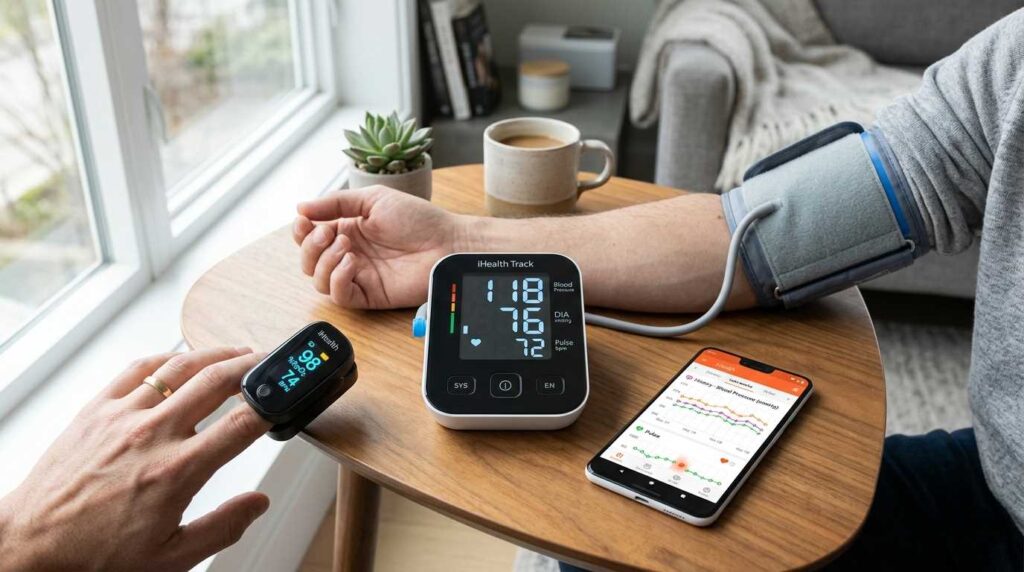
Price: ~$65 for both devices | No subscription required
iHealth offers a bundle that includes both a blood pressure cuff and a pulse oximeter. Both sync to a free smartphone app, but they also display readings directly on the device — so a smartphone is optional, not required. This is important for seniors who aren’t comfortable with apps.
What seniors love about it: The iHealth app is genuinely easy to read and lets you share your history with a family member or doctor with one tap. The pulse oximeter has a large digit display and clips easily on any finger size.
🥉 3. KardiaMobile 6L — Best for Heart Monitoring
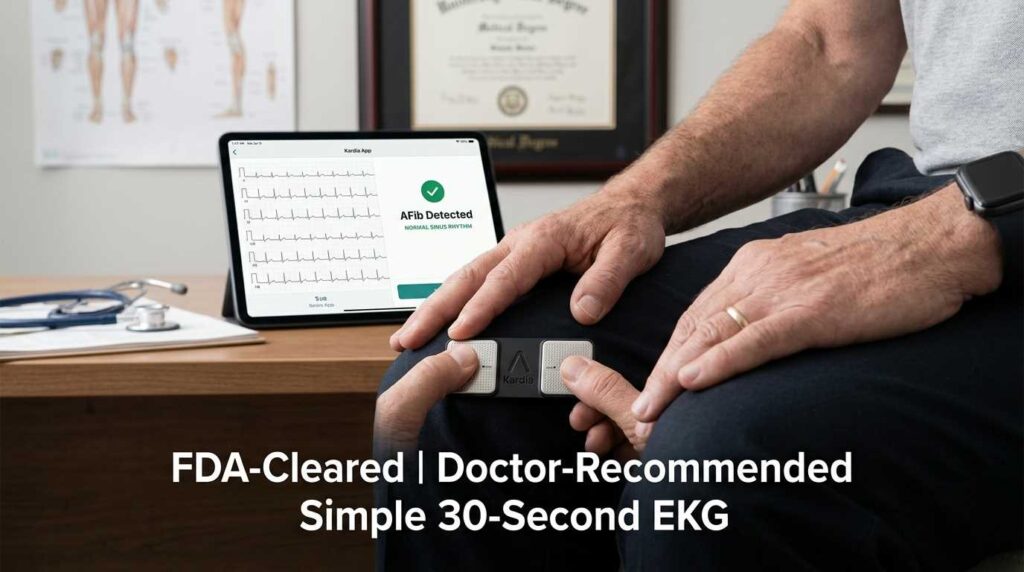
Price: ~$149 | Optional subscription: $9.99/month (basic version is free)
This thin card-sized device is FDA-cleared to detect AFib, tachycardia (fast heartbeat), bradycardia (slow heartbeat), and normal sinus rhythm. You simply rest it on your knees and place your thumbs on the two sensors for 30 seconds. It connects to a free app and generates a report your doctor can actually read.
What seniors love about it: Doctors take it seriously. Multiple cardiologists actively recommend this device to patients with a history of heart palpitations or AFib. Several seniors report that recordings from this device caught irregularities that led to life-changing diagnoses.
Limitation: Requires a smartphone. The app is reasonably simple, but if you’re not comfortable with apps, ask a family member to set it up once — after that, you just press one button on the device itself.
4. Contour Next ONE Blood Glucose Kit — Best for Diabetics
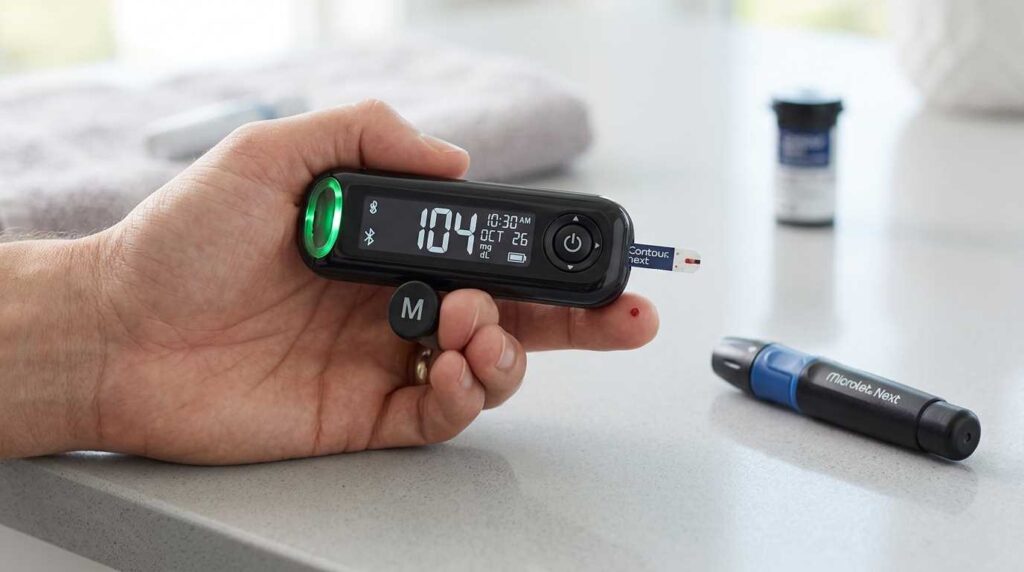
Price: ~$30 for meter; test strips ~$30/100 strips | No subscription
The Contour Next ONE consistently ranks among the most accurate consumer glucose meters available in the U.S., with studies showing it meets FDA accuracy standards in over 99% of tests. The lancet device is described by users as nearly painless. Readings appear in 5 seconds on a large, bright screen.
Important note on test strips: Test strips are an ongoing cost regardless of which glucose meter you buy. Check whether your Medicare Part D plan covers a specific brand — this can save you $50–$100 per month.
5. Withings BPM Connect + Body+ Scale Bundle — Best for Comprehensive Tracking
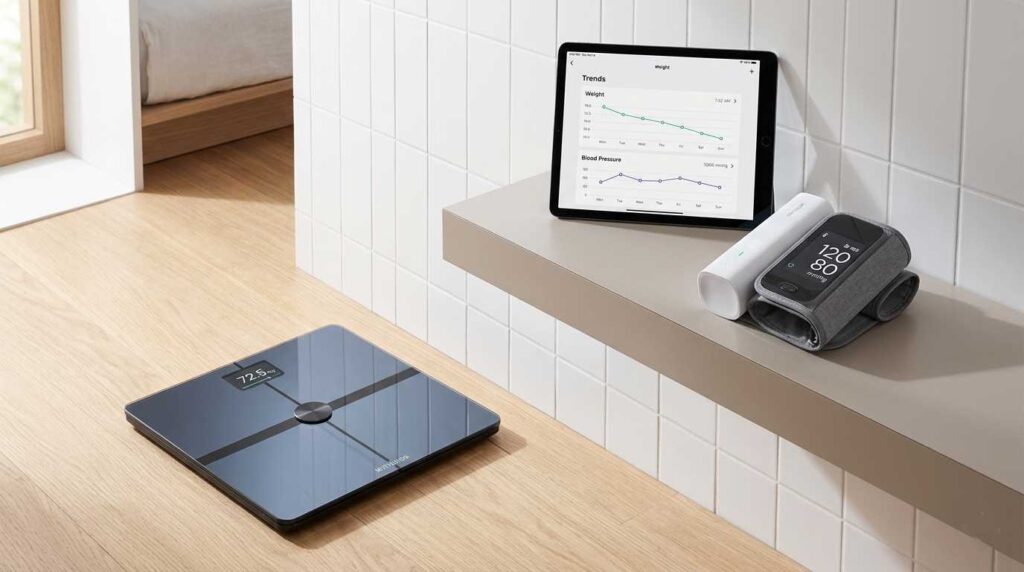
Price: ~$170 for both | No subscription required
Withings makes some of the most thoughtfully designed health devices on the market. The BPM Connect is a blood pressure monitor that stores readings directly on the device (no phone needed) and also connects to the Withings app if you want to track trends over time. The Body+ scale measures weight and body composition and has a display that’s large enough to read easily even for those with vision challenges.
What seniors love about it: Withings designs its devices to work without your smartphone as the primary display. You see your reading directly on the device, clean and clear. The app is optional but well-designed for sharing data with family or healthcare providers.
At-a-Glance Comparison: Top At-Home Health Monitoring Kits for Seniors
| Kit / Device | Measures | Price | Phone Required? | Best For | Medicare Coverage? |
|---|---|---|---|---|---|
| Omron Platinum BP5450 | Blood pressure, pulse, irregular heartbeat flag | ~$75 | No | Most seniors — simple daily use | Sometimes (with Rx) |
| iHealth Track Bundle | Blood pressure + blood oxygen | ~$65 | Optional | Best value starter kit | Partial |
| KardiaMobile 6L | ECG, AFib detection, heart rhythms | ~$149 | Yes (free app) | Heart concerns, AFib history | No (OTC device) |
| Contour Next ONE | Blood glucose (sugar) | ~$30 + strips | Optional | Diabetes / pre-diabetes | Yes (Part D for strips) |
| Withings Bundle | Blood pressure + body weight/composition | ~$170 | Optional | Comprehensive, long-term tracking | Partial |
Does Medicare Cover At-Home Health Monitoring Kits?
This is one of the most common questions — and the answer is: sometimes, if certain conditions are met.
Medicare Part B covers what’s called “durable medical equipment” (DME). Blood pressure monitors and blood glucose monitors can qualify — but they typically need to be prescribed by your doctor and obtained through a Medicare-approved supplier. If you buy one at CVS or Amazon, Medicare usually won’t reimburse it even if it’s the exact same device.
Medicare Advantage plans (also called Part C) have more flexibility. Many Medicare Advantage plans in 2025–2026 have started covering a broader range of health monitoring devices — including some smartwatches and Bluetooth monitors — especially as part of chronic care management programs. Call your plan’s member services number (on your insurance card) and ask specifically: “Do you cover remote patient monitoring devices for home use?”
Blood glucose test strips: These are almost always covered under Medicare Part D (prescription drug coverage) for seniors with a diabetes diagnosis. The coverage amount varies by plan, but it’s substantial — often covering 80–100% of the cost.
For the most up-to-date coverage information, visit Medicare.gov’s blood glucose monitor page or call 1-800-MEDICARE (1-800-633-4227) — free, available 24/7.
How to Set Up Your At-Home Monitoring Kit in Under 10 Minutes
Most seniors tell us the hardest part isn’t using the device — it’s the first unboxing. Here’s a calm, step-by-step process that works for almost any at-home health monitoring kit for seniors.
- Open the box and remove everything. Lay it all out on a table. Most kits include: the device, a cuff or sensor, batteries (or a USB charger), a storage pouch, and a paper manual. The manual is usually overwhelming — ignore it for now.
- Insert the batteries. This is almost always AA or AAA batteries. The battery compartment is usually on the back or bottom of the device, with a small arrow showing which way to insert them.
- Find the “on” button. It’s usually the biggest button, often green or labeled with a heart or “START.” Press it once.
- Follow the screen prompts. Modern monitors walk you through the process with simple icons or arrows on the screen. For a blood pressure monitor: put on the cuff, sit quietly, press Start, wait 30 seconds.
- Write down your first reading. Keep a small notebook in the same drawer as your device. Date, time, and numbers. That’s it. This log becomes genuinely useful at your next doctor’s appointment.
- (Optional) Connect to an app. If your device supports Bluetooth, download the app (iHealth, Withings Health Mate, KardiaMobile, etc.) on your smartphone. Usually you just open the app, press “Add Device,” and let it connect automatically. If this feels like too much, skip it — the device works perfectly without the app.
If you get stuck, most manufacturers have a toll-free support line. For Omron: 1-800-634-4350. For iHealth: 1-855-238-5100. Both have patient representatives who are used to helping seniors.
Understanding Your Readings: When to Pay Attention
Your at-home health monitoring kit for seniors gives you numbers. Here’s a plain-language guide to what those numbers mean — and when to take action.
Blood Pressure: What’s Normal, What’s a Warning Sign
| Reading (Systolic / Diastolic) | What It Means | What to Do |
|---|---|---|
| Below 120 / Below 80 | Normal ✅ | Keep doing what you’re doing |
| 120–129 / Below 80 | Elevated — watch it | Note it; mention at next appointment |
| 130–139 / 80–89 | Stage 1 High Blood Pressure | Call your doctor within a week |
| 140+ / 90+ | Stage 2 High Blood Pressure | Contact doctor soon — within 1–2 days |
| 180+ / 120+ | Hypertensive Crisis ⚠️ | Call 911 or go to ER immediately |
| Below 90 / Below 60 | Low blood pressure — also concerning | Call doctor if you feel dizzy or faint |
Important: One high reading doesn’t mean a crisis. Blood pressure naturally fluctuates. It can be high after coffee, exercise, stress, or a salty meal. What matters is a pattern — consistently high readings over several days.
Blood Oxygen (SpO2): Simple Rule
- 95–100%: Normal. Healthy lungs and blood.
- 92–94%: Slightly low. Note it and call your doctor if it’s consistent.
- Below 92%: Seek medical attention. Don’t wait.
Blood Glucose: The Numbers Your Doctor Wants to See
- Fasting (before eating): 70–99 mg/dL — Normal
- Fasting 100–125 mg/dL — Pre-diabetic range. Talk to your doctor.
- Fasting 126+ mg/dL — Diabetic range. Doctor should know.
- Below 70 mg/dL — Low blood sugar (hypoglycemia). Have a small snack with sugar (orange juice, glucose tablets) and call your doctor if it persists.
More Ways Seniors Are Taking Charge of Their Health in 2026
At-home monitoring is just one piece of the puzzle. If you’re building a healthier, more independent life after 55, these resources from our community may help:
7 Practical Tips for Getting the Most Out of Your Monitoring Kit
These come from real seniors who’ve been using these kits for 2+ years. Simple but easy to miss.
- Check at the same time each day. Blood pressure naturally rises and falls throughout the day. Comparing your 7 AM reading to yesterday’s 7 AM reading is meaningful. Comparing your 7 AM reading to your 3 PM reading is not.
- Sit quietly for 5 minutes before checking blood pressure. Walk in from outside, sit down, wait 5 minutes, then check. Standing up, rushing, or being stressed will give you an artificially high reading.
- Keep your device in one place. Put it in the same spot — a bedside table, a kitchen shelf — so it becomes part of your routine. “Out of sight, out of mind” is real for monitoring kits.
- Bring your log to every doctor’s appointment. A notebook with 30 days of readings tells your doctor more than a single in-office measurement. Most doctors are genuinely pleased when patients bring this data.
- Don’t panic over a single unusual reading. Everyone has off readings. Look for trends — three or more consecutive high (or low) readings in the same direction deserve attention.
- Replace batteries every 6 months. Weak batteries can cause inaccurate readings. Mark “replace batteries” on your calendar every March and September.
- Calibrate your blood pressure cuff once a year. Bring it to your next doctor’s appointment and ask the nurse to check it against their office monitor. Most are happy to do this.
Frequently Asked Questions About At-Home Health Monitoring Kits for Seniors
These are the questions we hear most from readers over 55 — answered plainly.
The Omron Platinum BP5450 is widely considered the best starting point. It requires no smartphone, no app, no Wi-Fi, and no setup beyond inserting batteries. You press one button and read three numbers on a large, lit screen. That’s the entire process. It stores 200 readings automatically, so you can show your doctor your history without writing anything down.
No — and this is important. At-home monitoring is designed to support your relationship with your doctor, not replace it. Think of your monitor as giving your doctor better information, not fewer visits. Some conditions (like heart arrhythmias or kidney-related blood pressure issues) require in-person testing that no home kit can replicate. Use your readings as conversation starters, not diagnoses.
For most healthy adults over 55 with no diagnosed conditions, checking blood pressure 3–4 times per week (same time each day) provides useful trend data without becoming an anxious obsession. If you have a diagnosed condition like hypertension or diabetes, your doctor may recommend daily monitoring. For pulse oximetry, most seniors only need to check when they feel short of breath or unusually tired — it doesn’t need to be part of a daily routine unless prescribed.
For top-rated devices like the Omron Platinum or Withings BPM Connect, the accuracy is very close to clinical-grade monitors — within 3–5 mmHg, which is clinically acceptable. The key is technique: same arm, same position, same time of day, 5 minutes of rest before measuring. The most common source of inaccuracy in home monitoring isn’t the device — it’s inconsistent technique by the user. Follow the same routine every time and your readings will be reliable.
Absolutely. All five kits reviewed in this guide display readings directly on the device screen — no smartphone needed. The Omron Platinum, Contour Next ONE glucose meter, and basic pulse oximeters are completely self-contained. Smartphone connectivity is an optional bonus for people who want to track trends in an app or share data digitally. It is never a requirement. A $4 notebook works just as well for logging your readings.
The Bottom Line: Start Simple, Stay Consistent
At-home health monitoring kits for seniors aren’t about turning your home into a mini hospital. They’re about having a simple, reliable way to notice when something in your body is changing — before it becomes a bigger problem.
You don’t need to buy every device on this list. Start with a blood pressure monitor — that single purchase addresses the #1 silent health risk for Americans over 55. Use it consistently. Write down your numbers. Bring them to your next doctor visit. That simple routine has helped thousands of seniors catch problems early and avoid hospitalizations.
If you want to add more monitoring over time, the other devices in this guide are all straightforward and genuinely useful. But one monitor, used consistently, beats five monitors collecting dust in a drawer.
🏥 Discover More Senior Health & Tech Guides
Learn how smart technology is helping adults 55+ live healthier, more independent lives — without needing a tech degree.
Medical Disclaimer: This article is for general informational purposes only and does not constitute medical advice. Always consult your physician or qualified healthcare provider before beginning any new health monitoring regimen, changing your treatment plan, or acting on readings from a home health device. The products mentioned are for informational purposes only; we do not receive compensation for product recommendations in this article.