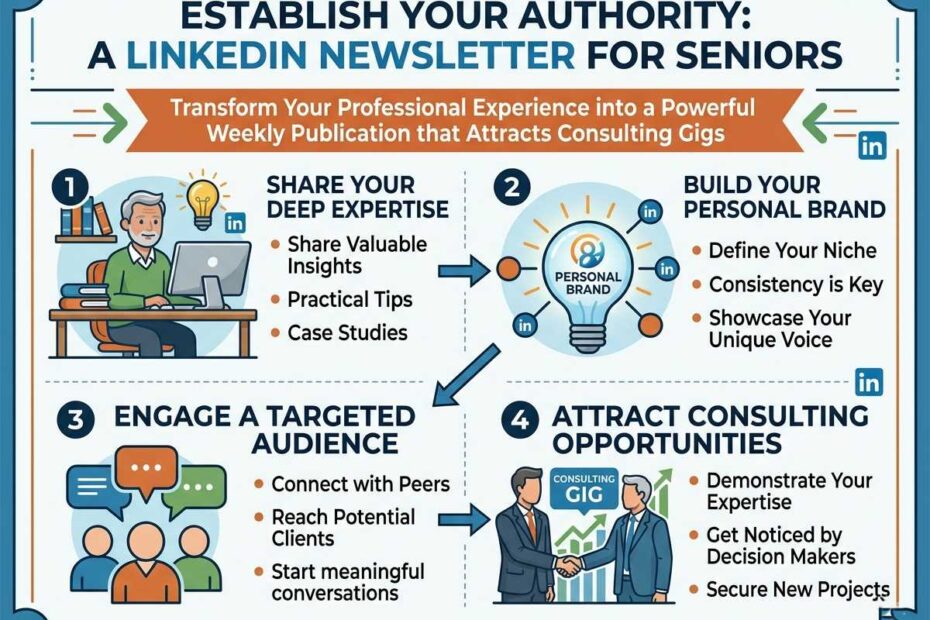
A plain-English, step-by-step guide for professionals over 55 who want to turn decades of experience into a trusted newsletter — and a steady stream of consulting inquiries. You spent 30 years fixing broken supply chains,…
Here is a question worth sitting with: What if the most valuable thing you own is not in your savings account — it is stored in your head? If you have spent 20, 30, or…
You don’t need a tech degree, a pile of savings, or a second job. You need the right setup — and a little patience.
Passive income for seniors is one of the most searched retirement topics right now — and for good reason. Social Security covers the basics for most people, but it rarely covers everything. Prices have gone up. Medicare premiums have gone up. And the idea of going back to a 9-to-5 just to make ends meet? That’s not appealing to anyone who has already put in 30+ years of hard work.
This guide lays out nine real, tested ways to create income that keeps arriving whether you’re gardening, traveling, or simply enjoying a quiet Tuesday morning. We’ll explain each option in plain language, be honest about how much effort it truly takes, and point you to the next step for each one.
Quick Definition
Passive income is money you earn without trading hours for dollars every day. You do the work once (or invest money once), and the income keeps flowing with minimal ongoing effort. For seniors, the best sources are low-maintenance, low-risk, and compatible with Social Security rules.
Why this matters in 2026: The Social Security earnings test only applies before your full retirement age. Once you pass it, you can earn as much as you want from most income sources without any reduction in benefits. That changes everything.
What Passive Income Actually Means for Seniors
You may have heard people say passive income means “making money while you sleep.” That’s mostly true, but there’s a catch: almost every passive income stream requires some upfront effort — writing a book, setting up an account, or making an initial investment. After that initial work is done, the ongoing time commitment drops dramatically.
For someone over 55, this is actually a natural fit. You’ve spent decades building knowledge, relationships, and (in many cases) savings. Passive income is how you put all of that to work without going back to a demanding schedule.
Here’s the most important thing to understand before we dive in: not all passive income is created equal for seniors. Some strategies (like rental properties) sound great but come with landlord headaches. Others (like dividend stocks) are genuinely hands-off once you’re set up. We’ll be clear about each one.
Quick Comparison of All 9 Methods
Use this table to find the method that fits your situation at a glance.
Method
Startup Cost
Tech Level
Time to First $
Ongoing Work
Good for Fixed Income?
High-Yield Savings
$1+
Very Low
1 month
None
✔
Dividend Stocks / ETFs
$500+
Low
1–3 months
Very Low
✔
E-Book (Amazon KDP)
$0
Low
1–6 months
Low
✔
Online Courses
$0–$50
Medium
1–4 months
Low–Med
✔
Digital Downloads (Etsy/Gumroad)
$0–$20
Low
Weeks
Very Low
✔
Affiliate Marketing
$0–$100
Medium
3–12 months
Medium
✗ Long runway
Print-on-Demand
$0
Low–Med
1–3 months
Low
✔
Real Estate Crowdfunding
$10–$1,000
Low
3–6 months
None
✔
Renting What You Own
$0
Low
Days–Weeks
Low–Med
✔
High-Yield Savings Accounts: The Simplest Starting Point
Low Effort·Setup time: 15 minutes
If you have money sitting in a traditional bank savings account earning 0.01% interest, you are leaving real money on the table. High-yield savings accounts (HYSAs) at online banks are paying between 4% and 5% annually as of mid-2026 — that’s 40 to 50 times more than most big-bank accounts.
Here’s a simple example: $25,000 in a HYSA at 4.5% earns you about $94 per month in interest, automatically, with zero effort after setup. These accounts are FDIC-insured up to $250,000, meaning your money is federally protected.
Who this is for: Anyone with savings sitting idle. No investment knowledge required. No risk to your principal. You can withdraw your money at any time.
Where to look: Ally Bank, Marcus by Goldman Sachs, and Discover Bank consistently offer competitive rates. Compare current rates at Bankrate’s HYSA comparison tool before opening an account.
One thing to know: Interest rates on these accounts can change. When the Federal Reserve adjusts rates, your HYSA rate follows. They’re not fixed like a CD.
Dividend Stocks & ETFs: Let Your Money Work for You
Low–Medium Effort·Setup time: 1–2 hours
Some companies share a portion of their profits directly with shareholders every quarter. These payments are called dividends. When you own stock in these companies — or a fund (ETF) that holds a basket of them — you receive regular cash deposits just for being an owner.
Think of it this way: if you own 100 shares of a company that pays $1.20 in dividends per share per year, you receive $120 per year, split into quarterly payments of $30. The more shares you own, the more you receive.
Dividend ETFs take the guesswork out by spreading your investment across dozens or hundreds of dividend-paying companies at once. Popular options include Vanguard’s Dividend Appreciation ETF (VIG) and the iShares Core High Dividend ETF (HDV). Always consult a licensed financial advisor before investing, as stock values can go down as well as up.
Tax note: Qualified dividends are often taxed at a lower rate than regular income — sometimes 0% for seniors in the lower tax brackets. A tax professional can help you understand your specific situation.
E-Books on Amazon KDP: Publish What You Know
Low Effort After Writing·Setup time: A few weeks to write and upload
You’ve lived a full life. You’ve raised children, navigated a career, managed a home, learned skills, and solved problems most people half your age haven’t faced yet. That knowledge is valuable — and people will pay for it.
Amazon KDP (Kindle Direct Publishing) is a free platform where anyone can upload a book and start selling it. You write the book once. Amazon handles the selling, the payment processing, and the delivery. You earn a royalty — up to 70% of the sale price — every time someone buys.
You don’t need to write a 300-page novel. Short e-books (40–80 pages) on practical topics — gardening, managing Medicare, cooking for one, downsizing a home, dealing with grief — sell well to readers who want focused, expert advice.
Step-by-step to get started:
Write your book in Microsoft Word or Google Docs (it’s free).
Online Courses: Your Expertise, Packaged and Sold on Repeat
Medium Effort Upfront·Setup time: 4–8 weeks
An online course is similar to an e-book, but with video lessons. Once you record the videos and upload them to a platform, the course sells automatically, 24 hours a day, without you lifting a finger.
The key is choosing the right topic — something people actively search for and are willing to pay to learn. Your decades of experience are an enormous asset here. A retired nurse can teach medication management for caregivers. A former accountant can teach small-business bookkeeping to beginners. A passionate gardener can teach container vegetable gardening to apartment dwellers.
You don’t need fancy equipment. A smartphone propped on a stack of books, decent lighting near a window, and a quiet room are enough to get started. Platforms like Teachable and Udemy handle the technical side for you.
⚠️ Honest caveat: Building an audience takes time. Courses on Udemy benefit from built-in traffic but come with lower royalties. Hosting your own course on Teachable gives you higher income per student but requires you to drive your own traffic (social media, email list, word of mouth).
Digital Downloads on Etsy or Gumroad: The Underrated Gem
Low Effort·Setup time: 1–3 hours per product
A digital download is a file you create once and sell unlimited times. Think: a printable meal planner for seniors, a Medicare checklist, a retirement budget spreadsheet template, a set of greeting card designs, a cross-stitch pattern, or a packing list for snowbirds.
Someone pays, they download the file instantly, you receive the money — all without touching a thing. Etsy has built-in traffic from millions of shoppers. Gumroad is even simpler to set up and has no listing fees.
You can create most of these files using Canva (free version available), Microsoft Word, or Google Docs. If you can design a nice-looking document, you have everything you need.
Affiliate Marketing: Recommend Products, Earn a Commission
Medium Effort·Setup time: 3–6 months to gain traction
Affiliate marketing means recommending a product or service and receiving a commission when someone buys through your unique link. You don’t handle the product, ship anything, or deal with customer service. You simply connect people with things they were already looking for.
This works best when you have a platform — a blog, a newsletter, a YouTube channel, or even a Pinterest account — where people regularly come for advice. For example, a senior who blogs about retirement travel could earn commissions by linking to luggage, travel insurance, or hotel booking sites.
Amazon’s affiliate program (Amazon Associates) is the easiest entry point. Once approved, you can earn 1%–10% commission on products you recommend across millions of items.
Be patient with this one. Affiliate income typically takes months to build. It’s best as a supplement to faster-starting methods on this list.
Print-on-Demand: Turn Your Creativity Into Products
Low Effort After Setup·Setup time: A few hours
Print-on-demand (POD) lets you sell physical products — t-shirts, mugs, tote bags, phone cases, wall art — without ever storing inventory, packing a box, or visiting a post office.
Here’s how it works: you upload a design to a platform like Redbubble, Merch by Amazon, or Printify. A customer orders the item. The platform prints it, ships it, handles returns, and sends you a royalty. You never touch the product.
You don’t need to be a professional artist. Quotes, simple patterns, hobby-themed designs, and regional pride imagery all sell well. Canva makes it easy to create clean, attractive designs without design experience.
Real Estate Crowdfunding: Real Estate Returns Without Being a Landlord
Low Effort·Setup time: 30 minutes to open an account
Owning a rental property sounds appealing until you get a 2 a.m. call about a broken furnace. Real estate crowdfunding solves that problem. You pool money with other investors to buy a stake in commercial properties — apartment buildings, storage facilities, retail centers — without any management responsibility.
Platforms like Fundrise allow you to start with as little as $10. Returns vary but have historically ranged from 5% to 12% annually, though past performance doesn’t guarantee future results.
Important note: Unlike stocks, your money in a real estate crowdfunding platform isn’t instantly liquid. Some platforms have lock-up periods of 3–5 years. Only invest money you won’t need in the short term.
As always, speak with a licensed financial advisor before making any investment decision.
Renting What You Already Own: Monetize What You Have
Low–Medium Effort·Setup time: Hours to days
This is the most overlooked passive income source for seniors — and often the fastest to start. You likely already own things other people would pay to use.
A room or extra space: Listing a spare bedroom on Airbnb or Vrbo can earn $700–$2,000+ per month depending on your location. You control when it’s available, who stays, and the price.
A second or rarely used car: Turo allows you to rent your car to verified drivers. The platform provides insurance and handles payments. The average Turo host earns around $700–$900 per month per car.
A parking space: If you live near a stadium, airport, hospital, or downtown area, your driveway or garage could earn $50–$300 per month through apps like SpotHero or Neighbor.
Storage space: Have an unused basement or garage bay? Neighbor.com connects you with people who need affordable storage. Setup takes about 15 minutes.
How to Choose the Right Passive Income Strategy for You
With nine options in front of you, picking the right one can feel overwhelming. Here’s a simple way to think about it.
Start with what you already have. If you have savings, the HYSA or dividend approach costs you no time to set up. If you have knowledge and a story to tell, an e-book or course is your fastest path. If you have physical assets — a spare room, a car you don’t use daily — renting them out generates cash within days.
Then, as you get comfortable, add a second stream. Most financially secure retirees don’t rely on just one source of passive income. They stack two or three: perhaps dividend income from an investment account, plus royalties from a self-published book, plus a digital download shop that earns $200–$500 a month almost automatically.
The goal isn’t to get rich overnight. It’s to build enough consistent extra income that a medical expense, a home repair, or a dream vacation doesn’t derail your budget.
If you want help thinking through which gig matches your skills and schedule, browse our full articles library: All Guides for Seniors →
📌 Passive Income & Social Security: Once you’ve reached your full retirement age (66–67 for most people currently), you can earn any amount of passive income without affecting your Social Security payments. Investment income, royalties, and rental income do not count toward the earnings test. Learn more: Earning Income While on Social Security →
A Closer Look: Selling Digital Products Without Any Tech Background
The biggest fear most seniors share when exploring digital passive income is this: “I’m not good with technology.” It’s worth addressing this directly, because it’s largely a myth in 2026.
Platforms like Etsy, Gumroad, Amazon KDP, and Canva have been built specifically for people without technical backgrounds. If you can:
Log into a website with an email and password
Type a document in Word or Google Docs
Upload a photo from your phone
…you have all the technical skill needed to start. Our digital products guide for seniors walks through the entire process with screenshots, step by step.
And if technology still feels intimidating, that’s exactly why we wrote the AI for Seniors Beginners Guide — because tools like ChatGPT and Claude can help you write your e-book, brainstorm product ideas, and draft marketing descriptions in plain conversational English. No coding. No confusion.
A Brief Word on Taxes
Passive income is generally taxable, but the tax picture for seniors is often more favorable than people expect.
Qualified dividends from stocks held over a year are taxed at 0%, 15%, or 20%, depending on your total income. Many seniors in the 10%–12% income tax bracket pay zero federal tax on qualified dividends.
Royalties from books and digital products are taxed as ordinary income, but the amounts are often small enough to stay in a low bracket — especially when paired with deductions.
Rental income is reported on Schedule E and can be offset by expenses like maintenance, depreciation, and insurance.
Frequently Asked Questions – Passive Income for Seniors
What is the easiest passive income for seniors?
High-yield savings accounts are the easiest because there’s truly nothing to do after you open the account. Money earns interest automatically each month. Digital downloads on Etsy or Gumroad are a close second — you create a file once, and it can sell for years without any additional effort.
Does passive income affect my Social Security benefits?
It depends on the type of income and your age. Investment income — dividends, interest, rental income, capital gains — does not count toward the Social Security earnings test regardless of your age. Active self-employment income (like consulting or freelance work) may count if you are below your full retirement age. Once you reach full retirement age, Social Security cannot be reduced by any amount you earn. Always verify your specific situation with the Social Security Administration or a financial advisor.
How much money do I need to start earning passive income?
Several options on this list cost nothing to start. Writing an e-book on Amazon KDP, uploading a digital download on Gumroad, or starting a print-on-demand shop all require zero upfront investment — only your time. If you have savings, even $500 in a high-yield savings account or a dividend ETF will begin earning immediately. You do not need a large nest egg to begin.
Can I earn passive income online without knowing much about technology?
Yes, absolutely. Platforms like Amazon KDP, Etsy, Canva, and Gumroad are designed for everyday people, not tech experts. If you can write an email and upload a file, you have all the skills you need. For extra help, tools like Claude AI or ChatGPT can guide you through each step in plain English — you just type questions like you’d ask a knowledgeable friend.
Is passive income taxable for seniors?
Most passive income is taxable, but the rates are often favorable for seniors. Qualified dividends and long-term capital gains are taxed at 0% for many seniors in the lower tax brackets. Rental income can be reduced by legitimate deductions. Royalties are taxed as ordinary income. A tax professional who works with retirees can help you minimize your tax bill legally and maximize what you keep.
The Bottom Line
Building passive income for seniors isn’t about chasing get-rich-quick schemes or risking your retirement savings. It’s about making smart, sustainable decisions that let your money, your knowledge, and your assets do a bit of the work — so you can do less of it.
Start with the method that requires the least from you right now. Open a high-yield savings account this week if you haven’t already. Write down three topics you know well enough to teach. Look around your home for unused assets. Small steps, consistently taken, compound over time.
And remember: you don’t have to do this alone. Every guide on this site is written for people who want straight answers in plain English — no jargon, no pressure, no judgment. That’s what we’re here for.
If you’ve ever organized a school event, managed a department, coordinated volunteers, or just kept a busy household running on schedule — you already have the core skills to become a virtual project manager for…
Here’s an uncomfortable truth: in a virtual consulting meeting, the client makes a judgment about your credibility within the first 15 seconds — before you say a word about your experience. They look at your…
No tech background needed. Discover which digital collaboration tools for seniors actually work — and how to start using them today. Here is something nobody tells you when you start working remotely after 55: the…
Micro consulting for seniors is one of the fastest-growing income models for Americans over 55 — and it’s built entirely around something you already have: real-world experience that took decades to earn. This guide is…
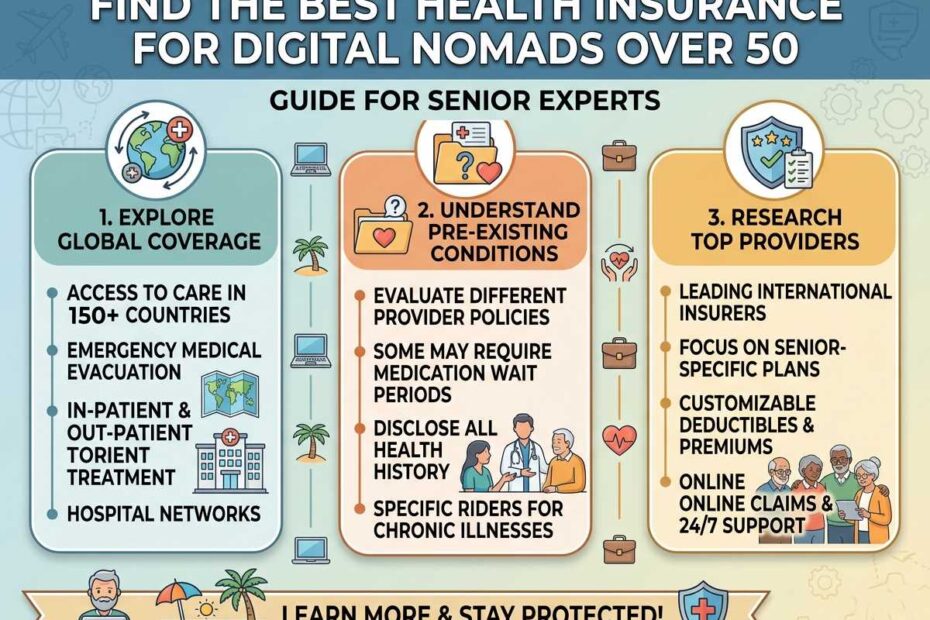
Health insurance for digital nomads over 50 is the one logistical problem that stops more American seniors from living abroad than any other. Not the language barrier, cultural adjustment, time zones. The insurance question —…
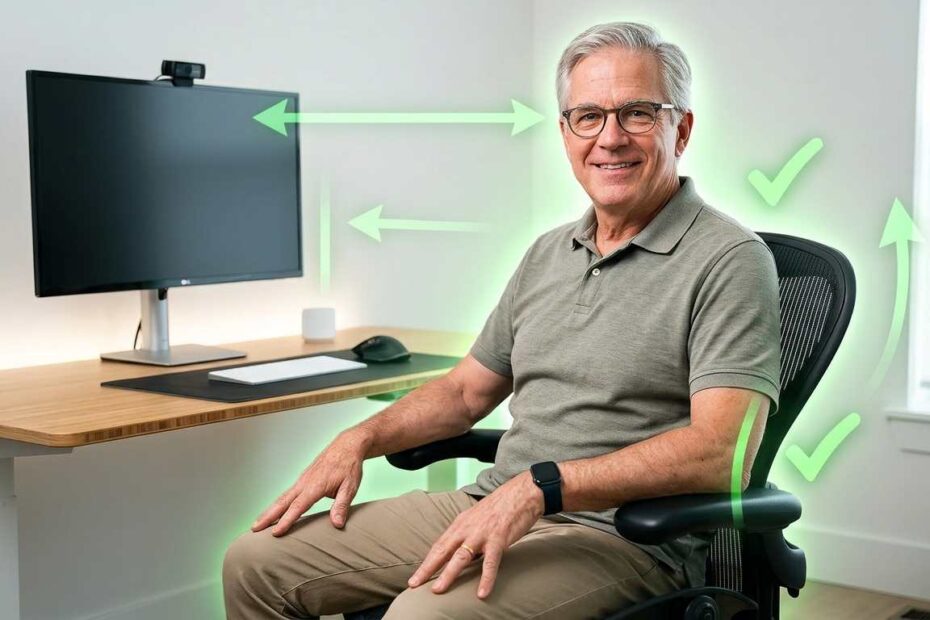
If you’ve ever stood up after three hours at your desk and felt your lower back quietly protest, this guide is for you. Building the right ergonomic home office setup for seniors isn’t about buying…
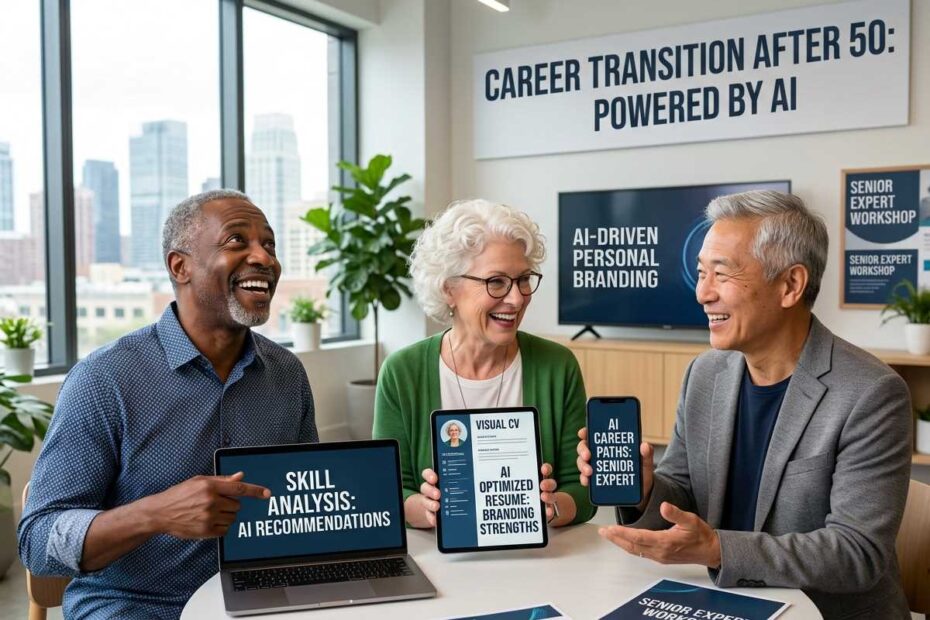
Making a career transition after 50 doesn’t mean starting over — it means starting smarter. You already own the hardest thing to fake: decades of real-world experience. This guide shows you, step by step, how…
Privacy Preference Center
We use cookies to enhance your experience, analyze our traffic, and provide personalized content. By clicking "Accept", you consent to our use of cookies.
Functional:
Always active
Strictly necessary for the website to function and cannot be switched off in our systems.
Tercihler
Teknik depolama veya erişim, abone veya kullanıcı tarafından talep edilmeyen tercihlerin saklanmasının meşru amacı için gereklidir.
Statistics
We use these to analyze site usage and improve your experience.Technical storage or access that is used exclusively for statistical purposes.
Marketing:
These are used to track visitors across websites to display ads that are relevant and engaging.